
 Procedures

Online mailbox
Receiving feedback and proposals from organizations and individuals.

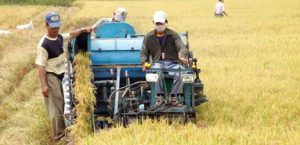 Total foreign direct investment (FDI) in the agricultural sector has only stopped at cof 3.54 billion USD, too low compared to the potential, advantages and needs of the industry.
“Although the industry has many potentials and advantages, FDI inflows into the agricultural sector are still relatively limited compared to the needs of the industry,” the Foreign Investment Department commented.
Currently FDI in the agricultural sector accounts for only 2.4% of the total number of projects and 1.2% of the total investment capital of all fields. The average capital size of projects in the agricultural industry is only about 6.7 million USD/project.
Statistics show that investment in the agricultural sector accounts for a very small proportion compared to total foreign investment capital (in 2012 it was 0.6%, in 2013 it was 0.8%, in 2014 it was 0.5% and in 2015 it was 1%).
In addition, the distribution of FDI capital in agriculture is also uneven. FDI projects mainly focus on a number of areas such as wood and forest product processing, livestock farming and animal feed processing. Investment capital for agricultural and aquatic product processing industries is still low.
”This requires the agricultural sector to have a long-term strategy and orientation to attract FDI capital,” the Foreign Investment Department commented.
Information from the Foreign Investment Agency, attracting foreign businesses to cooperate with domestic businesses in this field will help Vietnamese agriculture access advanced technology and clean technology in developing product value chains to create agricultural products with high quality and added value; At the same time, it will help Vietnam use and protect natural resources well, create more jobs and apply advanced management methods to the agricultural sector...
Recently, a number of large investors from Japan and Korea have been very interested in agricultural projects in Vietnam. On the Vietnamese side, many localities and businesses have prepared projects for investment cooperation with foreign investors. However, in reality, the number of projects that the two sides can invest in and do business together is not many.
In fact, in the context of Vietnam increasingly integrating more deeply into the world economy through participating in a variety of FTAs, especially TPP, the agricultural sector also receives both opportunities and challenges.
Joining the TPP Agreement will create export opportunities for Vietnamese agricultural products to the markets of member countries signing the Agreement. However, to enter these markets, the quality of Vietnamese agricultural products must meet allowed standards, especially in some markets such as the United States and Japan, where product quality and food hygiene requirements are very strict.
In addition, TPP is also an opportunity for Vietnam's agricultural sector to attract more investment capital from developed countries; From there, it is possible to increase the competitiveness of Vietnamese agricultural products through the adoption of high technology and advanced management skills, thereby improving product quality and participating more deeply in the global production chain.
"But besides the above opportunities, joining TPP also poses many challenges for Vietnam's small-scale agriculture. It is necessary to try to overcome weaknesses in infrastructure, land, and human resources to improve the quality and productivity of labor to be able to participate in this big playground," the Foreign Investment Department said.