
 Procedures

Online mailbox
Receiving feedback and proposals from organizations and individuals.

GDP growth in the first 9 months of this year tends to increase over the quarters, but is lower than the same period last year (6.53%) and progress is lower than the target set for the whole year (6.7%).
Because goods trade surplus was 2.765 billion USD and services trade deficit was 3.4 billion USD, it reduced GDP growth rate by 1.9 percentage points. This proves that total demand has increased and this is one of the factors contributing to the consumer price index (CPI) in 9 months being higher than the same period 2 years ago (up 3.14% compared to 2.27% in 9 months of 2014 and compared to 0.58% in 9 months of 2015).
But the increase in CPI higher than the same period also has an important part due to the fact that the prices of medical services and educational services have increased quite high due to adjustments by the State. As for the absolute scale, total supply is still larger than total demand, although the growth rate of total demand is higher than the growth rate of total supply. In addition to the trade surplus of goods, total supply is greater than total demand, which is also reflected in credit growth being lower than deposit growth (up 10.46% and 12.02% respectively over the same period last year).
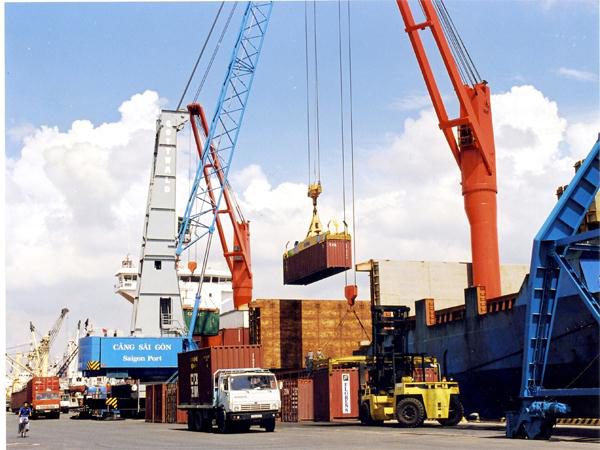
In the first 9 months of the year, capital flow investment achieved positive results for the whole society's development
Meanwhile, attracting investment capital for social development achieved positive results, up 9.6% over the same period last year. If excluding the price factor, it is still much higher than the GDP growth rate. The ratio of development investment capital/GDP is at 33.1%, making the coefficient between this ratio and the GDP growth rate up to 5.6 times, much higher than the corresponding figure for the whole of 2015 (4.9 times). This proves that investment efficiency has decreased compared to the previous year.
In the first 9 months of the year, the trade balance has improved significantly. In trade relations with foreign countries, Vietnam has moved from a trade deficit in the same period last year to a trade surplus in the first 9 months of this year. Specifically, in terms of goods, exports reached 128.2 billion USD, an increase of 6.7%; imports 125.4 billion USD, up only 1.3%; Trade surplus was 2.765 billion USD (same period last year trade deficit was 3.64 billion USD). Regarding services, exports reached 9.2 billion USD, an increase of 12.8%; imports reached 12.6 billion USD, up 3.4%; trade deficit of 3.4 billion USD.
In the field of currency and credit, although credit increased from the beginning of the year and in the first 9 months of this year by 10.46%, it was still lower than the deposit growth rate (12.02%). This proves that people still have the mentality of "saving money for a rainy day". Meanwhile, bank bad debts have not substantially decreased, mainly because the real estate sector (accounting for 70-80% of total bad debts) has just warmed up and is afraid of overheating, so credit is reduced. The difference in domestic gold prices compared to the world has decreased. The rate of exchange rate increase after 9 months is still negative (-0.9%), although on average the first 9 months of this year compared to the same period last year increased quite well (2.96% compared to 2.47%), but has slowed down compared to many previous months of the year.
Regarding the budget, the results of the first 9 months of the year have achieved some positive results. Compared to the yearly estimate, total revenue reached 65.6%, while total expenditure reached 64.4%. In the context of very low budget revenue from crude oil (52% of the yearly estimate), low budget balance revenue from import/export activities (56.6%), and low investment efficiency, achieving the above estimate is a great effort.
The ratio of domestic revenue compared to the yearly estimate also achieved positive results. The rate of overspending compared to the yearly estimate (44.6%), is lower than the corresponding rate of total revenue and total expenditure. The 9-month overspending/GDP ratio reached about 4%, lower than the set overspending/GDP ratio for the whole year (4.95%); ensure timely debt repayment... However, regarding the budget, there are still some points that need warning, such as the low rate of implementation of estimates, the ratio of public debt, government debt, foreign debt compared to GDP is still high...