
 Procedures

Online mailbox
Receiving feedback and proposals from organizations and individuals.

Potential to accelerate capital flows from Japan Investment capital from Japan into Vietnam is tending to slow down, but still has a lot of potential [...]
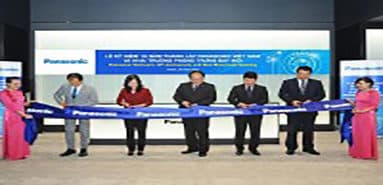
Investment capital from Japan into Vietnam is tending to slow down, but still has a lot of potential to accelerate in the near future.
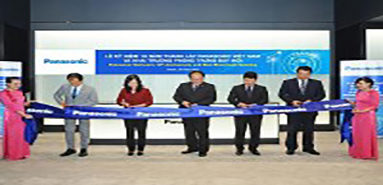
On May 26, Panasonic officially opened a new showroom at Panasonic Risupia Vietnam Center. This showroom is where Panasonic vividly introduces customers to the Company's latest technologies.
Actually, this is one of the important events marking Panasonic's 10 years of operation in Vietnam. Over the past 10 years, with the strategy of making Vietnam a key destination in the Asia-Pacific region, Panasonic has continuously expanded its manufacturing factories and research and development centers in Vietnam with a total capital of investment 243 million USD and bringing more than 7,500 jobs to Vietnamese people. Currently, in Vietnam, Panasonic has 7 members, including 5 manufacturing companies.
 Like Panasonic, many Japanese names have chosen Vietnam as a destination, such as Honda, Toyota, Kyocera, Canon, Fuji Xerox...Thousands of factories have been built by Japanese businesses in Vietnam and this has made Japan a strategic investor in Vietnam. Japan has always been the number 1 investor in Vietnam for a long time. This position was only temporarily "usurped" after Korea continuously had billion-dollar projects in Vietnam.
Accumulated as of April 2016, Japan has 3,051 investment projects in Vietnam, with a total registered capital of 39 billion USD, ranking second among countries and territories investing in Vietnam. If calculated in 4 months, the commitment of Japanese businesses is 563 million USD, ranking 4th.
A quite clear fact is that, after a long time of Japanese businesses continuously choosing Vietnam as the leading production location in Asia, in the past 2 years, Japan's investment growth rate has slowed down. The reason is said to come not from Vietnam, but from Japan. Because of the great need to rebuild the country, the Japanese Government is calling on businesses to promote domestic business investment. The devaluation of the yen has also made it difficult for Japanese businesses to invest abroad, because it will cause capital costs to skyrocket. Therefore, Japanese investors are cautious in making investment decisions abroad.
In addition, it is worth noting that, in new investment projects from Japan, according to a survey recently announced by the Japan Trade Promotion Organization (Jetro), the proportion of manufacturing industry decreased by 15% compared to 2014. In contrast, the proportion of capital invested in the distribution and retail industry increased from 14% in 2014 to 17% in 2015.
The above situation clearly shows a change in the investment trend of Japanese businesses in Vietnam. In other words, Vietnam is not only considered a production location with low labor costs, but also a promising market for investors in the service sector and domestic consumption. "This trend will continue to increase in the coming years, because the Vietnamese market continues to be of interest to many Japanese investors," said Mr. Kawada Atsusuke, Chief Representative of Jetro in Hanoi.
The change in investment trends can be clearly seen through the activities of retailers and companies operating in the service sector. Japan's largest retailer Aeon, after opening 3 shopping centers and supermarkets in Hanoi, Ho Chi Minh City, and Binh Duong, has built a new center in Ho Chi Minh City.
Previously, retailer 7-Eleven in Japan announced that it would open its first store in Vietnam in 2017. Within 3 years, 7-Eleven will develop 100 convenience stores in Vietnam and will bring this number to 1,000 stores after 10 years. Another retail group from Japan, Nojima Corporation, also bought 10% of Tran Anh Retail Company's shares to participate in the electronics retail market.
“Market size and consumer demand with a largely young population are factors that encourage the shift in new investment trends of Japanese investors in Vietnam,” Mr. Atsusuke said.
Not to mention, a new trend has also emerged, which is that more and more Japanese businesses are interested in investing in the agricultural sector in Vietnam. Statistics show that the amount of investment capital in the field of agriculture - forestry - fisheries accounted for about 6% of the total 1.285 billion USD of new Japanese investment capital in Vietnam in 2015.
Talking with a reporter from Investment Newspaper not long ago, Mr. Hirono Mitsutoshi, Senior Vice President, member of Fujitsu's Executive Board - the unit that cooperates with FPT to bring high technology into Vietnam's agriculture shared that Fujitsu is very happy with this trend. "We want to contribute to the development of Vietnam's agricultural industry, making Vietnam an agricultural powerhouse," said Mr. Hirono Mitsutoshi.
According to experts, although investment from Japan is slowing down, it is only temporary. Surveys from Jetro show that up to 70% of Japanese businesses surveyed want to invest and expand investment in Vietnam. And one of the reasons is that there are huge opportunities brought about by Vietnam's participation in the ASEAN Economic Community (AEC), as well as the Trans-Pacific Partnership, of which Japan is also one of 12 members.