
 Procedures

Online mailbox
Receiving feedback and proposals from organizations and individuals.

More PPP transport projects "sold out" by investors. Concerns about policy stability are one of the reasons why foreign investors still […]
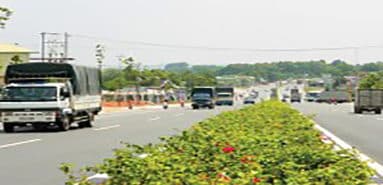
Concern about policy stability is one of the reasons why foreign investors still turn away from public-private partnership (PPP) transport infrastructure projects.
According to information from the Investment Newspaper, the Ministry of Transport has just officially canceled the pre-qualification invitation to select investors for component project 1B of the Tan Van - Nhon Trach section Construction Project, phase I, ring road III, Ho Chi Minh City in the form of PPP.
This is one of the rare PPP infrastructure projects where the Ministry of Transport plays the role of the competent state agency to select investors through bidding. However, after 2 months from the issuance of the pre-qualification documents, at the bid closing time at 9:00 a.m. on May 20, 2016, no investors submitted pre-qualification documents.
 To attract foreign investors to participate in the projectTraffic BOT, there needs to be a risk sharing mechanism according to international practices. Photo: Le Toan
In 2 rounds of selling prequalification documents (including the extension at the end of April), the representative of the competent state agency, Cuu Long Transport Infrastructure Project Management and Development Investment Corporation (CIMP Cuu Long), sold a total of 6 sets of documents to Korean and Vietnamese investors.
This result is quite surprising for CIMP itself, because the Ring Road III Construction Project, Ho Chi Minh City, Tan Van - Nhon Trach section, phase I, component 1B has always received the attention of investors because this is a vital gateway route, with a huge traffic flow of the entire Southeast key economic region. Meanwhile, the total project investment scale of about VND 4,000 billion is not a big barrier for investors.
Mr. Duong Tuan Minh, General Director of CIMP Cuu Long, said that in the long list of reasons for giving up that representatives of competent state agencies received from investors who had spent money on purchasing prequalification documents, concerns about risks related to site clearance were mentioned first.
“The fact that investors are required to bear the entire cost of site clearance and resettlement as well as other costs incurred is a huge burden because they have to completely depend on the efforts of local authorities as well as the cooperative attitude of affected people, while these are all unpredictable factors,” said an official at CIMP Cuu Long.
According to Mr. Nguyen Quoc Binh, General Director of Ho Chi Minh City Infrastructure Investment Joint Stock Company (CII), compensation and site clearance for infrastructure development projects are often implemented quite slowly, with people often complaining for a long time and not complying with the handover of land, while land prices for compensation, support and resettlement in recent times have been too low compared to the actual transfer price, so international organizations such as the World Bank (WB), International Finance Corporation (IFC), Asian Development Bank (ADB) usually do not accept loans when this happens.
In addition, investors felt disappointed when the prequalification documents did not have a provision for guarantees in case of early contract termination and exchange rate change risks, especially when the project was implemented in both domestic and foreign currencies.
It should be added that, in the past 3 years, there have been quite a few investors from Korea, the United States, Hong Kong, Spain, and India "knocking on the door" of the Ministry of Transport, but they all stopped at "looking at" the project, without setting a return date.
The risk sharing mechanism introduced by competent state agencies after more than 3 years has many improvements, but is not convincing enough for foreign investors to invest in transport projects invested in the form of build - operate - transfer (BOT).
“In areas that are not yet regulated by law, only limited to decrees such as BOT and PPP, the policy risks are very large, especially when investors spend a large amount of money and have to recover capital over a long period of time,” explained Mr. Nguyen Danh Huy, Head of the PPP Project Management Department (Ministry of Transport and Communications).
According to experts, the absence of foreign investors shows that the risk sharing policy in BOT traffic projects in Vietnam has not approached international practice. This is also the reason why this playground is a monopoly of domestic investors, the biggest consequence is the excessive use of short-term capital that should flow into other production industries.
In order to open the way for foreign investors, the Ministry of Transport has just proposed that the Prime Minister assign the Government Steering Committee on investment in the form of PPP to select and preside over the implementation of one or several pilot infrastructure investment projects.
“The experiences gained will be the basis for evaluating and perfecting policies to attract foreign investors and foreign credit institutions in the field of transportation,” said Mr. Nguyen Nhat, Deputy Minister of Transport.
It is known that for Component Project 1B of the Tan Van - Nhon Trach Section Construction Project, Phase I, Ring Road III, Ho Chi Minh City, along with canceling pre-qualification, the Ministry of Transport has agreed to let CIPM Cuu Long study and adjust the pre-qualification documents and reorganize the pre-qualification to select investors.
“CIPM Cuu Long studies the opinions of sponsors and investors registering to participate in prequalification, provides legal advice and proposes a consultation program between relevant parties,” Deputy Minister of Transport Nguyen Ngoc Dong requested.