
 Procedures

Online mailbox
Receiving feedback and proposals from organizations and individuals.

Agricultural products seek a "survival" strategy during the TPP period. Vietnamese agricultural products are facing many opportunities, but also many challenges, forcing businesses in the field to […]
Vietnamese agricultural products are facing many opportunities, but also many challenges, forcing businesses in this field to change their business strategies.
When Vietnam joins the Trans-Pacific Partnership Agreement (TPP), many import and export taxes will be reduced to 0%, which will create favorable conditions for many agricultural products such as rubber, wood processing, coffee, cocoa, cashew, pepper, rice, and fresh vegetables and fruits to enter foreign markets.
However, to take advantage of the opportunity to export agricultural products to TPP countries, the challenge for domestic businesses comes from ensuring quality when having to comply with strict market standards. Currently, the quality and processing proportion of Vietnamese agricultural products is still low. Many Vietnamese fresh fruit, vegetable and seafood products still cannot reach major markets in TPP such as Japan and the US because of food safety issues. Besides, most of Vietnam's agricultural products are in raw, fresh, frozen or dried form, lacking technologies to create added value. Post-harvest preservation technology is weak and lacking.
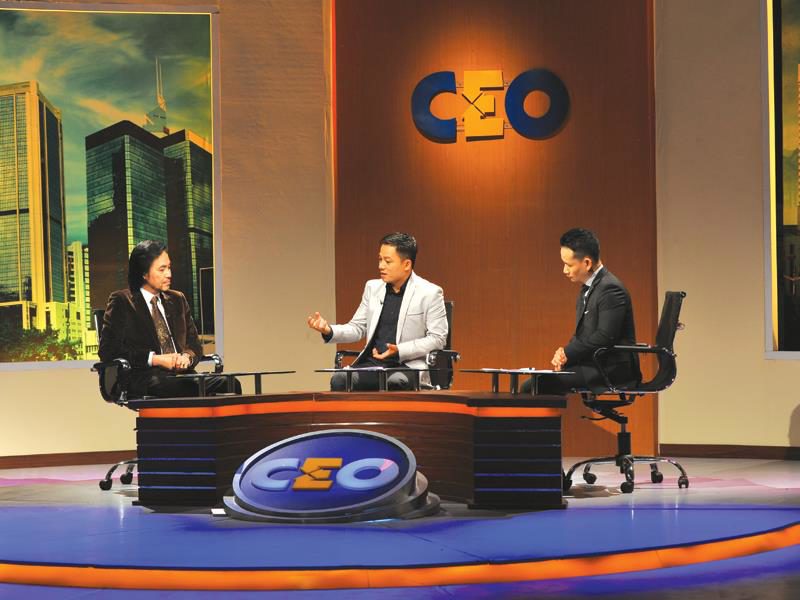 Mr. Nguyen Van Ngoan, CEO of the CompanyAmerican Educational Institutions Ltd. (IAE) in the CEO role of this situation.
Many businesses have clearly seen their weaknesses and want to take advantage of opportunities before TPP takes effect in 2018 to change their business strategies. However, changing business strategy is never easy, especially for small businesses, limited in many aspects. Therefore, it is understandable that internal businesses are confused about determining business strategies. The current situation at many agricultural product enterprises is an example.
While shareholders believe that to survive in a competitive context, businesses should switch from manufacturing to importing and distributing food and agricultural products. Because the price of food and agricultural products from other countries entering Vietnam is cheaper, of better quality and more popular with customers. However, the CEO (also a shareholder of the company) disagrees. According to this CEO, if we switch to importing, all the effort and money invested in the manufacturing sector will be lost, and the jobs of workers will no longer exist. Furthermore, domestic agricultural foods also have their own characteristics and advantages that other countries do not have.
"Instead of producing products similar to competitors, businesses will switch to typical products and specialties that only Vietnam has to compete with competitors. Then, find ways to export abroad," the CEO said.
"If you follow the CEO's direction, the business will still have to invest in technology, production processes and improve quality. All of these are beyond the ability of the business. Switching to import is the safest and most effective solution," said a shareholder.
The difficult problem at this enterprise has attracted public attention. In fact, many companies in the agricultural sector are being challenged by imported goods, while negative media about the quality of domestic products...
Some experts believe that CEOs need to redefine the position and strengths of the business, the advantages of domestic products, and users' habits and love of fresh food. Over 90% of Vietnamese consumers like fresh food, and the supply of fresh food can only be achieved by domestic production and local supply. Therefore, to gain consumer trust, we must make quality products and prove to customers that the quality is better than foreign products. An effective solution is to focus on production, farming and quality control, and at the same time, choose marketing solutions, business strategies, and communication combinations that are appropriate to the budget and goals that the Board of Directors and Board of Directors desire.
Thuy Minh (Hanoi) shared, it seems that a shareholder has somewhat followed the CEO's direction, however the shareholder's intention to focus on the domestic market first and then attack abroad is a possible solution that the CEO should consider. "The CEO's direction of producing specialized, high-quality products is very good. Why doesn't the CEO try to link up with other companies, or business households that are producing these products, to create supply chain links. This will build a strong brand at home and create a springboard to move abroad," said Thuy Minh.
To find the optimal solution for his business, the CEO sought out two experts of the CEO Program - Key to Success, Mr. Thai Quoc Minh, Chairman of the Board of Directors and General Director of VINA Private Investment Company Limited - VP Capital and Mr. Robert Tran, General Director of Robenny Strategic Consulting Group, America and Asia - Pacific Region.
The column is produced in cooperation with the CEO program - The key to success co-produced by Vietnam Television and the Royal Media Group with the companionship of the OTIV brand.