
 Procedures

Online mailbox
Receiving feedback and proposals from organizations and individuals.

Does AEC have anything to do with you? The guilt of not knowing anything about the ASEAN Economic Community (AEC) not only lingers in the minds of many businessmen; […]
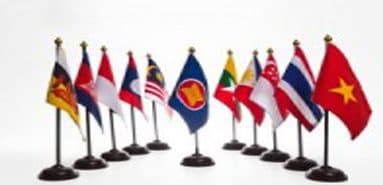
 The guilt of not knowing anything about the ASEAN Economic Community (AEC) not only lingers in the minds of many businessmen; It also haunts people who feel a little guilty about worldly affairs. December 31, 2015,AEC was officially formed - such an important milestone that I knew nothing about.
Actually, many ASEAN people ask themselves the same thing - that's why there are question and answer sections in many newspapers. For example, the question most people ask is is the AEC similar to the European Union (EU)? At first glance, the AEC is similar to the EU when it first formed the so-called European Economic Community in 1957, but in essence it is completely different. The AEC has no plans to launch a common currency, does not have a common central bank, does not have a common parliament, so it is said to be an economic community but not as closely linked as the current EU.
For normal people, perhaps the concern is limited to a few specific things, the first of which is employment. Will the birth of AEC promote large-scale migration flows looking for jobs, which is currently happening, such as Vietnamese workers going to Thailand or Malaysia to work?
In fact, at this early stage, the AEC only focuses on moving skilled labor, but unskilled labor is not a concern of policymakers. Until now, only people working in eight professional occupations have the right to change workplaces within ASEAN, accounting for 1.5% of ASEAN's total workforce, including doctors, nurses, dentists, engineers, surveyors, tourism workers, accountants and architects.
But this process is not natural in the way that whatever country likes to do it, it depends on the conditions each country sets before mutual recognition. For example, in Malaysia, people working in this profession must have at least 10 years of experience and must be sponsored by a local company.
It is in this field that many changes are expected to be brought about by the AEC. There will be many young people going to other ASEAN countries to work in the tourism, hotel, and restaurant industries, and vice versa, foreign travel companies will also bring their own personnel to Vietnam. Many foreign-invested companies, currently having difficulty recruiting middle-level personnel, will turn to finding accounting specialists, financial directors... from neighboring countries.
Anyway, this is a very necessary competitive pressure for young people to improve themselves in both knowledge, skills, work consciousness, English ability, and teamwork ability. This pressure will reverberate through universities, they cannot sit idly in their ivory towers anymore.
There have been real-life stories posted on Facebook, including the story of passengers on a domestic flight being surprised by the enthusiasm and professionalism of a male flight attendant; It turned out that this was a Thai flight attendant that this airline had just recruited. It's ironic that the normal service of a flight attendant, such as thoughtfully helping passengers put their suitcases in the luggage compartment, giving detailed instructions on how to install safety locks for the elderly, observing to see if anyone needs help and quickly coming to help... causes surprise in observers. When I found out that this guy was Thai, I exclaimed, it's just like that!
So soon domestic businesses, for customers and work efficiency, will aim to recruit personnel from neighboring countries? Why is the professionalism of our country's workers gradually disappearing while deception and negligence are widespread? Where, in what environment, do Vietnamese employees learn professional conscience, professional practice, and how to behave according to international standards?
And from the story of the labor flow that will likely be free to flow within the ASEAN region in the coming years, looking back at the evil of job-hunting in our country, we can see how great the risk of falling behind is.
Let's say we put on one side a hospital that has to find every way to recruit good doctors, including experts from abroad, and on the other hand, a hospital that has to spend hundreds of millions on anyone who wants to work, even if it's just a nurse, let alone a doctor.
Suppose there is a school system where teachers have to spend money on lubrication to be accepted, then a school system may have to recruit teachers from the Philippines to teach English at a higher salary than local teachers.
There is no need to compare, everyone can see the ups and downs of these two types of recruitment. So why is job evasion still common? Perhaps the heads of the recruiting units do not understand that the quality of the apparatus will depend on the quality of the personnel they recruit.
Looking more broadly, there will definitely come a time when the AEC will agree to mutually recognize more occupations, and to prepare for that, ASEAN has drafted a skills reference framework that countries in the bloc will have to rely on to draft training programs for their countries. I don't know if the Ministry of Education and Training as well as universities and vocational schools have aimed to include it in their plans? For example, the controversy surrounding allowing the University of Business and Technology to open a major in general medicine, the issue is not whether this ministry or that ministry supports it; The problem is whether the school's output meets the skill requirements to be recognized by other countries.
From another perspective, to avoid people being seduced by the label of "foreign doctors" without knowing the actual skills of these doctors, has Vietnam drafted a roadmap to recognize doctors from ASEAN countries? For example, the Philippines requires doctors and dentists to have five years of practice experience, and nurses three years. In countries that do not have agreements to accept each other's labor, any business that wants to receive foreign workers must prioritize recruiting workers from the host country first. Only when they post recruitment notices and no candidates appear will they be allowed to recruit workers from other countries. Our country also has these regulations, but almost no one enforces them thoroughly.
In short, what the AEC aims to build a common market and a common production area is the free movement of skilled labor. If Vietnam continues to focus on exporting unskilled labor, it will be considered a loser: not only will it not be able to send people to work in other AESAN countries, but it will have to accept the flow of mid-level and high-level specialists from other countries. Perhaps this will have a big impact on society, not taxes because taxes have actually been reduced since before the AEC was born.
The reality of labor flow in ASEAN is not as envisioned by AEC. Because up to 87% of workers transferred within the bloc are unskilled workers. The five main movement corridors include: Myanmar to Thailand; Indonesia to Malaysia; Malaysia to Singapore; Laos passes through Thailand and Cambodia also passes through Thailand. The formation of the ASEAN Economic Community is expected to create an additional 14 million jobs by 2025.
Source: Saigon Economic Times Online