
 Procedures

Online mailbox
Receiving feedback and proposals from organizations and individuals.

ASEAN Economic Community officially established On December 31, the ASEAN Economic Community was officially established when the declaration to establish the ASEAN Community [...]

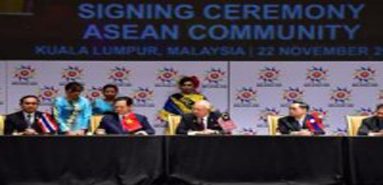 On December 31, the ASEAN economic community was officially established when the declaration to establish the ASEAN community was signed by 10 leaders of member countriesAssociation of Southeast Asian Nations (ASEAN) comes into effect.
The ASEAN Economic Community (AEC) is one of the three pillars of the ASEAN community, along with the Political - Security community and the Cultural - Social community. Currently, this is considered a vibrant development region in the world with more than 640 million people, a total GDP of about 2,480 billion USD and a trade turnover of 2,530 billion USD in 2014.
“ASEAN's GDP is expected to reach 4,700 billion USD in 2020. According to forecasts, the region has the potential to become the fourth largest economy in the world by 2030. There are many economic benefits that we will reap, thereby bringing a more prosperous life to all ASEAN people,” Malaysian Prime Minister Najib Razak said at the signing ceremony in November 2015.
According to the ATIGA Preferential Tariff Agreement, ASEAN-6 countries (including Singapore, Thailand, Malaysia, Indonesia, Brunei, and the Philippines) have eliminated nearly 100% of tariff lines since 2010, except for some products that are permanently exempted for reasons of national security, ethics and health. Since 2015, Vietnam has reduced 93% of tariff lines to 0%, retaining only 7% of tariff lines by 2018, including automobiles and components, iron and steel, motorcycle components and parts, machinery, equipment, tools and spare parts, bicycles and spare parts, alcohol, beer, plastic products, and paper of all kinds.
From 2018, Vietnam can only maintain import tax with a maximum tax rate of 5% for about 3% of tariff lines, including mostly sensitive agricultural products (live poultry, aged meat, poultry eggs, citrus fruits, rice, brown rice, processed meat, sugar).
This tariff removal roadmap has had a major impact on trade turnover between Vietnam and regional countries. Regarding exports, ASEAN is currently the third largest market for Vietnamese businesses, after the US and the European Union, with main products including rice, crude oil, textiles, footwear, seafood, coffee, rubber, computers and electronic products, iron and steel...
On the contrary, this is the third largest trading partner providing a source of goods for Vietnamese businesses, after China and Korea. Over the past many years, import turnover from ASEAN has mainly been essential goods and input raw materials for domestic production such as all kinds of petroleum, machinery and equipment, household goods, chemicals, plastics, etc.
But up to now, Vietnam has not been able to improve the level of trade balance deficit with ASEAN. In 2015, Vietnam estimated its trade deficit from this area was about 5.5 billion USD, an increase of 45% compared to last year, according to data from the General Statistics Office. Malaysia is the largest export market, accounting for a quarter of turnover. And Thailand ranks first among partners supplying goods to Vietnam.
Source: VnExpress