
 Procedures

Online mailbox
Receiving feedback and proposals from organizations and individuals.

Entering TPP: Taxes are deeply reduced, many Vietnamese goods have more export doors to foreign countries. Many Vietnamese goods such as textiles and garments, leather and footwear, wooden furniture, and agricultural products have the ability to expand [...]
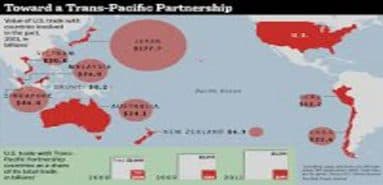
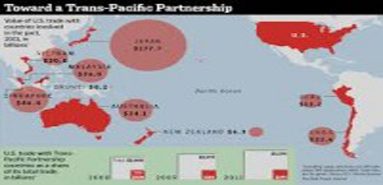 Many Vietnamese goods such as textiles and garments, footwear, wooden furniture, and agricultural products have the ability to expand markets and increase exports due to deeply reduced tax rates.
The Trans-Pacific Partnership (TPP) negotiation is a free trade negotiation between 12 member countries, with the goal of establishing a common free trade area for partner countries in the Asia Pacific region.
According to economic experts, specifically regarding trade, when this Agreement takes effect, 90% of tariff lines will be reduced to 0%. The Trans-Pacific Partnership negotiation includes many important partners of Vietnam such as the US, Japan, Australia... Many products such as textiles and garments, footwear, wooden furniture, and agricultural products of Vietnam have the ability to expand markets and increase exports due to deeply reduced tax rates.
For example, currently the textile and garment industry exports to the US with an average tax rate of 17%, the highest 32%, then when the tax is reduced to 0%, export turnover can increase sharply.
Dr. Vo Tri Thanh, Deputy Director of the Central Institute for Economic Management Research, said that the Trans-Pacific Partnership Agreement negotiation is one of Vietnam's most important trade negotiations, including not only issues of opening the market for goods and services but also non-trade issues.
According to Mr. Thanh, "The TPP Agreement is of very high quality. In addition to traditional issues such as trade, services, and investment, there are many issues related to post-border policies such as: state-owned enterprises, public procurement, intellectual property rights. So its requirements are very high, but very consistent with our current reform and reform processes. Because the nature of this agreement is an equal, open, transparent business environment. And reform Vietnam's way must be the same."
At the conference, many opinions said that to take advantage of the opportunities brought by the Trans-Pacific Partnership Agreement, Vietnam needs to overcome major challenges in implementing commitments. Accordingly, participating in a large "playing field" like TPP also means stronger openness, so competition is also fiercer. Even industries considered to have advantages when joining the Trans-Pacific Partnership Agreement may face many barriers.
For example, to enjoy the 0% tax rate, Vietnam's textile and garment industry must ensure the principle of origin, since fibers must be imported from member countries of the Trans-Pacific Partnership Agreement. With seafood, tax rates are no longer the main barrier, but quarantine measures are more stringent. Therefore, Vietnamese businesses need to quickly improve their competitiveness and product quality; Reduce dependence on imported raw materials, especially from outside the TPP bloc.
In addition, according to Dr. Tran Du Lich, "Our state needs to create an economic institutional and business environment in which businesses can maximize their creativity. I believe that with a relatively complete economic legal system, it creates an environment for businesses to have more favorable access to the implementation of the TPP. This includes shifting the industry from processing to manufacturing, restructuring agriculture... to create a market, conditions for domestic enterprises to increase their localization rate to participate in TPP."
The Trans-Pacific Partnership (TPP) is a very large regional free trade agreement, covering nearly 40% of GDP and 30% of global trade. Currently, 12 TPP member countries are still continuing negotiations, to be completed by the end of this year or in 2015. Experts recommend that Vietnamese industries and businesses need to proactively grasp information and specific commitments related to their industries and products, thereby having strategies to improve competitiveness and take advantage of opportunities and benefits from this agreement.
According to VOV