
 Procedures

Online mailbox
Receiving feedback and proposals from organizations and individuals.

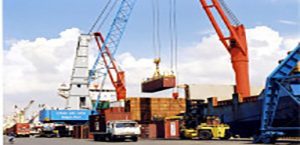 With the decrease in export prices, it is necessary to respond by exploiting the source of goods to compensate. If the import price decreases, it can compete with the market.Intending to increase imports to take advantage of opportunities when domestic investment and consumption demand recovers.
According to a report from the General Statistics Office, in the first 9 months of this year compared to the same period last year, export prices decreased by 3.14%, causing a loss of 3,773 million USD in exports (equivalent to 84,000 billion VND), equal to about 2.8% of GDP in the first 9 months of 2016. Similarly, import prices decreased by 7.13%, resulting in a loss of about 8,829 million USD (equivalent to 197,000 billion VND), equal to about 6.5% of GDP in the first 9 months of 2016. Compensating between losses and benefits due to reduced import/export prices, in the first 9 months of the year, we benefited by 5,056 million USD (equivalent to 113,000 billion VND), equal to 3.7% of GDP in the first 9 months of 2016.
From data from the General Statistics Office, it is possible to calculate the loss/benefit due to decreased import/export prices for some major products in the first 9 months of 2016 compared to the same period last year as follows.
According to calculations, with only 16 export product groups, due to falling prices, export turnover decreased by 2,313 million USD. If you add in items that do not have a common unit price (aquaculture decreased by 273 million USD, vegetables and fruits decreased by 99 million USD, wood and wood products decreased by 62 million USD), the reduced export price of the above items resulted in a loss of 2,747 million USD.
The surplus trade balance has contributed to the overall balance of payments surplus, helping foreign exchange reserves reach a new peak
For imports, with 18 items, due to falling prices, turnover decreased by 4,730 million USD. If you add in items that do not have a common unit price, the reduction is even greater.
First of all, because import prices fell deeper than export prices, it contributed to the country's position shifting from a large trade deficit in the same period last year (3,639 million USD) to a trade surplus this period (2,765 million USD).
Along with other factors, the surplus trade balance has contributed to the overall balance of payments surplus. Other factors here are that the amount of foreign currency entering Vietnam from sources is quite large and increasing (realized foreign direct investment capital increased by 2 digits, ODA continued to be disbursed, foreign indirect investment capital increased by nearly 5 billion USD...). The psychology of holding foreign currency has decreased...
The overall surplus balance has helped foreign exchange reserves reach a new peak, contributing to improving liquidity and ensuring the country's financial safety.
The exchange rate is also basically stable. After 9 months (September 2016 compared to December 2015), the USD price in Vietnam decreased by 0.99%, while the same period last year increased by 5.10%; USD prices in the world increased and increased in Vietnam's major trading partners. This is one of the factors contributing to psychological stability.
The VND/USD exchange rate decreased along with the decrease in world prices in USD, so import prices in VND decreased or increased slightly and this is one of the important factors contributing to curbing inflation, so that we can be more secure with inflation and focus more on restoring growth.
The stable exchange rate has contributed to preventing the recent gold fever, causing the gold price to increase/decrease along with the world price and no longer differ much from the world price like a few years ago.
The decrease in export prices needs to be responded to by exploiting sources of goods to compensate. In fact, the amount of exported goods increased quite well, such as coffee increased by 39.6%, pepper increased by 33.6%, rubber increased by 15.3%, textile fibers increased by 18.6%, iron and steel increased by 33.7%... Meanwhile, world prices are at a low level, so it is necessary to reserve to avoid early sales, which can easily be missed.
In the face of falling import prices, we can take advantage of increasing import volumes to take advantage of opportunities when domestic investment and consumption demand recovers. In fact, imports increased quite well, such as wheat increased by 84.5%, corn increased by 2.9%, ore and other minerals increased by 54.1%, coal increased by 191.5%, petroleum increased by 22.9%, liquefied petroleum gas increased by 21.7%, plastic raw materials increased by 18.3%, paper of all kinds increased by 11.4%, fiber increased by 11.1%, and iron and steel scrap increased. 14.7%, iron and steel of all kinds increased by 24.2%, other base metals increased by 42.2%...
However, careful consideration is also needed to avoid competing with domestic production market share and avoid high inventory.