
 Procedures

Online mailbox
Receiving feedback and proposals from organizations and individuals.

Prime Minister Nguyen Xuan Phuc signed and promulgated Resolution No. 53/NQ-CP dated July 17, 2019 of the Government on solutions to encourage and promote businesses to invest in agriculture [...]
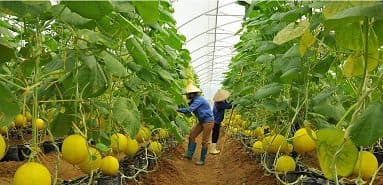
Prime Minister Nguyen Xuan Phuc signed and promulgated Resolution No. 53/NQ-CP dated July 17, 2019 of the Government on solutions to encourage and promote businesses to invest in agriculture effectively, safely and sustainably. The resolution affirms that Vietnamese agriculture still has many potentials and opportunities that need to be exploited, especially land fund, human resources and taking advantage of opportunities during the 4.0 industrial revolution.
_900x600.jpg)
Agriculture applying high technology and clean agriculture
100,000 businesses and the world's leading goal in agricultural products
In recent times, the agricultural sector's growth rate has been quite good, productivity, quality and efficiency have been continuously improved. Among them, outstanding achievements include Vietnam firmly ensuring national food security and becoming the second largest exporter of agricultural products in Southeast Asia, 15th in the world with 10 groups of agricultural, forestry and fishery products with export turnover of over 1 billion USD, including 6 items with turnover of over 3 billion USD.
Practice shows that the State needs to have policies for businesses to cooperate with agricultural sector institutions to promote the accumulation and concentration of land to create the most favorable conditions for large-scale agricultural production, mechanization of agricultural production, application of new technology, high technology in agriculture, production of high quality agricultural products, greater added value, and the ability to participate in the global value chain; creating a position to build the national brand of Vietnamese Agriculture, at the same time, mobilizing social resources to invest in developing agricultural and rural infrastructure and agricultural support services, creating a vibrant competitive environment in agriculture.
Currently, many large enterprises and corporations are interested in and implementing investment projects in the agricultural sector, including the world's leading enterprises in shrimp, pangasius, rice, coffee... A system of enterprises operating in the field of rural agriculture has been formed with over 50 thousand enterprises investing in the agricultural sector, including production, processing, product consumption, trading of agricultural materials, agricultural products, and services to serve the agricultural sector. agricultural development service, in which about 10,200 enterprises directly invest in developing agricultural, forestry and fishery production.
However, the development of businesses in the agricultural sector is very modest compared to the potential and development advantages. The number of enterprises investing in the agricultural sector currently accounts for only 8% of the total number of enterprises nationwide, of which the number of agricultural, forestry and fishery enterprises accounts for 1%. The main form of agricultural production organization today is still in the form of production households with more than 9.2 million very small-scale households. Labor productivity in the agricultural sector is still limited, only about 38% of the national average labor productivity and lower than most countries in the region. The application of science and technology and national and international quality standards is still limited, with only nearly 5% of agricultural, forestry and fishery enterprises being certified with VietGAP.and equivalent. The consumption market is not sustainable; Chain product consumption channels with large retail distributors are still limited; The number of enterprises participating in production along the value chain is still small; Technical and quality barriers in the international market are increasingly strict.
Empowering the market, businesses are the pillar
Faced with the above situation, Resolution No. 53 of the Government sets the goal of striving for a growth rate of agricultural, forestry and fishery production value of about 3.0%/year by 2030; The growth rate of agricultural, forestry and fishery export turnover is about 6%-8%/year.
By 2030, there will be 80,000 to 100,000 enterprises with effective investment and business activities in the agricultural sector, of which about 3,000 to 4,000 large-scale enterprises and 6,000 to 8,000 medium-sized enterprises.
The resolution proposes many groups of solutions and specific tasks, including continuing to improve institutions and reform administrative procedures; Strongly reduce barriers to business conditions in agriculture; Improve the efficiency of state management in the spirit of constructive Government, empowering the market to decide...
In fact, from the beginning of this term, the Government and Prime Minister Nguyen Xuan Phuc have always paid special attention to agriculture, with a focus on developing high-tech agriculture, clean agriculture, and organic agriculture. According to the Prime Minister, agriculture is one of three competitive advantages and three breakthroughs that Vietnam needs to focus on developing, along with the information technology and tourism industries.
“I order the agricultural industry in the next 10 years to be in the top 15 most developed countries in the world, of which the agricultural product processing sector is in the top 10 in the world. Vietnamese agriculture is a deep processing center of world agriculture, a logistics center of global agricultural trade", the Prime Minister stated his vision for the agricultural industry.
To realize the above vision, the Prime Minister said that the agricultural sector needs to have a desire to develop, the core is the development of businesses investing in the agricultural industry and the first thing is to have good legal institutions and eliminate outdated regulations.
Ha Chinh
baohaiphong.com.vn