
 Procedures

Online mailbox
Receiving feedback and proposals from organizations and individuals.

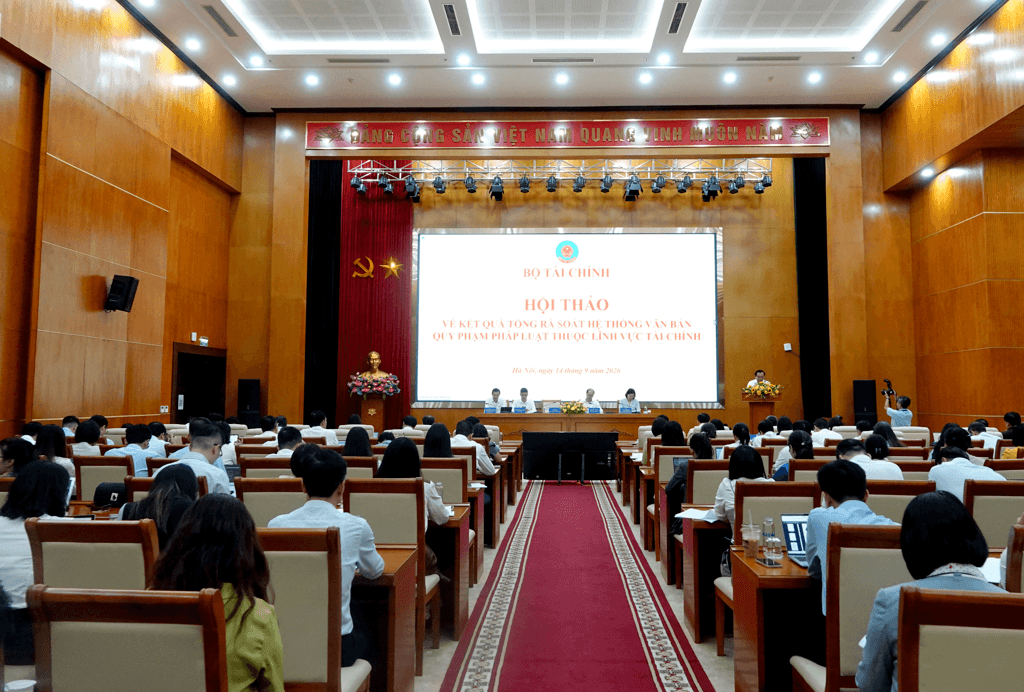
On the afternoon of September 14, the Ministry of Finance held a workshop to solicit feedback on the results of the comprehensive review of the legal normative document system under the Ministry's state management. Deputy Minister of Finance Le Tan Can attended and chaired the workshop. Attendees included representatives from the Central Committee of the Vietnam Fatherland Front; ministries, ministerial-level agencies; People's Committees of provinces and cities; the Vietnam Chamber of Commerce and Industry (VCCI); associations in the financial sector; and state-owned corporations and general companies.
The workshop focused on evaluating the review results and proposing solutions for regulations related to the development of state and private economies, thereby continuing to improve institutions, remove bottlenecks, and create a favorable environment for investment and business activities.
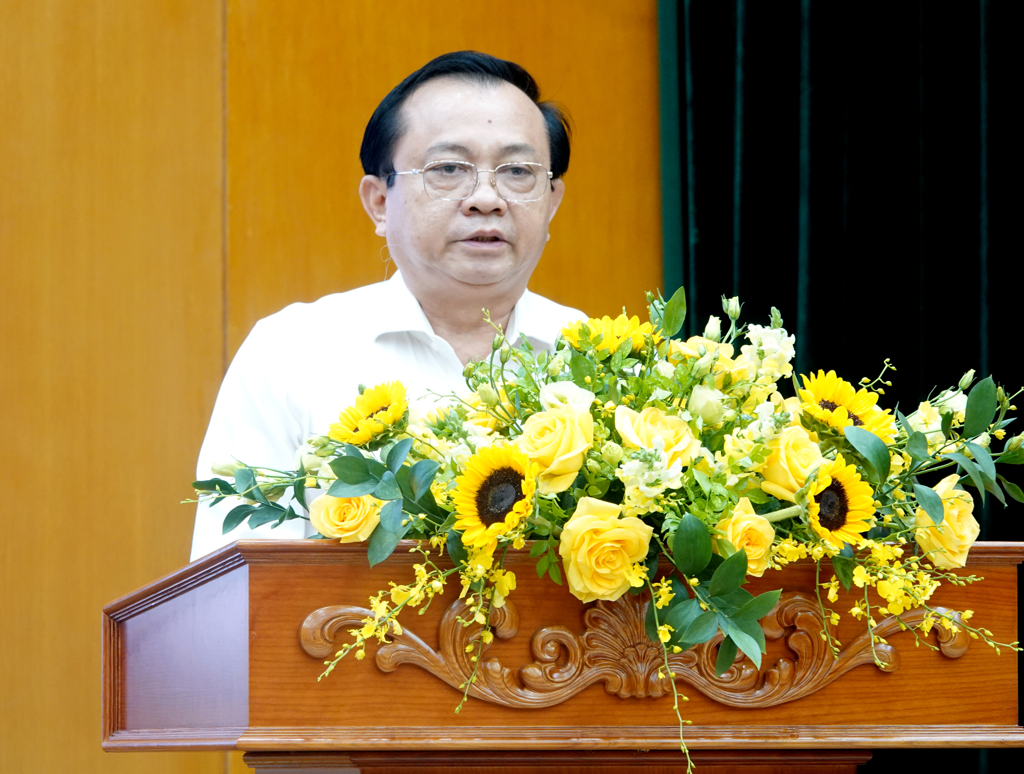
Deputy Minister Le Tan Can speaking at the workshop
Delivering the opening remarks and outlining the workshop's content, Deputy Minister of Finance Le Tan Can emphasized the need for a thorough review, correctly identifying the scope and content requiring action, and ensuring that proposals for amending, supplementing, replacing, or newly issuing documents are well-founded and align with practical requirements.
Presenting the review results on the development of the state economy, Mr. Nguyen Vinh Quang, Deputy Director of the Institute of Financial Strategy and Policy, stated that central and local agencies had proposed addressing 62 documents. Through the review, 30 documents were recommended to be removed from the thematic scope, of which 18 documents related to conformity with the two-tier local government model and 12 documents were proposed for repeal due to the expiration of superior documents. The remaining 32 documents require further consideration and refinement. According to Mr. Nguyen Vinh Quang, the review process needs to accurately define the scope of criteria for state economic development, not automatically considering all documents in areas such as state budget, public assets, land, and public investment as documents institutionalizing the policy of state economic development. The review must be linked to specific Party policies and guidelines and assigned tasks, thereby avoiding omissions of content that needs to be institutionalized. The lead agency also proposed continuing to review some contents related to infrastructure, ports, civil-military applications, management, exploitation, and protection of airspace, which were raised in Resolution No. 79-NQ/TW and Government Resolution No. 29/NQ-CP, but have not been fully reflected in the preliminary review results.
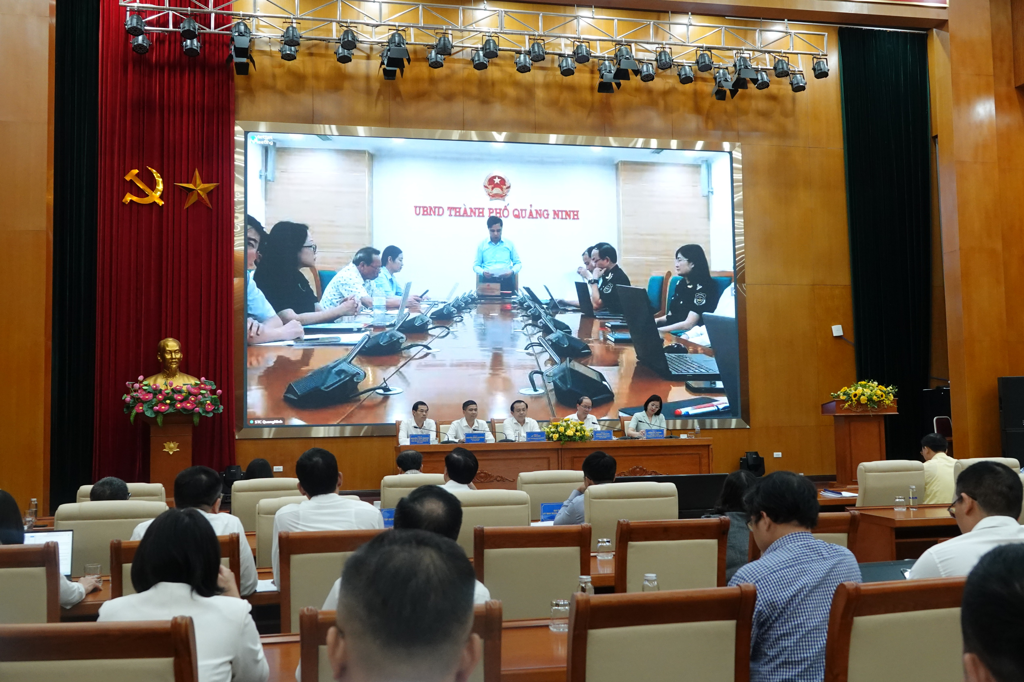
Localities reporting review results
Regarding the thematic area of private economic development, Ms. Trinh Thi Huong, Deputy Director of the Department of Private Enterprise and Collective Economy Development, stated that ministries, sectors, and localities proposed reviewing, amending, and supplementing 107 legal normative documents. Through the review, 65 documents were identified as falling within the scope of the private economy theme; the remaining documents related to the collective economy and some planning issues were proposed to be transferred to an appropriate review scope.
The review results show that the Party's policies and orientations for private economic development have been largely institutionalized, but some contents need further improvement, especially administrative procedure reform, business conditions; supporting enterprises' access to resources; ensuring property rights, intellectual property rights, and fair competition; expanding the participation of the private sector in strategic industries and fields; and perfecting the legal framework for new business models.
Notably, access to land and production/business premises in localities still presents some challenges that need to be addressed. Some mechanisms to support small and medium-sized enterprises and startups in accessing premises in industrial parks, clusters, technology incubators, and public assets have not been fully institutionalized.
Regarding the roadmap, the contents to be addressed are expected to be concentrated in 2026-2027; some difficult, new, or experimental issues will be researched in the 2028-2029 period. Specifically, in 2026, approximately 15 codes, laws, and National Assembly resolutions, and 27 decrees and decisions of the Government and the Prime Minister are expected to be addressed; in 2027, 4 codes, laws, and 2 decrees will be addressed. Additionally, 11 circulars and 34 provincial-level documents are expected to be amended in the 2026-2027 period.
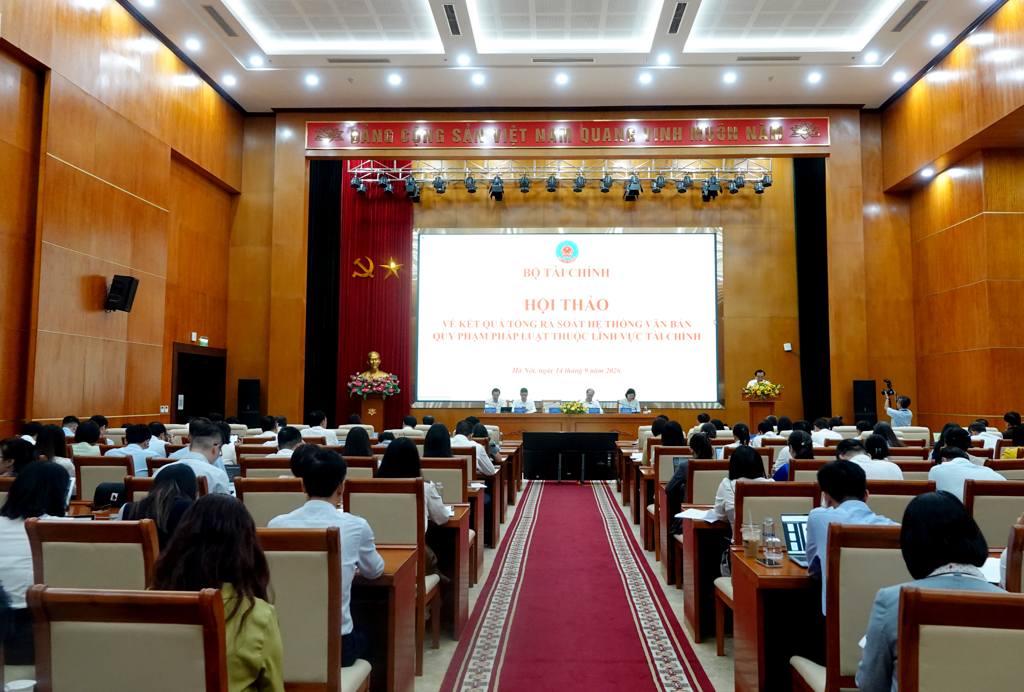
Overview of the workshop
At the workshop, central and local agencies provided feedback on the comprehensive review results, focusing on regulations that are still problematic, incomplete, or require further research and refinement.
Based on the review results, the lead agency proposed that ministries, sectors, and localities continue to review and fully and comprehensively institutionalize the Party's policies and orientations for the development of both state and private economies; and accelerate the research and amendment of related regulations. At the same time, it is necessary to strengthen exchanges and receive feedback from the business community and associations to promptly identify difficulties and problems arising in practice, thereby proposing appropriate amendments and supplements to the law.
Concluding the workshop, Deputy Minister of Finance Le Tan Can requested units to fully absorb the feedback from central and local agencies, continue to refine the comprehensive review results, clearly identify the contents to be addressed and the implementation plans, contributing to the improvement of the legal system and creating impetus for the development of the state and private economies.