
 Procedures

Online mailbox
Receiving feedback and proposals from organizations and individuals.

Improving national competitiveness in the context of international integration The Government electronic information portal introduces the article of comrade Vuong [...]

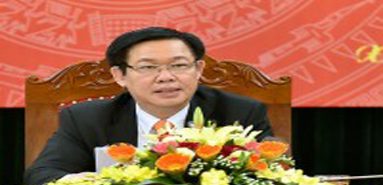 Government electronic information portal introduces an article by comrade Vuong Dinh Hue, Member of the Party Central Committee, Head of the Economic Committee Central Committee on National Competitiveness, Issue dhas been consistently mentioned in the Party's guidelines and policies; State policies and laws.
National competitiveness is a combination of institutions, policies and factors that determine the level of efficiency and productivity of a country. A productive and efficient economy is one that has the ability to use and exploit limited resources well.
National competitiveness is a combination of institutions, policies and factors that determine the level of efficiency and productivity of a country. A productive and efficient economy is one that has the ability to use and exploit limited resources well.
In other words, the nature of national competitiveness is the ability to operate the economy effectively, at the most reasonable cost, bringing about the most prosperous and sustainable results. National competitiveness is closely correlated with the business environment. Improving and ensuring the effectiveness and efficiency of implementing legal regulations as well as mechanisms and policies to facilitate business activities not only contributes to improving productivity and quality of business operations, but also promotes transparent allocation of resources, and therefore, directly and indirectly enhances the productivity of the economy and enhances national competitiveness.
Whether the economy develops sustainably or not depends largely on whether the national competitiveness is high or low as well as the favorable or unfavorable level of the business environment.
Currently in the world, the World Economic Forum's "Global Competitiveness Index" (GCI) is widely recognized as a popular index used to evaluate the competitiveness of economies in global comparison.
In the period 2006-2015, the GCI index evaluates competitiveness through 12 pillar indices divided into 3 groups. Group 1- Indicators reflect the basic requirements of an economy, including: (1) institutions, (2) infrastructure, (3) macroeconomic environment, (4) health and primary education. Group 2 – Indicators for the economy to develop towards quality and efficiency includes: (5) post-primary education and training, (6) commodity market efficiency, (7) labor market efficiency, (8) level of development of the financial market; (9) Technology readiness and (10) market size. Group 3 – Indicators reflecting business level and innovation capacity include: (11) business level, (12) Innovation capacity.
Although the 12 pillar indexes are measured separately, in reality, these pillars and component indexes are all related to each other and interact and support each other. Vietnam's three strategic breakthroughs have reflected 9 out of 12 pillar indicators. The remaining three pillars (technology readiness level, business level and innovation capacity) depend on science and technology policies and enterprise development policies.
These are the main focuses in policy planning to improve national competitiveness in the coming period. Some of the contents evaluated in the Global Competitiveness Index have similarities in content with the provincial competitiveness index (PCI), the efficiency index of construction and enforcement of business laws of ministries and branches (MEI) and the provincial governance and public administration performance index (PAPI) currently applied in Vietnam; especially on institutional issues and growth models.
The issue of improving national competitiveness has been mentioned consistently in the Party's guidelines and policies; State policies and laws. After 30 years of innovation, Vietnam's competitiveness has changed and gradually improved, but compared to the world and even the ASEAN region, it is still at a low level.
According to the Global Competitiveness Report, in 2015, Vietnam ranked 56/140 economies, reaching 4.3/7 points, an increase of 12 places compared to 2014 and the highest ranking of Vietnam in the period 2006-2015.
Vietnam's sectors with low rankings in the bottom half, average and below average include: Institutions (85/140), pinancial market development (84/140), training and post-primary education (95/140), cinfrastructure (76/140), teligibility business (100/140), technology readiness (92/140), innovation (73/140).
In ASEAN, except for Singapore, Malaysia, Thailand and Brunei with scores above 4.5, Vietnam's 2015 ranking is only higher than the remaining countries in ASEAN-4 (including: Laos, Myanmar, Cambodia, Vietnam).
There are 7/12 fields where Vietnam is even behind some ASEAN-4 countries in global rankings. The ability to keep up with ASEAN-6 countries is still far away, while the risk of being overtaken by ASEAN-4 countries is also a challenge.
The 2015-2016 Global Competitiveness Report pointed out five groups of problems considered the biggest obstacles for Vietnam, including: Access to finance, cunstable policies, insufficiently trained workers, poor labor discipline andcorruption.
In addition, the improvement of provincial competitiveness in the period 2006-2014 shows significant progress but is still unsustainable. Areas of clear improvement are: market entry costs, transparency, business support services, labor trainingand time costs. Areas that have not improved or are trending downward are: informal costs, government dynamism, land accessand fair competition.
Through analysis of the index sets, the Central Economic Committee found that a number of factor groups need to focus on analyzing, evaluating and having solutions to improve the business environment and enhance Vietnam's national competitiveness, including:
First, group of factors on economic institutions and implementation of economic institutions, including: Legal regulations and law enforcement in business and competition; judicial reform issues; Prevent and combat corruption, reform public administration.
Secondly, the group of macroeconomic issues, including: Sustainability of the macroeconomic environment; Current status of total factor productivity (TFP) in Vietnam's growth model.
Third is, a group of issues accessing resources and markets, including: Developing basic resources to serve the production and business activities of the enterprise; develop market factors and market types; ncapacity for international economic integration.
Fourth, a group of issues about business development and startups.
Five is, a group of issues related to the field of security and safety as well as social factors such as health and education.
After 30 years of innovation, Vietnam has actively integrated deeply into the international economy on many levels, in diverse forms, according to the principles and standards of the global market; has diplomatic relations with 185 countries, economic relations with 224 countries and territories, established strategic partnerships with 14 countries, and comprehensive partnerships with 10 countries.
To date, 59 countries have recognized Vietnam's economy as a market economy, including Vietnam's major trading partners. Vietnam has signed 10 regional and bilateral free trade agreements; just completed negotiations on 2 FTAs (European Union and TPP); is actively negotiating 3 other FTAs.
Participating in negotiations and signing FTAs has a positive impact on economic development, but it also intertwines many challenges from outside and inside the economy, especially up to now, Vietnam has participated in three value chains that play an important role in the global economy: Food value chain and food security; energy value chain and energy security (oil, gas, coal) and textile, garment and footwear value chain.
Therefore, proposing practical solutions to improve national competitiveness is essential to effectively take advantage of opportunities and benefits of international integration commitments, contributing to building an independent, self-reliant economy with rapid and sustainable development.
Based on the analysis of objective and subjective causes and the main groups of factors mentioned above, the Central Economic Committee recommends that the Central Economic Committee soon develop, promulgate and organize the good implementation of the Overall project on improving the business environment and enhancing Vietnam's national competitiveness with the following viewpoints, orientations and main solutions:
About opinion:
Focusing on improving the business environment and enhancing national competitiveness is a key solution for economic development and realizing the opportunities of international integration, creating a strong driving force for the development of all types of businesses in the direction of dynamism, innovation and creativity, successfully implementing three strategic breakthroughs in the process of innovating the growth model and restructuring the overall economy.
About orientation:
– Continue to promote the improvement of business and competition institutions, create favorable conditions for businesses to develop healthily, minimize informal transaction costs, increase publicity and transparency, and strengthen prevention and combat of corruption in the economy.
– Continue to sustainably stabilize the macroeconomy, innovate growth models, focus on improving productivity and efficiency in the direction of promoting the application of science and technology, innovation and creativity in all fields of the economy.
– Continue to strengthen the facilitation of access and development of resource and market factors, focusing on developing access to capital and financial markets, labor and labor markets, science and technology and intellectual property rights, infrastructure, strengthening links, cooperation and market connections between economic sectors, economic entities, economic space, and improving international integration capacity.
– Develop mechanisms and policies to promote strong development of all types of businesses and business startups.
– Continue to refer to the published assessment results of international and domestic organizations assessing improving the business environment and enhancing national competitiveness in regional and global comparisons.
Main solution groups
First, strengthen institutions and implement institutions that facilitate business activities and competition, perfect the multi-sectoral and multi-sectoral coordination mechanism between the Central and localities, promote judicial reform, public administration reform, enhance transparency and prevent and combat corruption. Synchronously resolve the promulgation and enforcement of legal regulations on business and competition.
Second, increase sustainable macroeconomic stability, improve labor productivity and the contribution of total factor productivity in the growth model in the direction of promoting the application of science and technology and enhancing innovation. Continue to promote growth model innovation, improve national labor productivity and the contribution of total factor productivity to the growth model in the direction of promoting the application of science and technology and building an innovation system.
Third, increase access to domestic and world resources and markets, strongly promote domestic links and international integration capacity. Focus on developing and increasing access to input factors of the production process, especially capital, labor, science-technology, infrastructure and resources. Promote healthy competitive dynamics and promote the comparative advantages of localities, strengthen links between economic sectors, economic entities and economic spaces, economic regions, and improve international integration capacity.
Fourth, promote strong development of all types of Vietnamese businesses and increase business startups. Create a legal environment to ensure business freedom and fair competition among economic entities in a market economy with macro-regulation by the State. Promulgate the Law on Support for Small and Medium Enterprises, the Law on Supporting Industries and develop appropriate policies to support the development of all types of businesses; Enhance the effectiveness of the State's role in orienting the development of investment and business activities of enterprises according to market mechanisms. Promote the role of associations and business associations.
Fifth, strengthen regional connectivity and attach importance to sustainable development solutions. Develop plans and effectively implement the United Nations 2030 Agenda on sustainable development./.