
 Procedures

Online mailbox
Receiving feedback and proposals from organizations and individuals.

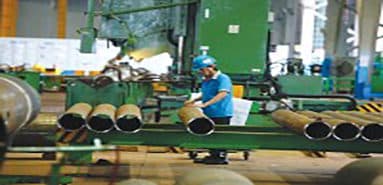
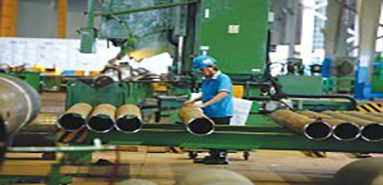 Korea is truly becoming a phenomenon in attracting foreign direct investment (FDI) to Vietnam, with more than 48 billionbillion USD in accumulated registered capital, far exceeding Japan by 9 billion USD.
Last weekend, another event marked the long step of Korean investors in the Vietnamese market. LG Display officially started construction of a factory complex for the production and processing of high-tech screen products (OLED screens) for mobile devices. The project is implemented in Trang Due Industrial Park (Hai Phong), with a total registered investment capital of up to 1.5 billion USD.
This is the first billion-dollar project to be granted an investment registration certificate this year and is an important project that makes Korea a phenomenon in attracting FDI to Vietnam. As of the end of April 2016, Korean businesses had registered to invest in Vietnam over 48 billion USD, far surpassing Japan - the investor who has held the top position for many years in the list of countries and territories investing in Vietnam - by more than 9 billion USD.
After Doosan, Kumho, Hyundai, GS, Posco..., many new Korean names are continuing to pour capital into Vietnam. Photo: Duc Thanh.
It must also be mentioned that a significant number of investments by Korean businesses, of which Samsung is a typical example, are invested through foreign subsidiaries. If these capital amounts are added, FDI from Korea to Vietnam will certainly exceed the 50 billion USD mark - accounting for a significant proportion of the total FDI capital of over 288.5 billion USD registered in Vietnam over the past 1/5 century.
Korean FDI into Vietnam has increased rapidly in the past 2-3 years due to consecutive billion-dollar projects pouring into Vietnam. Besides LG with an investment of 3 billion USD, the "biggest" is Samsung with a total investment of nearly 15 billion USD. Importantly, along with the "core" projects of Samsung and LG, hundreds of Korean satellite investors also come to Vietnam to invest and do business, creating more momentum for the FDI wave from Korea to Vietnam.
Not to mention, along with "old names" such as Kumho, Doosan, Hyundai, GS, Posco..., recently, new Korean names have "competed" to pour capital into Vietnam. Lotte is an example. After the Lotte Mart supermarket chain is still in the process of expanding, Lotte has acquired Diamond Plaza, built Lotte Center Hanoi and is pursuing the Smart City Project with an investment of 2 billion USD in Ho Chi Minh City.
Shinsegae is the same. Last year, they opened the first Emart supermarket in Go Vap (HCMC), with an investment of 60 million USD and continue to plan to open 10 such supermarkets in Vietnam by 2020. Meanwhile, CJ, after acquiring the famous kimchi brand in Vietnam, Ong Kim's, in February 2016, bought 4.08% of Vissan Vietnam's shares. To date, CJ has invested about 400 million USD in Vietnam. The company, which has the same "mother" as Samsung, like Shinsegae, even plans to spend about 500 million USD in 2016 to carry out M&A deals, to move faster and deeper into the Vietnamese market.
Korean news agency Yonhap, in an article a few days ago, also mentioned this trend and said that Korean companies are "shifting focus" to the Vietnamese market, in the context of their business activities in China reaching their limits. Yonhap even cited a report from the Korean Trade and Investment Promotion Agency that the Korean Government is pursuing the expansion of consumer goods exports to Vietnam to compensate for the stagnating Korean trade, while also considering Vietnam as a good opportunity for Korean companies.
A research report on Korea's overseas investment trends published by the Foreign Investment Agency (Ministry of Planning and Investment) said that Korean businesses often invest abroad with the following goals: market access (accounting for 36% of investment purposes); reduce production costs (31%); access to source technology and raw materials; Avoid trade barriers and combine investment and trade development. In addition, there has been a recent trend of Korean investors investing in anticipation of tariff incentives when ASEAN countries join new generation free trade agreements (FTAs) with the goal of processing and exporting.
From this aspect, with the two countries having signed a bilateral FTA, the Trans-Pacific Partnership Agreement (TPP) has also been signed, and Vietnam officially joining the ASEAN Economic Community, Vietnam is an open market for Korean investors. Benefits are everywhere, because Vietnam not only has stable politics, a growing economy, competitive labor prices, and many incentives for foreign investors, but is also a "root" market from which Korean businesses' goods can spread to other markets in the region, as well as other trade partners of Vietnam.