
 Procedures

Online mailbox
Receiving feedback and proposals from organizations and individuals.

Investment in developing supporting industries for the textile and garment industry: The slower you go, the more you lose. Trans-Pacific Strategic Economic Partnership Agreement (TPP) and [...]
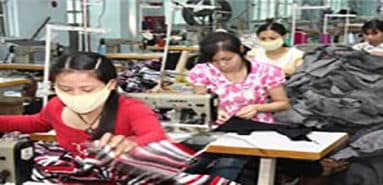
 The Trans-Pacific Strategic Economic Partnership Agreement (TPP) and the European Union-Vietnam Free Trade Agreement (EVFTA) are expected to be approved.Completion by the end of this year will bring great opportunities for Vietnam's textile and garment exports, especially in the US and European Union (EU) markets.
In order for the textile industry to reach new heights, Vietnam Textile and Garment Group (Vinatext) is focusing on prioritizing investment to develop supporting industries.
Currently, the average import tax applied to textiles and garments exported from Vietnam to the US and EU is 17-18% and 10-12% on the FOB price (purchasing raw materials and semi-finished products), respectively. These tariffs will be gradually reduced to 0% according to the agreement and US and EU consumers will be able to buy clothes imported from Vietnam at more competitive prices.
However, the above benefits are only available if Vietnamese textile and garment products meet the 'yarn forward' rule of origin (the yarn, fabric and sewing production stages must all take place in TPP countries for the final garment product to enjoy preferential tariffs under the agreement). The rules of origin in EVFTA are based on the basis of 'from fabric forward'. Therefore, if garment enterprises cannot proactively source fabric and yarn in Vietnam or within the TPP and EVFTA bloc, it will not only be difficult to take advantage of opportunities, but will also have to face many market challenges...
In recent years, textile and garment has been one of the industries with the largest export turnover in Vietnam, but up to 80-85% of raw materials and accessories have to be imported. Only yarn is the textile and garment industry that can be proactive in almost all domestic production and export needs (export of more than 2 billion USD/year). The country's textile and garment exports have so far reached more than 20 billion USD, but this industry still has to spend more than 10 billion USD to import raw materials such as fabric, zippers, fashion accessories... to serve production. Regarding the production capacity of raw materials supplied to the textile industry, types of natural origin such as cotton, silk, hemp, jute, flax...
Vietnam can completely produce it. But due to the influence of many factors, this raw material source is currently underdeveloped and only meets 3-5% of the industry's demand. Raw materials of artificial origin, artificial fibers - almost cannot be produced domestically; Synthetic fibers have a factory that has started production, but the output is low and the product quality has not been met. Therefore, the majority of synthetic fibers currently in Vietnam still have to be imported. Therefore, the value earned by the industry is very small compared to the export turnover achieved annually.
The only way to create a breakthrough for Vietnam's textile and garment industry is to have a supporting industry foundation, in the immediate future to meet the demand for the total amount of garments produced annually. Regarding this issue, Mr. Le Tien Truong, General Director of Vinatext, said that it is essential to establish industrial clusters of raw materials and accessories, solving the main bottleneck of wastewater treatment from dyeing or environmentally related materials such as plating in metal button production, or stages of the garment industry such as washing, printing...
Thus, prices will be competitive and the environment will be strictly managed. In addition, there should be preferential policies for businesses investing in the industrial cluster in terms of land tax, VAT, income tax, tax exemptions and reductions depending on the type of product that needs investment encouragement...; capital support for basic construction and equipment; Establish a support fund and credit incentives for businesses that test imported spare parts and replacement materials (dye, bleach) or equipment in the production line of supporting industrial products, businesses that implement the FOB method for orders with a localization rate of 50% or more...
Foreign-invested enterprises have been and will be investing in Vietnam in chains to benefit from TPP, while most domestic enterprises do not have enough resources to invest in chains. To overcome this weakness, Vinatext has linked with its member companies in a chain to prepare to meet rules of origin, as well as provide comprehensive services to customers.
Over the past years, the Group has focused on investing in weak and 'bottleneck' stages of the industry such as weaving - dyeing and finishing and a series of projects in this stage as well as joint ventures with foreign partners to take advantage of partners' technology, capital and market sources are also actively deployed.
According to New Hanoi Newspaper