
 Procedures

Online mailbox
Receiving feedback and proposals from organizations and individuals.

Entering TPP is half the fun! Mr. Nguyen Xuan Thanh, Director of the Fulbright Economics Teaching Program, said so about the foreseeable benefits and conditions [...]
 Mr. Nguyen Xuan Thanh, Director of the Fulbright Economics Teaching Program, said so about the foreseeable benefits and negative provisions in the recently announced TPP commitment.
Sir, the full text of the Trans-Pacific Partnership Agreement (TPP) commitment was just announced last week. What are the most visible benefits of Vietnam when TPP operates?
Mr. Nguyen Xuan Thanh: The TPP Agreement includes 30 chapters, in which commitments to eliminate tariffs will bring many benefits to Vietnam; followed by services and investment.
Regarding tariff elimination, many key export items of Vietnam such as agricultural products, seafood, textiles, footwear, wooden furniture, electrical and electronic goods, rubber... entering the TPP market will enjoy a tax rate of 0% immediately after the agreement takes effect or after 3-5 years.
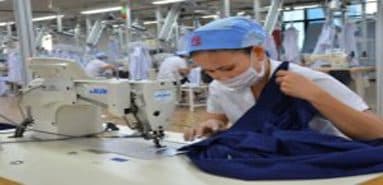
The US commits to immediately remove tariffs on many textile and garment products from 11 TPP countries, including Vietnam, instead of the current average tariff of 17.5%. Notably, Vietnamese textiles and garments can use some fabrics and raw materials outside the TPP within 5 years and still enjoy full tax incentives as stipulated in the agreement.
For import taxes, Vietnam commits to a common tax schedule for all TPP countries, in which over 65% of tariff lines will have import taxes eliminated as soon as the agreement takes effect and nearly 98% of tariff lines after 10 years; The remaining items have a roadmap of over 10 years or apply tariff quotas.
In the service sector, Vietnam and its member countries allow organizations to deploy cross-border financial services without having to establish branches or operating facilities in the host country. Thus, not only foreign businesses but also individuals (such as consultants) can come to Vietnam to open services, and domestic experts can go abroad to open services. This is a new, airy spot.
Regarding investment, TPP members agree on the principle of requiring fair and non-discriminatory investment policies and protection. So in about 2 years, we believe there will be new, larger investment capital flows from TPP to Vietnam.
What is expected from TPP is pressure for administrative and institutional reform... to increase internal strength, consistent with the framework of this playing field. How do you rate it?
I felt a bit disappointed from the Government Procurement chapter (chapter 15), the state-owned enterprises (SOEs) and monopolies chapter (chapter 17).
Initially, I hoped that the Government Procurement chapter would have strict regulations to control budget money and prevent corruption, but in the end, the commitments in TPP on this area were still general in terms of public procurement and bidding, so it was not strong enough to create pressure to improve the situation in our country.
Vietnam's characteristics are that SOEs play a pivotal role in the economy, but they are also low efficiency sectors. However, the TPP commitment allows the Government to fully subsidize SOEs when participating in commercial activities, both public and commercial, as long as "does not create negative effects on the interests of other TPP countries" or "does not harm the domestic industries of other members".
Such regulations do not have enough influence for reform. In our country, SOEs will continue to cling to the budget milk. Therefore, it is said that TPP only brings half the joy.
Up to now, there are still different understandings of the right to "freedom of association" in the TPP. Can you explain further?
The Labor Chapter (chapter 19) is quite brief, stating: "In the TPP, members agree to adopt and maintain in their laws and practices the basic rights of workers as recognized in the 1998 ILO Declaration, which are the right to freedom of association and the right to collective bargaining; abolition of forced labor; abolition of child labor and prohibition of the worst forms of child labor; elimination of discrimination in employment." and profession”.
The right to freedom of association, also known as "freedom of association", in Vietnam is understood to mean that workers have the right to establish organizations to represent themselves and protect their interests in addition to the state trade union. These organizations can exist in parallel, not necessarily in opposition to each other, and workers have the right to side with one side or the other. This forces the Trade Union organization to raise its stature further, and the established associations must also be qualified and brave enough to perform their representative function well.
TPP countries consider this a factor to consider trade competition, punishing each other when the goods of a certain business in a certain country violate the principles of negotiation to resolve labor disputes or discriminate in wages, recruitment...
Employees