
 Procedures

Online mailbox
Receiving feedback and proposals from organizations and individuals.

On December 13, 2017, in Hanoi, the Ministry of Planning and Investment in collaboration with the World Bank (WB) organized the Vietnam Development Forum 2017 with the theme [...]

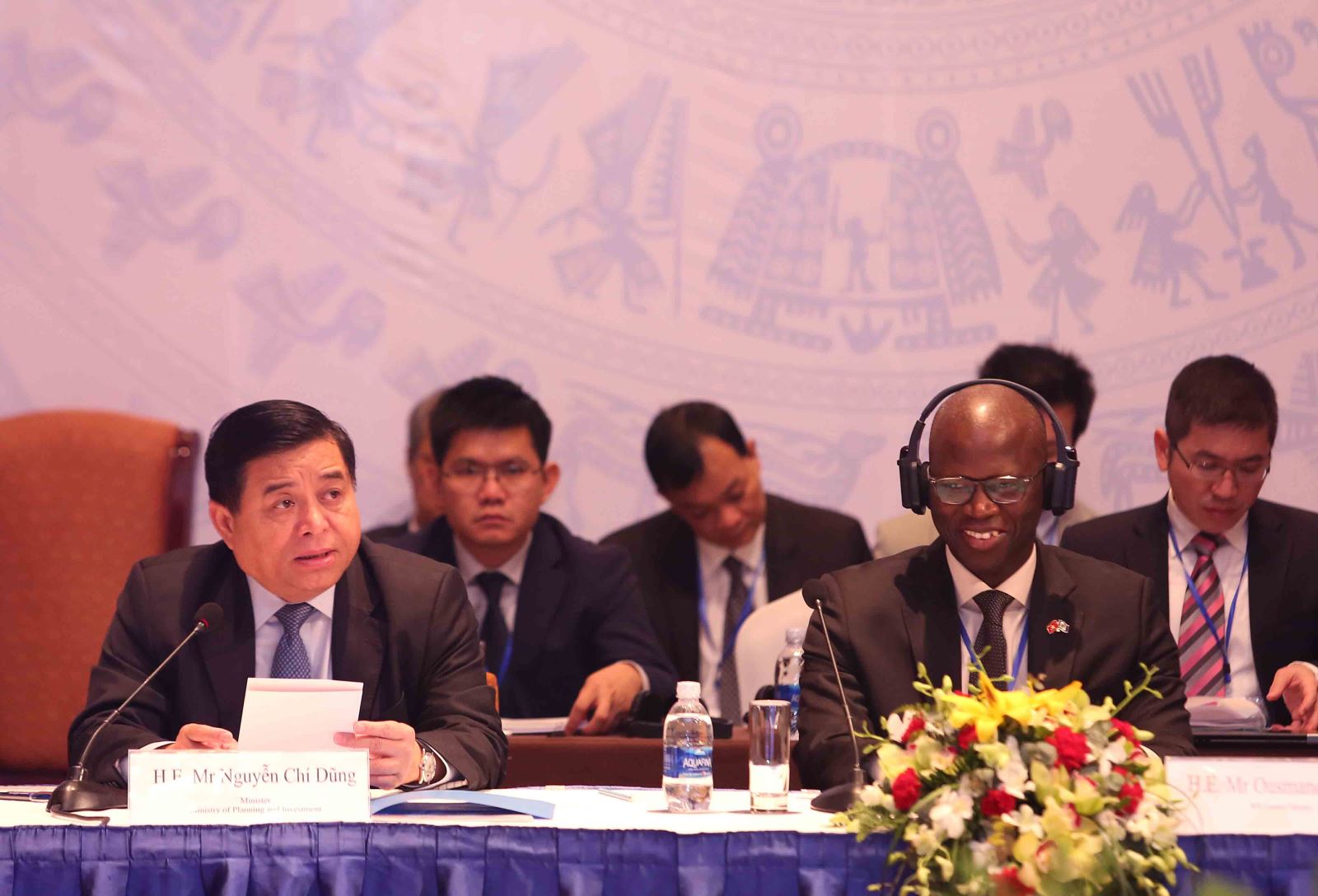 |
| Minister of Planning and Investment Nguyen Chi Dung spoke at the opening of the Forum. Photo: Duc Trung (MPI) |
In his opening speech at the Forum, Minister Nguyen Chi Dung said that 2017 was the year Vietnam's economy achieved many successes, of which the greatest success was that after many years, all 13 socio-economic development targets assigned by the National Assembly were expected to reach and exceed the set goals. The economy is growing well, GDP growth rate is estimated at 6.7%. But that is just one aspect. On the National Assembly forum during the recent session, many expressions were very concerned about the issue of growth quality and one of the decisive factors in quality as well as improving growth rate is productivity.
Recognizing the importance of increasing productivity, the Government has been making efforts to implement a series of solutions to promote innovation, creativity, and application of science and technology to improve productivity, quality, efficiency, and competitiveness of the economy. The 2018 socio-economic development plan reported by the Government at the 4th Session of the 14th National Assembly also emphasized the content of improving productivity, quality, efficiency and competitiveness, encouraging innovation and entrepreneurship. At the same time, the Government also directs and administers solutions to implement the 2018 Socio-Economic Development Plan with the spirit of strongly promoting the achievements and thoroughly overcoming the limitations and shortcomings of the Government.a year 2017. Strengthen discipline, improve integrity; Take advantage of every opportunity, take advantage of opportunities; Promote innovation and creativity; Create high consensus of the entire system, act decisively, towards rapid and sustainable development.
However, improving productivity is a challenge for Vietnam. The Government urgently needs the support and consultation of development partners, the business community, and domestic and foreign experts to find appropriate policy solutions to concretize the above goals.
 |
|
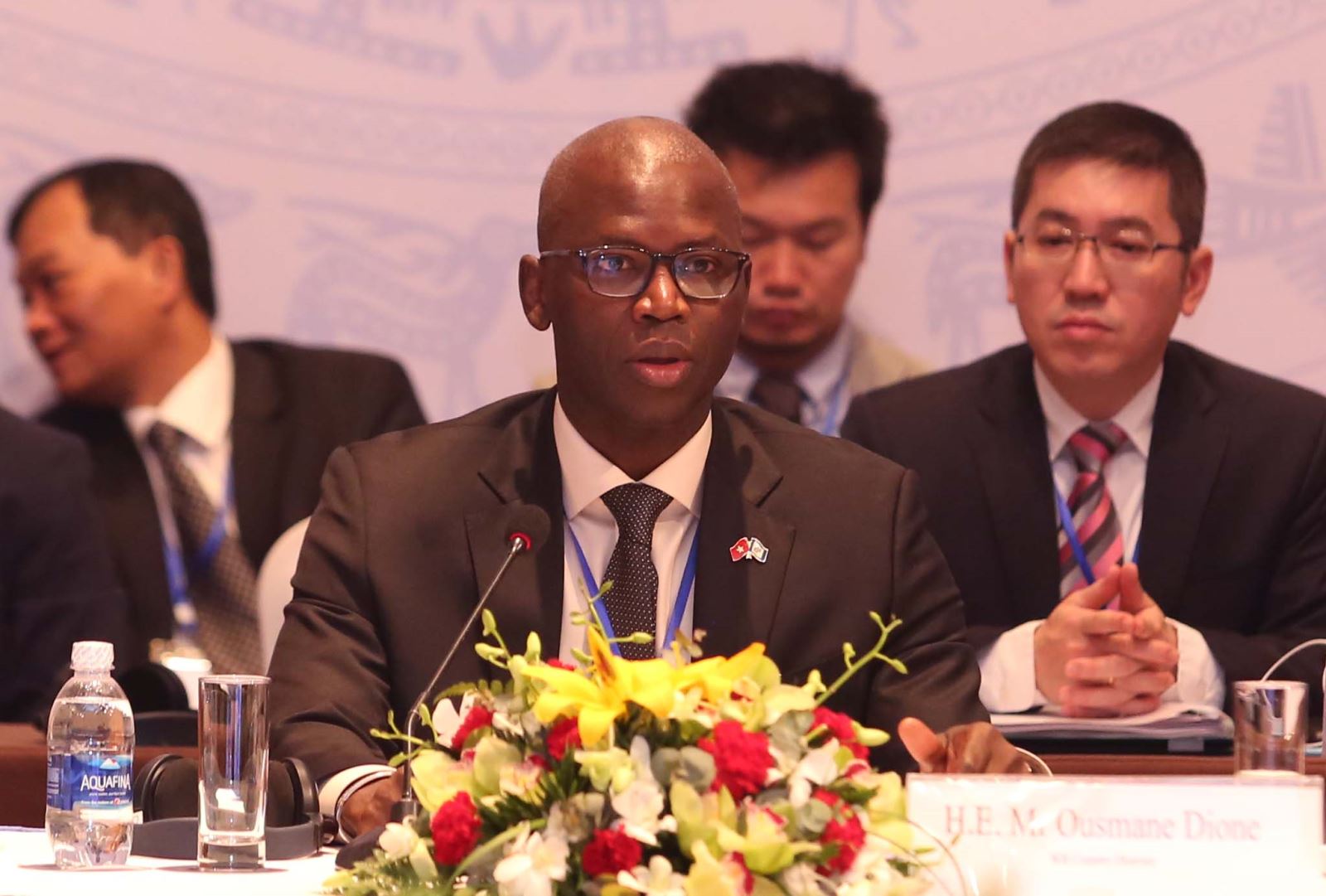
>WB Country Director for Vietnam Ousmane Dione spoke at the Forum. |
Speaking at the Forum, WB Country Director in Vietnam Ousmane Dione highly appreciated the theme of VDF 2017, increasing productivity is an important issue for medium-term development in Vietnam, helping Vietnam achieve the goal of becoming an upper middle-income country by 2035. Congratulations to the Government of Vietnam for achieving a number of high achievements in 2017 such as stabilizing the macroeconomy and inflation. low, stable exchange rate, increased foreign policy position... In particular, congratulations to the Government of Vietnam for increasing 14 places in the WB's business environment ranking and hope that Vietnam continues this growth momentum to maintain macroeconomic stability and sustainable development.
Mr. Ousmane Dione assessed that Vietnam still has a lot of room to improve productivity such as improving energy efficiency and applying technology in agriculture to improve quality. In addition, effective linkages between domestic and FDI enterprises also play an important role for Vietnam to move up the global value chain and improve productivity.
Second, reforms to develop and strengthen effective market institutions will need to be accelerated to achieve higher productivity growth, including continuing efforts to improve the business environment, focusing on simplifying administrative procedures and reducing cost burdens, and promoting more efficient markets to improve resource allocation. This is an important issue so that Vietnam can access the market, allocate production resources in the capital market and land market more effectively, ensuring that resources are used for the most effective purposes.
Third, strengthening competition policies and ensuring a transparent, level playing field for all economic partners, the importance of skills education and innovation in the process of finding ways to grow in Vietnam. Vietnam has done well in general education, but it needs to have a new set of skills to synthesize knowledge to contribute to productivity growth, the economy is integrating into the global economy, in the field of industry, manufacturing industry, agricultural services... Along with that, it is necessary to continue to strive for further improvements in the domestic private sector. There is a need for better labor market institutions, better higher education facilities, ensuring higher skills and qualifications for workers, creating an environmentEffective institutional environment and good incentive mechanisms help maintain sustainable productivity growth in the future.
Fourth, how can Vietnam mobilize and use scarce public resources to have capital for the development agenda in the next 5 years? When development support is gradually withdrawing, Vietnam needs to mobilize more domestic resources more effectively, mobilize domestic revenue, improve the efficiency of public spending and debt management, build an effective domestic debt market, which plays an important role in ensuring the achievement of goals. development without causing debt to increase to unsustainable levels, stepping up efforts to create an open environment favorable to private sector participation in the development of quality infrastructure, so important in the productivity growth that Vietnam needs today. The WB hopes that the new law on PPP will solve many current challenges. ODA resources need to be used more strategically and effectively, complementing domestic public resources and creating leverage to mobilize domestic private resources.
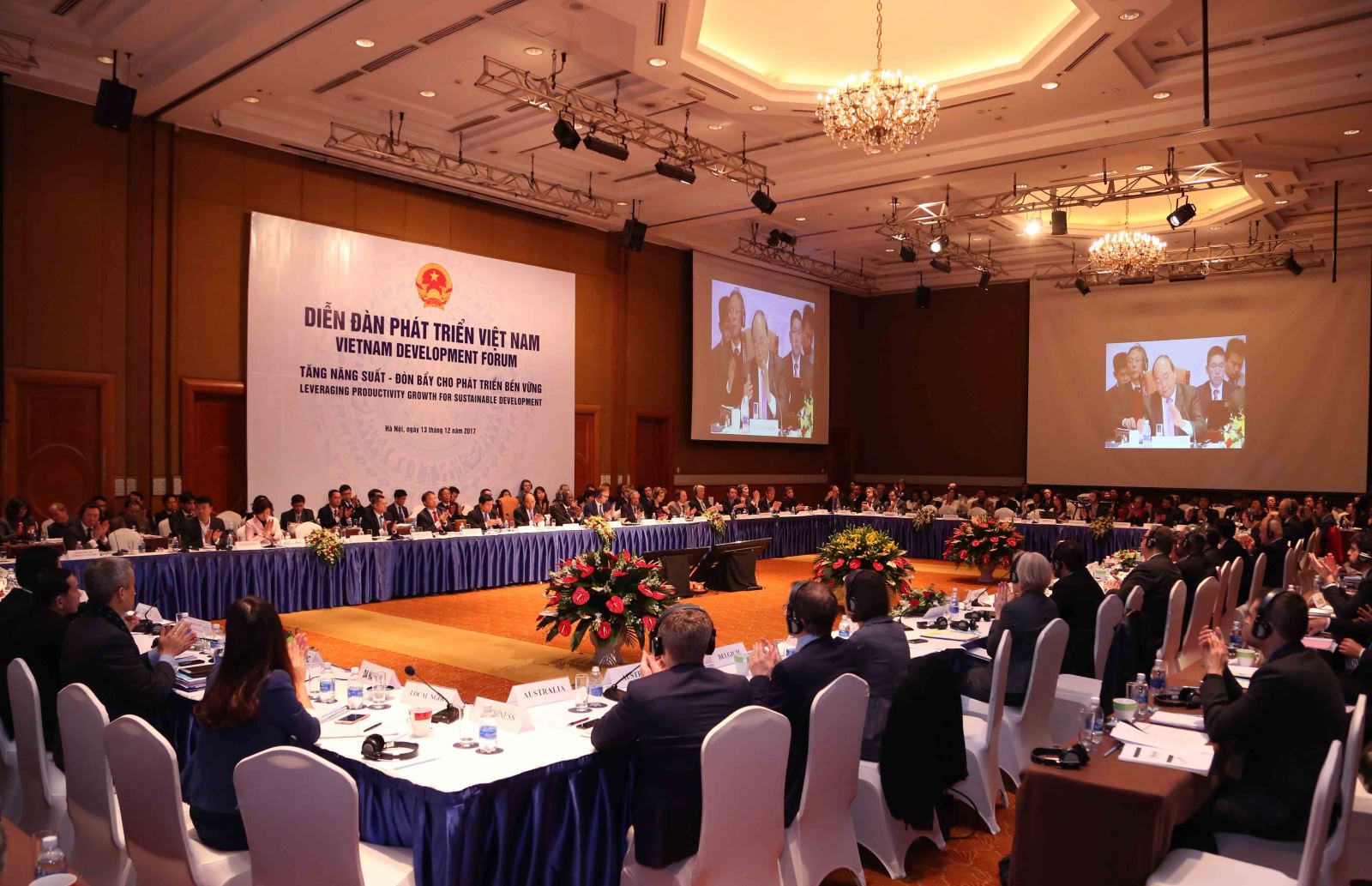 |
| Overview of the Forum. Photo: Duc Trung (MPI) |
At the Forum, in the discussion session on productivity growth: Global trends and challenges in Vietnam, development partners contributed opinions on trends and challenges for Vietnam's productivity through analysis of trends in productivity decline and increase as well as contributions to GDP growth. Examines key forces influencing productivity growth, including structural transformation, FDI linkages/networks, innovation in state-owned enterprises, private enterprises, small and medium-sized enterprises and some key trends in agricultural productivity, services and manufacturing, clear institutions and state programs for efficiency.
During the discussion session on unleashing productivity for Vietnam's sustainable development, development partners shared how to harmonize supply and demand for labor skills and how to innovate in businesses to help Vietnam improve its position in the value chain. The speakers also gave some recommendations for Vietnam to take advantage of technology, better connect with FDI and global networks, as well as promote international trade opportunities to enhance competitiveness and increase productivity. Vietnamese Government agencies also provide feedback on sector-specific policy issues to help address Vietnam's productivity challenges.
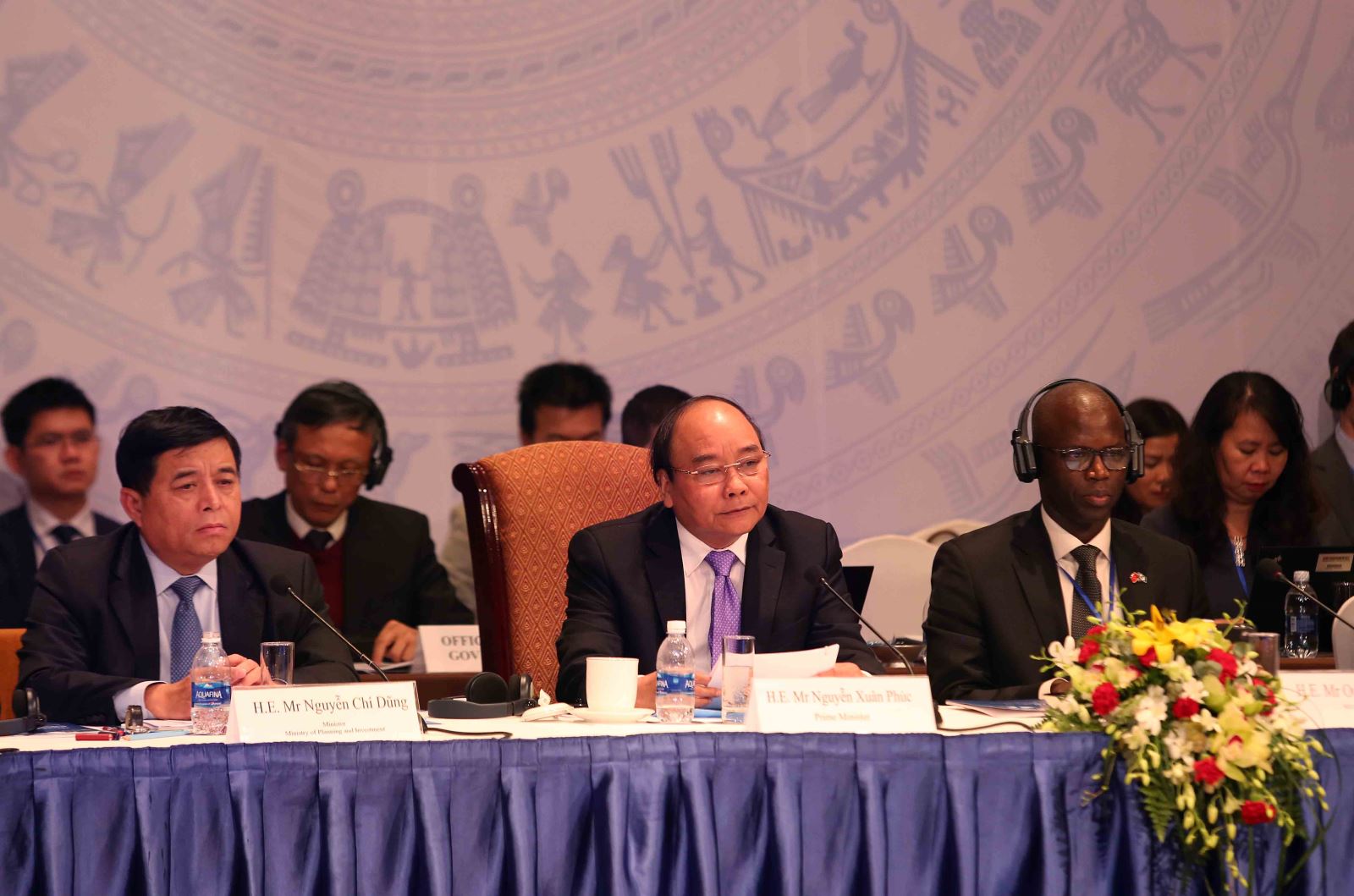 |
| Prime Minister Nguyen Xuan Phuc gave a directive speech at the Forum. Photo: Duc Trung (MPI) |
Speaking at the Forum, to continue improving productivity and creating leverage for sustainable development in the coming time, Prime Minister Nguyen Xuan Phuc requested that the Government must strive to create a comprehensive competitive environment in all three aspects: Synchronous development of all types of markets; Increase market scale and competition level; Ensure fair and equal competition. Competition needs to truly become the main pressure for all people, businesses and the whole country to improve the efficiency of technology use, increase the efficiency of resource allocation and improve productivity.
Second, continue to improve the efficiency of resource use. First of all, the allocation of state resources is associated with restructuring and improving the efficiency of public investment; Promote equitization and reform of state-owned enterprise governance; Developing organizations and public service units. Economic restructuring, shifting labor from the agricultural sector to the industrial and service sectors to further improve the country's overall productivity, towards a production that brings more value with fewer resources. At the same time, implement salary and wage reform according to market principles, consistent between increasing wages and increasing labor productivity.
Third, continue to strongly develop the private economic sector to become an important driving force of the economy. Fourth, proactively integrate internationally, promote internal strengths to overcome challenges, and effectively exploit opportunities from the Free Trade Agreements that Vietnam has been negotiating to participate in, especially new generation free trade agreements. Fifth, to be able to effectively implement the above productivity-boosting measures, the Government must steadfastly maintain socio-political stability, consolidate a stable macroeconomic foundation, and be determined to realize sustainable development goals, these are prerequisites for the success of all investment projects and business plans./.