
 Procedures

Online mailbox
Receiving feedback and proposals from organizations and individuals.

After TPP: Clothing and footwear production from A to Z With tens of thousands of tax lines to be cut to 0% according to the roadmap, the textile industry […]
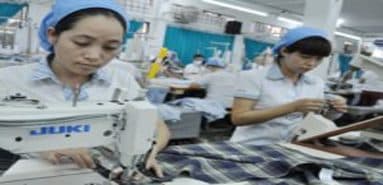
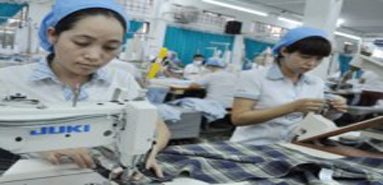 With tens of thousands of tax lines that will be cut to 0% according to the roadmap, Vietnam's textile, garment and footwear industry is expected to benefit the most from TPP. The race begins…
The race for new investment, capital increase, scale expansion... in this field is going on fiercely.
In this race, enterprises with foreign investment (FDI) are dominating, with a total investment capital in Vietnam's textile and garment industry currently about 10 billion USD, the goal is to make from raw materials to export products to enjoy tax incentives.
Increase investment, increase capacity
Even though we increased two production lines, equivalent to about 20% of capacity to increase production capacity to 9 lines right from the beginning of 2015, Mr. Nguyen Chi Trung - director of Gia Dinh Shoe Co., Ltd. - said it still "cannot meet the order needs of orders from the US". In addition to increasing production capacity, this enterprise has also invested more than 200 billion VND to build a supporting industrial cluster for the leather and footwear industry in Tan Uyen (Binh Duong).
"It was built in early 2015, but up to now there have been 7 businesses operating here. Therefore, I believe that 30 hectares of this industrial cluster will soon be filled, because many businesses will have to race to meet origin requirements to benefit from the TPP" - Mr. Trung commented.
Mr. Tran Quang Nghi, Chairman of the Board of Directors of Vinatex, also said that the group has about 12 projects being implemented, such as Phu Hung fiber project (Hue), Phu Cuong fiber project (Dong Nai), Yen My fiber project (Hung Yen). Regarding textile dyeing, there are at least four very important projects of Vinatex in Da Nang, Long An, Quang Ngai and Nha Trang that are running at full speed.
"We want to invest in more projects to increase our ability to be self-sufficient in raw material supply, but capital is limited, land funds for investment projects in dyeing and cotton growing are still difficult... Dependence on imported raw materials in the future is inevitable" - Mr. Nghi shared.
Meanwhile, FDI enterprises are dominating the race to benefit from TPP. In just the first 10 months of 2015, the FDI sector has poured nearly 2 billion USD into the textile industry with many huge projects, the largest of which is the 660 million USD fiber production and processing project in Dong Nai of Hyosung Group (Korea).
In addition, Far Eastern Group (Taiwan) also quickly invested about 274 million USD in supporting industries for the garment industry, expected to continue expanding the factory with an investment scale of 700 million to 1 billion USD to anticipate tax benefits from TPP.
Worry about "nothing to do, no choice"?
According to Mr. Vu Duc Giang - Chairman of the Vietnam Textile and Apparel Association (Vitas), when TPP takes effect, product lines such as shirts, pants, elastic clothes, sportswear... will "immediately" enter Vietnam's important export markets, of which the US market accounts for nearly 50% of the total current export turnover of the entire industry. "Except for some sensitive product lines that will be cut according to the roadmap, most tax rates will be reduced to 0% compared to the current average of 17.5%. The industry's growth rate will also increase to 25 - 30%/year in the first year TPP takes effect, instead of the current rate of 17 - 18%/year" - Mr. Giang predicted.
However, Professor Nguyen Mai - president of the Association of Foreign Investment Enterprises - believes that the current phenomenon of foreign investors massively investing in Vietnam is also worthy of startling Vietnamese policymakers.
Because who is really benefiting from TPP? According to Mr. Diep Thanh Kiet - vice president of the Ho Chi Minh City Textile, Embroidery and Knitting Association, the FDI business sector will benefit and even reap early results from the TPP because the production structure of the domestic textile and garment industry is "flawed".
In fact, FDI accounted for more than 60% of Vietnam's total textile and garment export turnover in 2014 (24.5 billion USD) and 65% of the 10 billion USD export turnover of the leather and footwear industry.
According to Mr. Kiet, currently domestic enterprises can only meet less than 1% of the demand for cotton, 30% of the demand for fiber, and less than 20% of the demand for fabric.
While the TPP requires the principle of enjoying the optimal tax rate (0%), the condition "from yarn onwards" must be met, but Vietnam is importing yarn and fabric mostly from China, Korea... - countries not within the TPP bloc.
“Not many domestic businesses have enough financial potential to revive this weak supporting industry, even after more than 5 years of waiting for TPP negotiations” – an industry expert worries.
Youth