
 Procedures

Online mailbox
Receiving feedback and proposals from organizations and individuals.

VEAEUFTA Agreement is about to take effect: Opportunity to increase exports to the EAEU market Vietnam Free Trade Agreement - Eurasian Economic Union […]
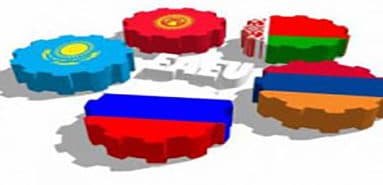
The Vietnam - Eurasian Economic Union Free Trade Agreement (VEAEUFTA) is expected to take effect in September this year. Accordingly, many of Vietnam's strong export products such as textiles, agriculture, seafood, footwear... will have growth opportunities thanks to tax exemptions and reductions.
Potential market
Mr. Dang Hoang Hai - Director of the European Market Department (Ministry of Industry and Trade) - said that the Eurasian Economic Union (EAEU) including countries: Russia, Armenia, Belarus, Kazakhstan and Kyrgyzstan is a potential market and very suitable for Vietnam's strong products. Furthermore, Vietnam is the first partner to sign a free trade agreement with this alliance, so the opportunities for Vietnamese export businesses are huge. With nearly 90% of tariff lines being cut and import tariffs reduced, of which 59.3% were eliminated as soon as VEAEUFTA took effect, this is a huge advantage for Vietnamese businesses in competing with other countries.
 According to the content of the agreement, the two sides commit to open the market with 9,927 tariff lines (87.4-95.7%). The group not committed to opening the market is 1,433 tariff lines (12.6-4.3%). In there,Some of Vietnam's strong products are given quite high incentives.
For seafood products, according to the Import-Export Department (Ministry of Industry and Trade), before VEAEUFTA, the tax rate of this product was about 35%, but when the FTA takes effect, with 95% of products fully open, the maximum roadmap is 10 years (of which more than 71% of tariff lines are completely eliminated immediately after the agreement takes effect, equivalent to 100% of the total average export turnover in 3 years from 2010-2012 of Vietnam entering the EAEU); The remaining 5% of tariff lines are products that Vietnam does not have export strengths. This is an advantage that helps Vietnamese seafood products be highly competitive compared to products from other countries.
Regarding leather and footwear products, 77% of tariff lines are committed to being reduced, of which 73% of tariff lines are completely eliminated within a maximum 5-year roadmap, equivalent to more than 99% of Vietnam's total average export turnover in 3 years (from 2010-2012) to this market.
As Vietnam's main export product, textile and garment products have a great opportunity to penetrate the EAEU market with 82% of tariff lines committed to being reduced, of which 36% of tariff lines are completely eliminated as soon as the agreement takes effect. The Vietnam Textile and Apparel Association predicts that VEAEUFTA will help textile and garment turnover between the two sides grow by 50% in the first year and increase by an average of 20%/year in the next 5 years. The value of turnover increases from 700 million USD currently to 1 billion USD in the next 1-2 years, Vietnam will move from the 8th position of textile and garment supplier to the 4th position in this market.
Businesses need to be proactive
The opportunity to dominate the EAEU market already exists, but Vietnamese businesses also need to prepare good infrastructure conditions, comply with strict regulations as well as compete fairly with goods from other countries.
Ms. Nguyen Khanh Ngoc - Deputy Director of the European Market Department (Ministry of Industry and Trade) - recommended: To take advantage of the benefits brought by the agreement, businesses need to carefully study each tax line, especially the rules of origin... For example, with seafood, VEAEUFTA stipulates that raw materials must originate from within the bloc, but with shrimp and tuna, Vietnam is allowed to use imported materials to process export goods and must ensure the domestic ratio above. 40%.
Besides, one of the difficulties when trading with this area is high transportation costs. This requires businesses to have a warehouse and yard system to reduce transportation costs.
Source: Industry and Trade Electronic Newspaper