
 Procedures

Online mailbox
Receiving feedback and proposals from organizations and individuals.

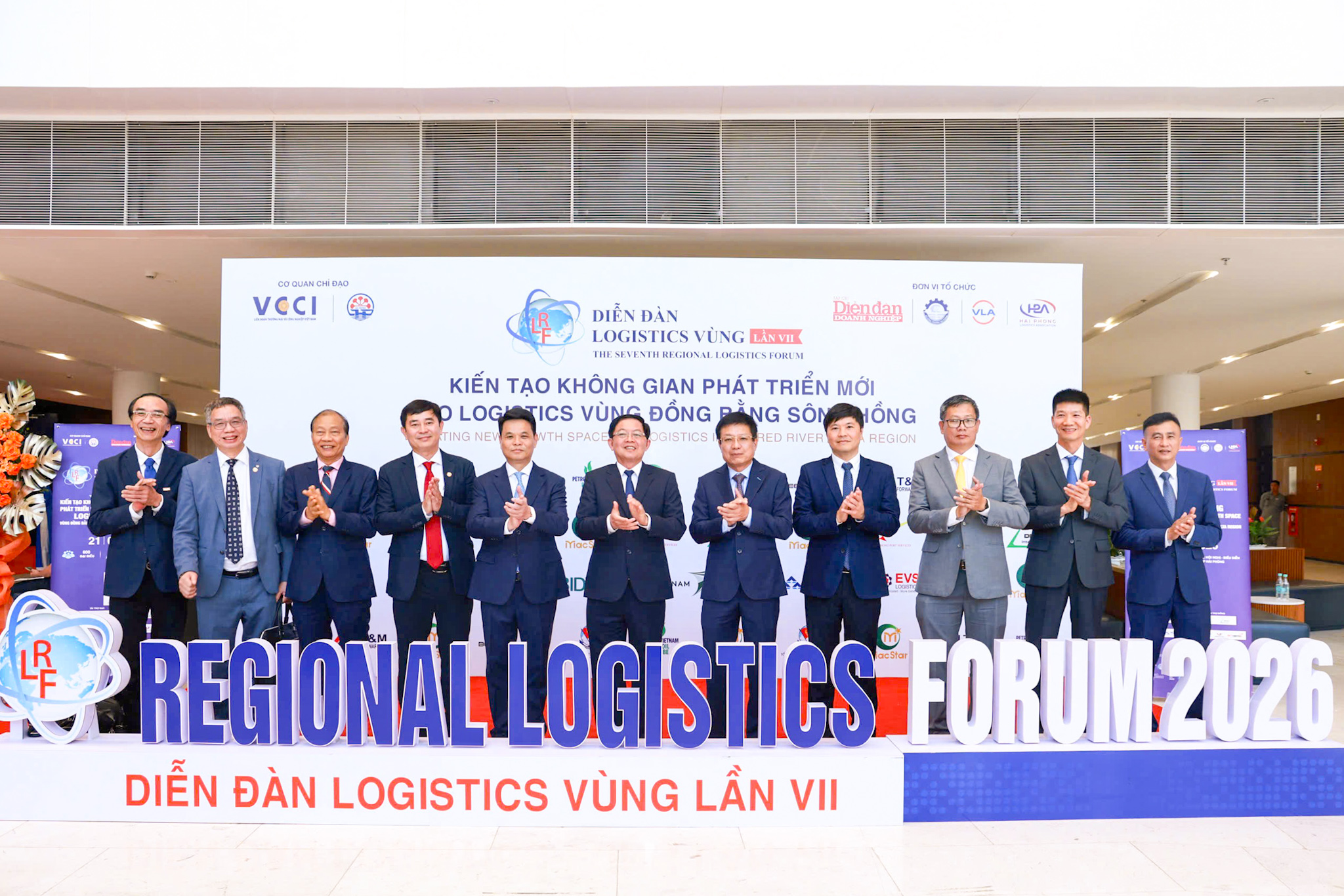
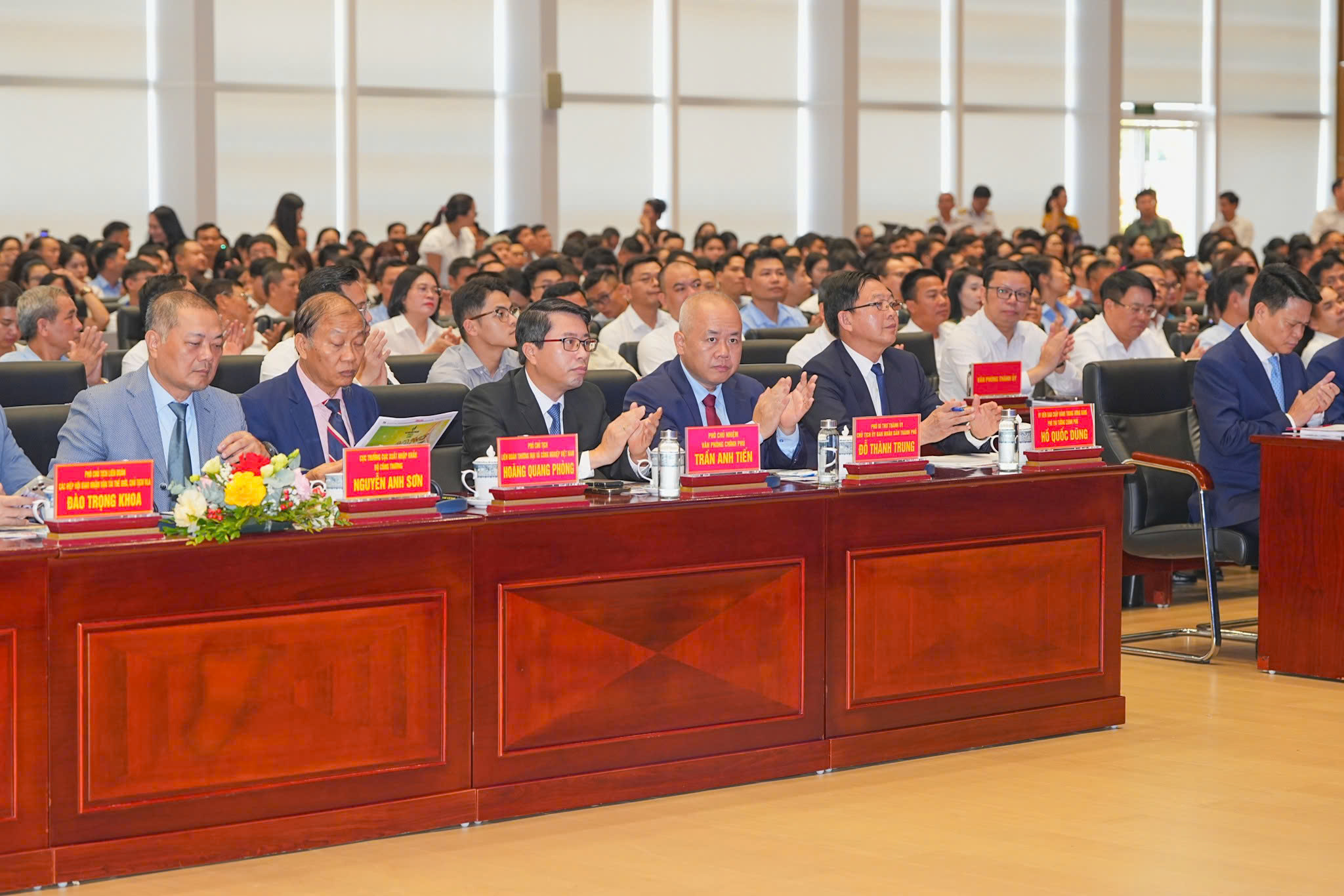
Attending the Forum from the Central Government were comrades: Ho Quoc Dung, Member of the Party Central Committee, Deputy Prime Minister; Nguyen Ngoc Tuan, Deputy Head of the Central Policy and Strategy Committee; Ho Sy Hung, President of the Vietnam Chamber of Commerce and Industry (VCCI).
From Hai Phong city were comrades: Le Ngoc Chau, Member of the Party Central Committee, Secretary of the City Party Committee, Head of the Hai Phong City National Assembly Delegation; Do Thanh Trung, Deputy Secretary of the City Party Committee, Chairman of the City People's Committee; representatives of the City Party Committee, People's Council, City People's Committee; representatives of departments, agencies, and localities.
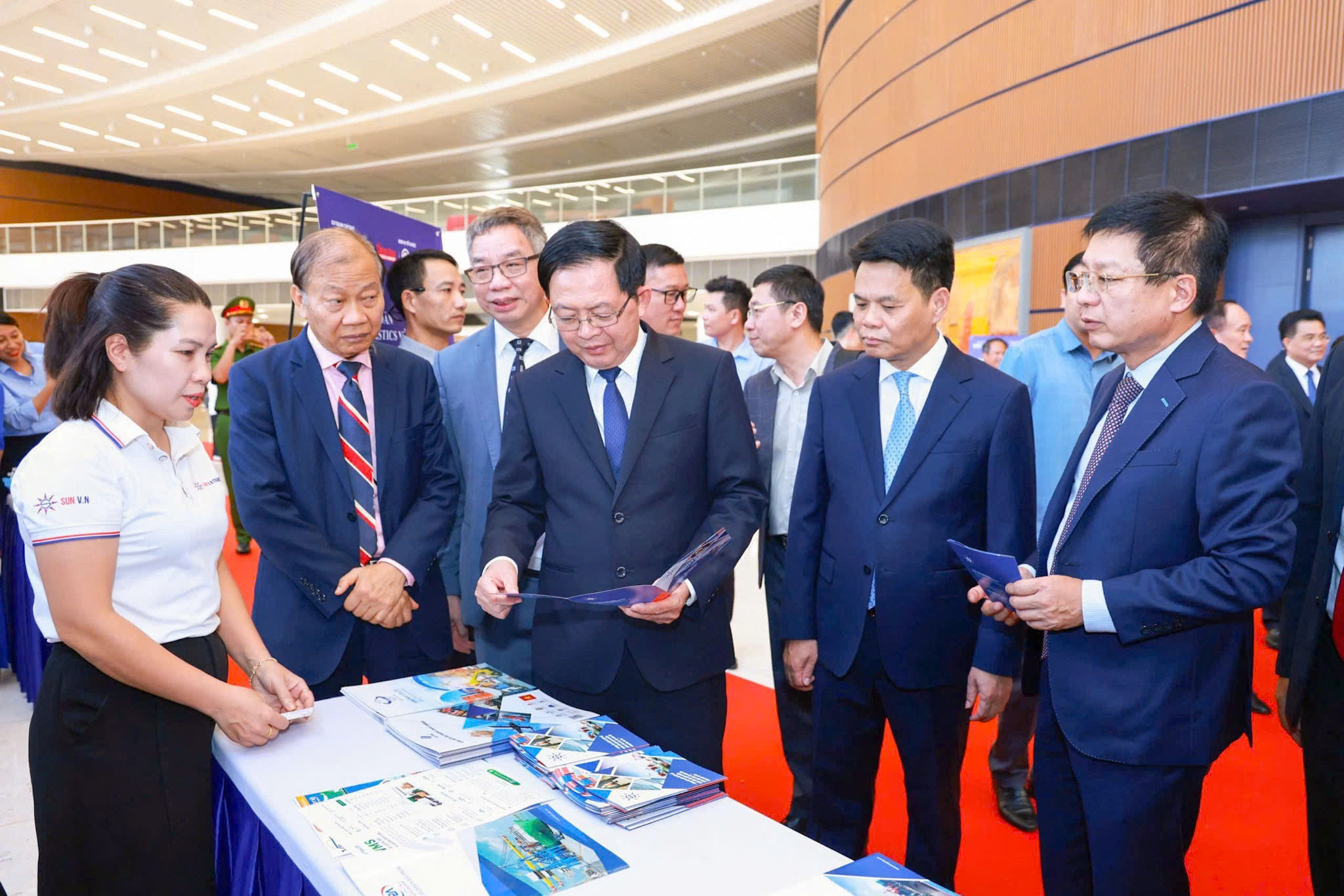
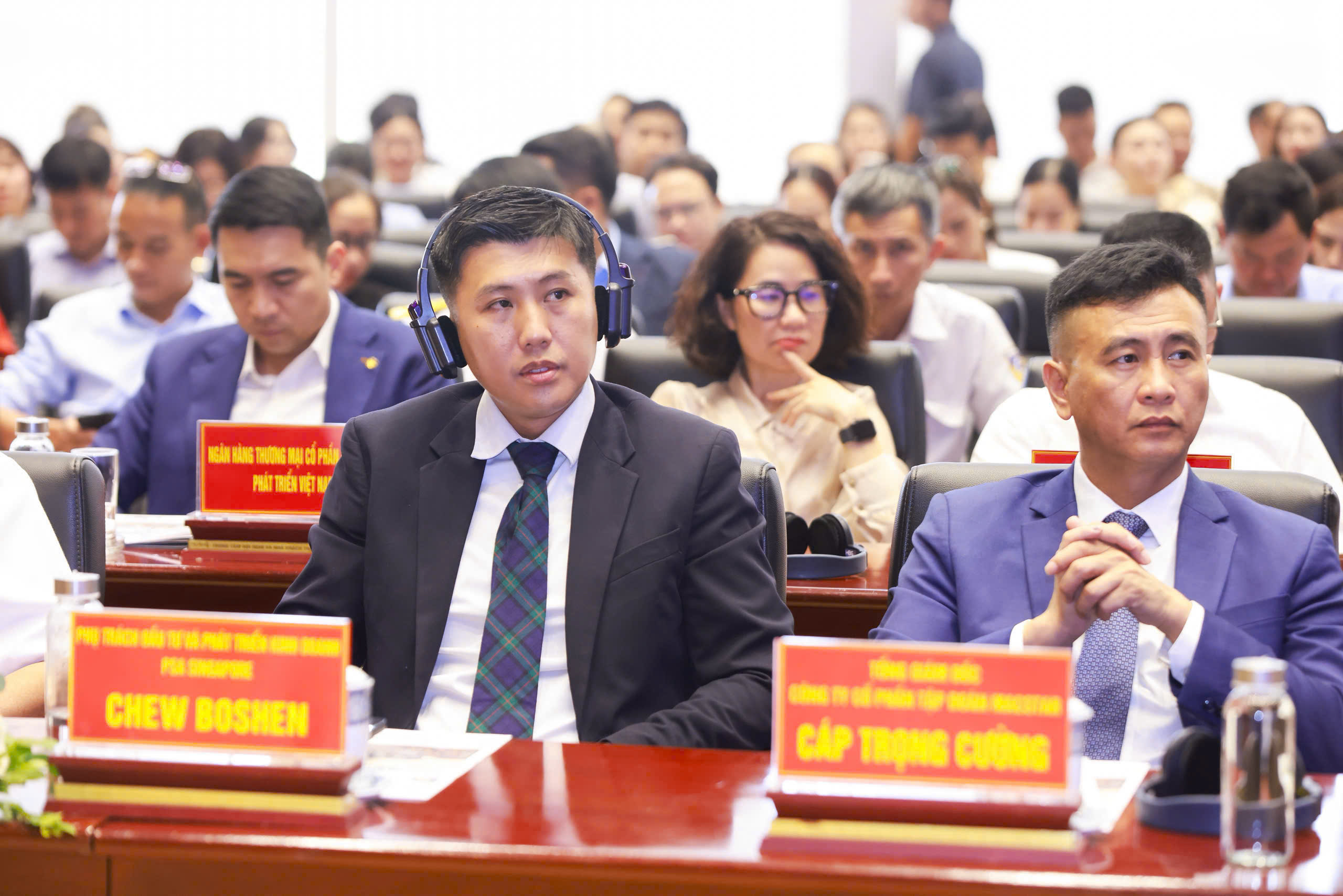
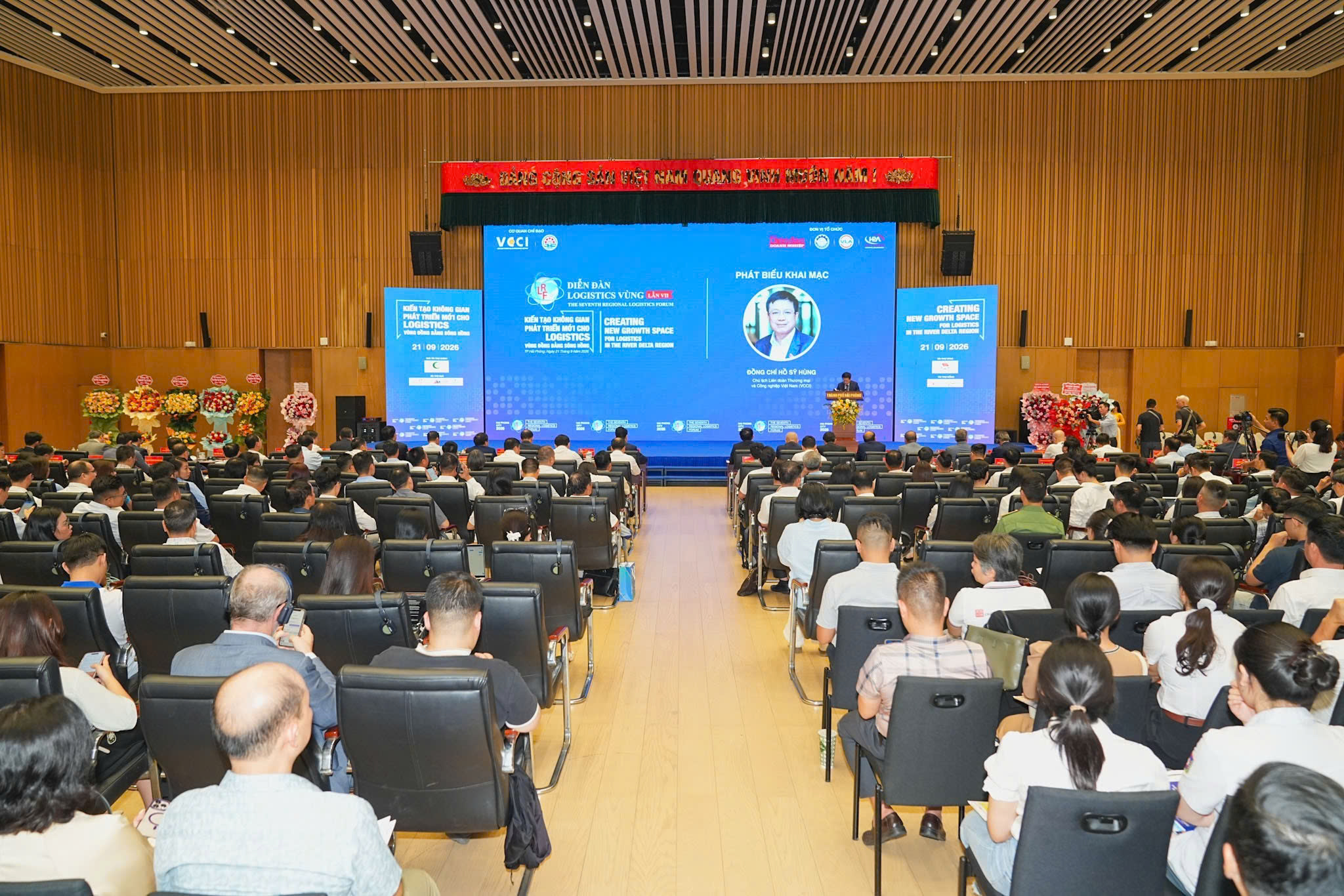
The event was attended by nearly 600 delegates from central departments, ministries, and agencies; representatives of international organizations, domestic and international logistics associations, research institutes, universities, banks, credit institutions; corporations and enterprises operating in the fields of seaports, warehousing, transportation, logistics, and import-export.
Organized in a direct format, combined with media communication and live streaming on the digital platforms of the organizing unit. The Regional Logistics Forum (RLF) is an annual economic event organized by VCCI in coordination with provinces, cities, and relevant units since 2021. Through 6 events held in key economic regions, the Forum has contributed to connecting businesses, promoting investment, and developing the logistics industry.
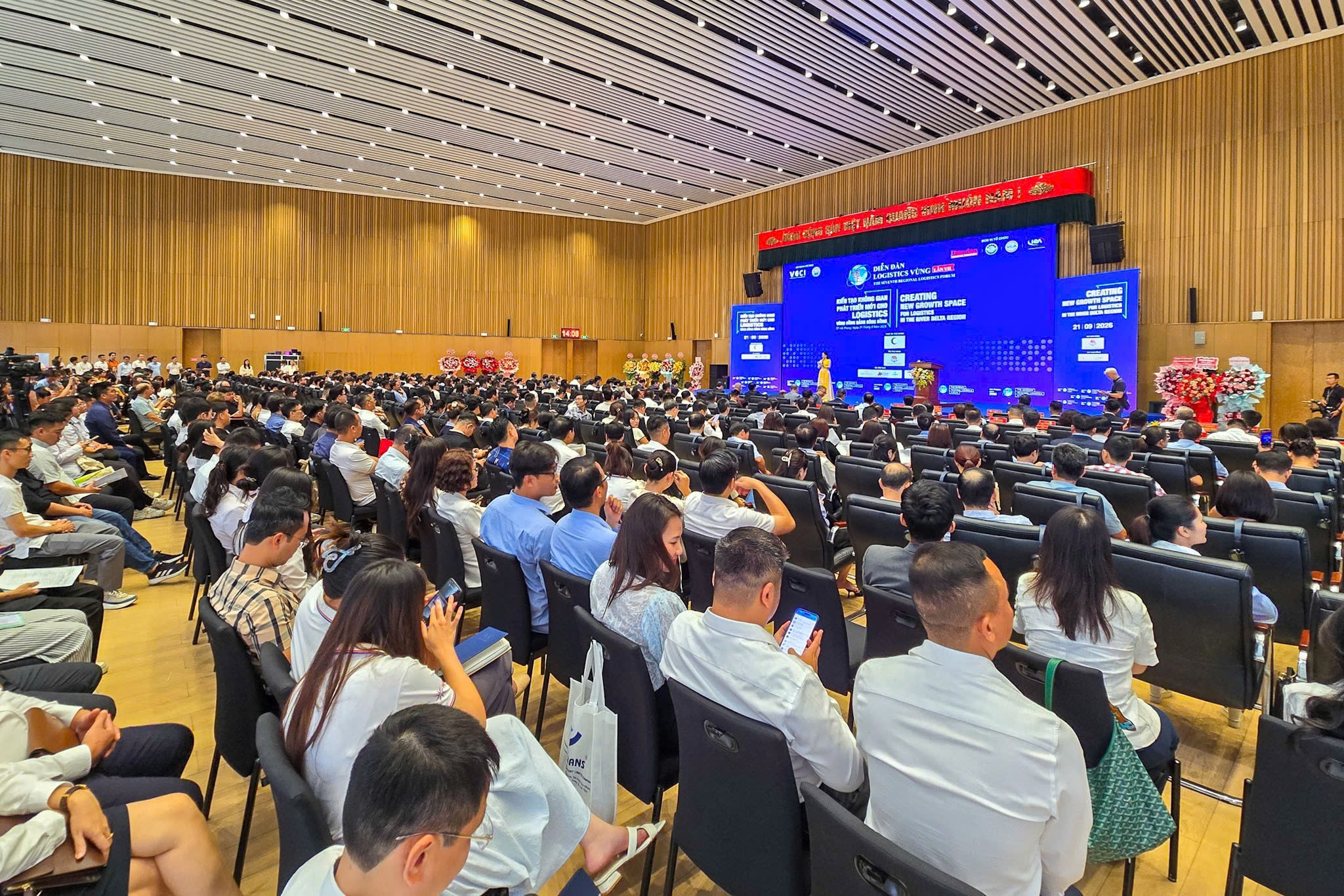
Returning to the Red River Delta for the seventh time, the Forum focused on discussing orientations and potential for logistics development; identifying and removing bottlenecks; attracting investment resources for logistics infrastructure development, including the Lach Huyen international gateway port area, Free Trade Zone, international logistics center, deep-water seaport, and smart warehousing infrastructure. Discussions also covered green logistics, AI application in supply chains, strengthening connections between logistics and import-export businesses, contributing to enhancing competitiveness and creating momentum for socio-economic development in the Red River Delta.
Strengthening linkages, promoting Hai Phong's role as a logistics hub
Speaking at the opening of the Forum, VCCI President Ho Sy Hung emphasized that Resolution No. 27-NQ/TW dated August 28, 2026, of the Politburo identified the Red River Delta as a unified development space, in which linkages between localities are strengthened and the advantages of each locality are promoted, especially in the field of logistics.
According to the VCCI President, Vietnam's logistics industry is growing at an average rate of 14-16% per year, with a market size of about 45-50 billion USD. In this context, the Red River Delta, with its gateway position connecting the North with the whole country and internationally, continues to affirm its role as an important logistics growth pole of the nation.
In this development space, Hai Phong plays a particularly important role with its advantages in seaports, logistics, and international connectivity. The VCCI President believes that Hai Phong is not only a locality with positive industrial development results but also plays the role of a seaport and logistics hub for the region, creating connections between the production area of the Red River Delta and domestic and international markets.
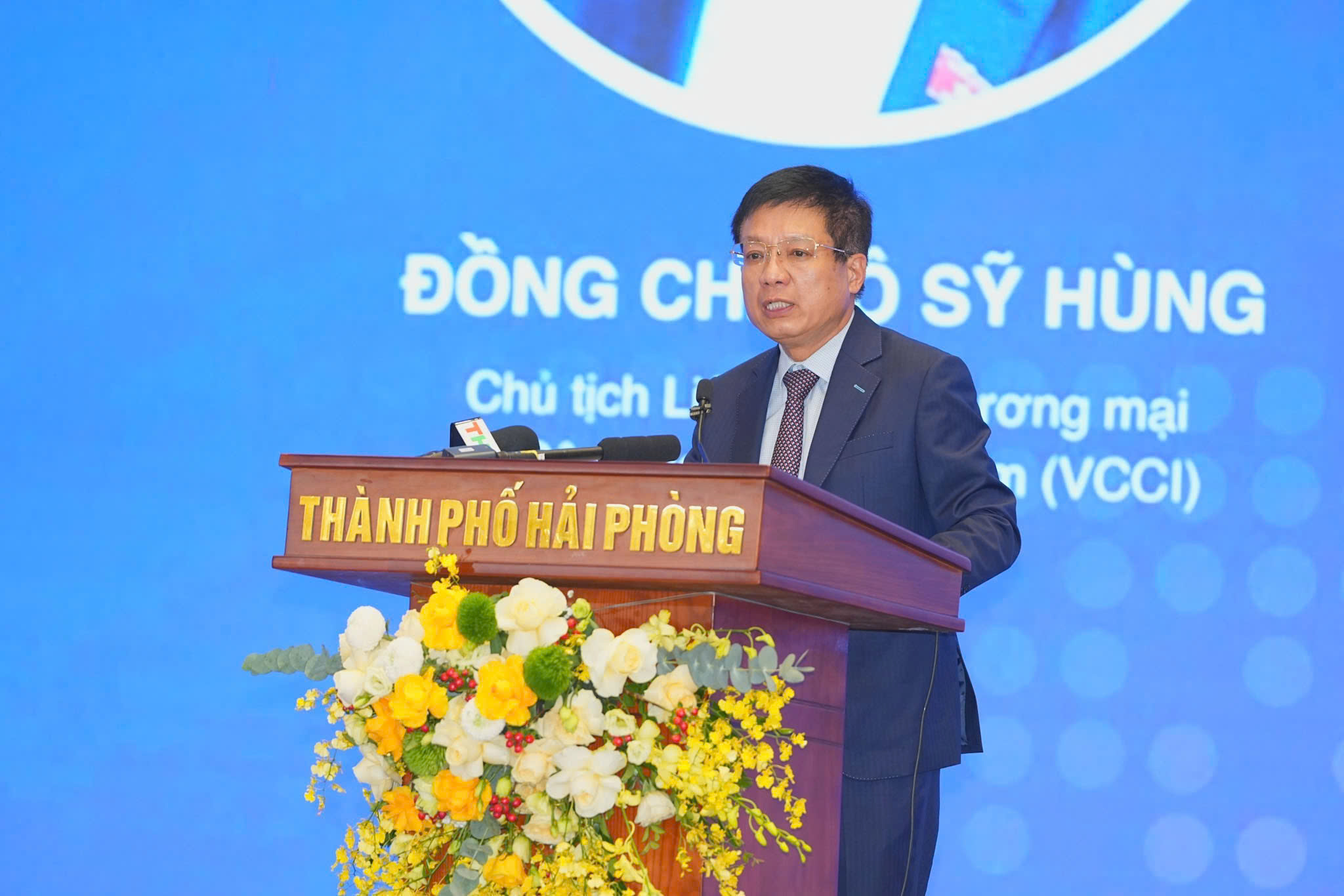
Resolution 27-NQ/TW also identifies Hai Phong as continuing to promote its strengths in seaports and logistics. This is an important basis for the city to leverage its potential, gradually forming a modern logistics ecosystem that meets international standards and enhances the connectivity capacity of the entire region. The VCCI President proposed that the Forum focus on discussing 4 contents: improving the business environment, reducing logistics costs; promoting green logistics and sustainable development; strengthening logistics connections with commodity sectors, forming a business ecosystem; promoting the role of logistics in leveraging free trade agreements, supporting Vietnamese enterprises to integrate deeply. At the same time, he expressed hope that Hai Phong would continue to innovate governance, complete planning and logistics development orientation, effectively exploit the advantages of its seaport and international gateway position; thereby strengthening Hai Phong's connections with localities in the region, ASEAN, and the world, contributing positively to the development of the Red River Delta economic space.
The VCCI President also affirmed that he would continue to accompany Hai Phong, the business community, and localities in implementing recommendations and proposals from the Forum, putting logistics development solutions into practice.
Hai Phong identifies logistics as one of the important growth drivers in the new period
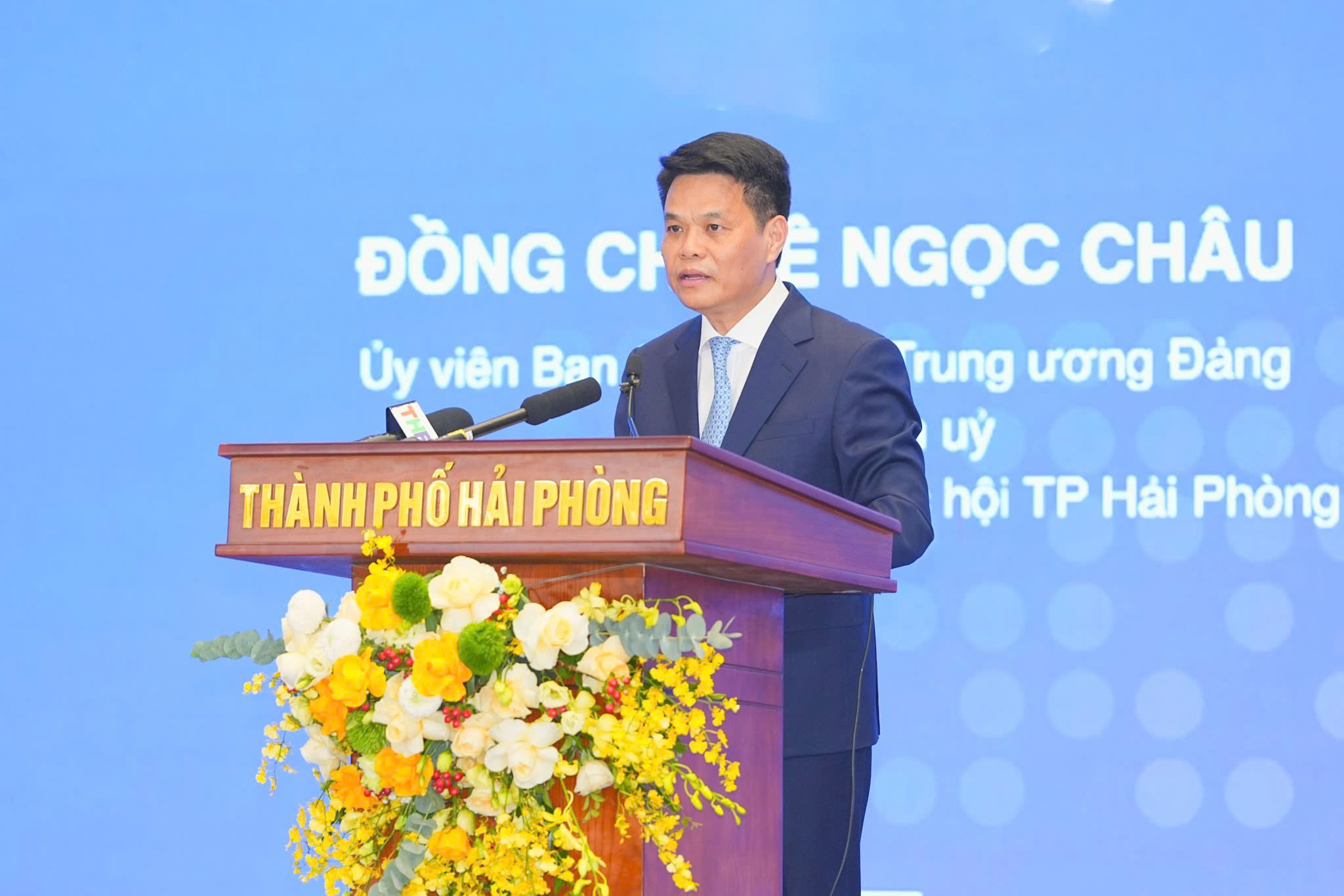
Speaking at the Forum, Secretary of the City Party Committee, Head of the Hai Phong City National Assembly Delegation Le Ngoc Chau emphasized that Hai Phong is an industrial center, a seaport, a transportation hub, and a growth pole of the region; with a diverse transportation system including roads, seaways, airways, railways, and inland waterways, logistics increasingly plays an important role in the development space of the city and the entire region.
In recent years, logistics services in the city have developed strongly, with an average growth rate of over 10% per year in the 2021-2025 period, contributing about 11.5% to the city's GRDP. Cargo throughput at Hai Phong port has continuously increased, contributing to maintaining the city's high economic growth momentum.
In the context of global supply chain restructuring, Hai Phong identifies logistics and seaport services as one of the important growth drivers in the new period; focusing on synchronously connecting seaports, airports, railways, roads, and logistics centers, while promoting digital transformation, automation, and green transformation.
Secretary of the City Party Committee Le Ngoc Chau stated that Hai Phong will focus on 5 groups of tasks: building a constructive government, improving the investment and business environment; enhancing planning quality, strengthening regional linkages and international cooperation; completing strategic infrastructure, expanding development space; developing logistics centers, Free Trade Zones, economic zones, industrial parks, and deep-water ports, attracting strategic investors; and developing high-quality human resources to meet the requirements of digital transformation and international integration.
The city continues to promote its role as an important development pole in the Hanoi - Hai Phong - Quang Ninh triangle, strengthening connections with localities in the region, Vietnam - China economic corridors, ASEAN, and internationally.
The Secretary of the City Party Committee affirmed that Hai Phong will continue to accompany, remove difficulties, and create a stable and transparent investment environment for businesses and investors; at the same time, strengthening linkages, sharing benefits, and cooperating with localities, the business community, and international partners, contributing to enhancing the competitiveness and sustainable development of the entire region.
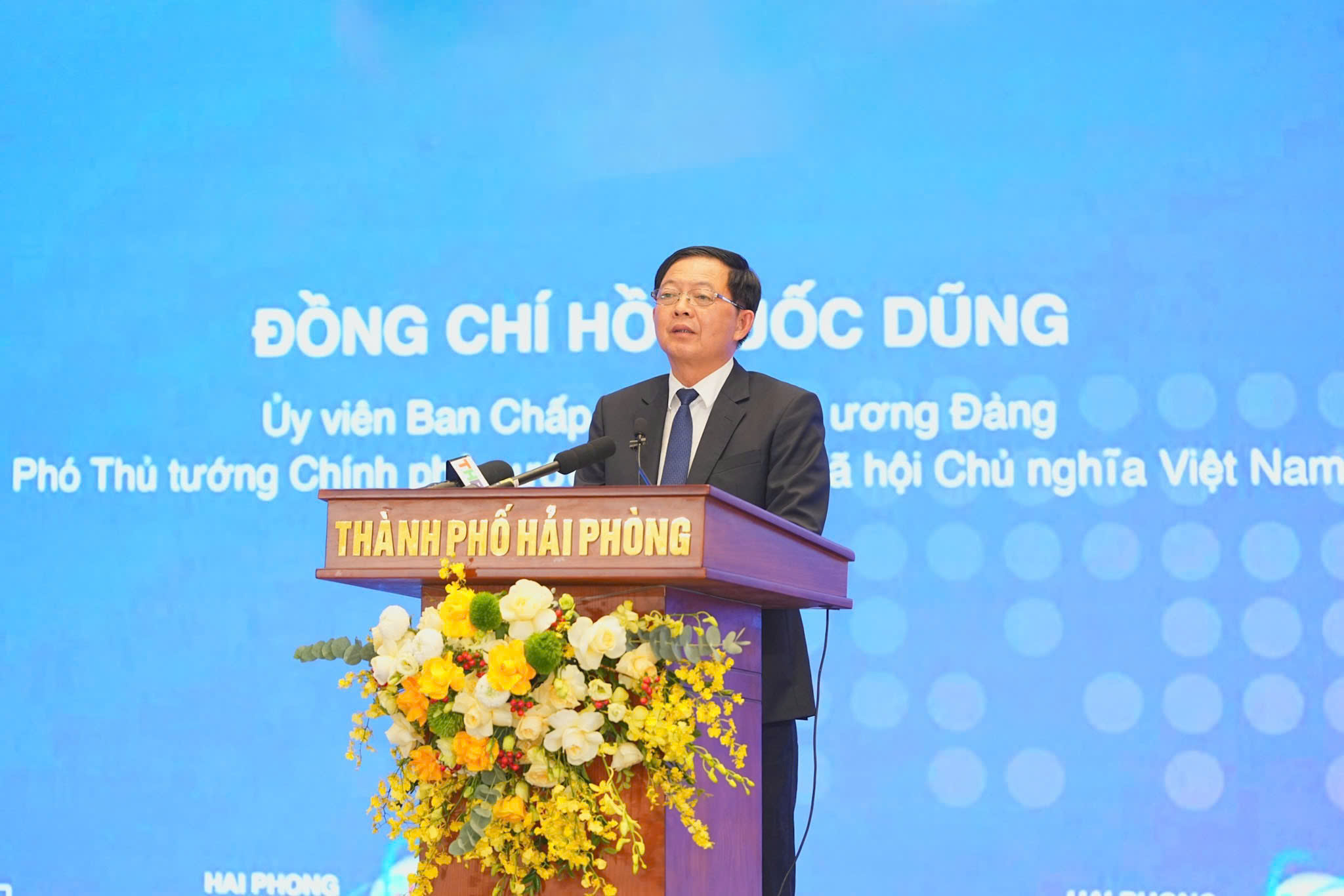
Delivering a guiding speech at the Forum, Deputy Prime Minister Ho Quoc Dung emphasized that logistics is no longer merely a supporting service industry but an important part of economic infrastructure, playing a direct role in enhancing the competitiveness of goods, businesses, and the economy.
For the Red River Delta, the Deputy Prime Minister believes that the region has many advantages to become an important logistics gateway for the North. However, it is necessary to overcome the situation of fragmented investment and unsynchronized connections; strongly shift from a "management, support" mindset to a "constructive, service-oriented, and development" mindset, making logistics an important service economic sector, contributing to optimizing supply chains, connecting production, supply, and consumption.
According to the Deputy Prime Minister, Vietnam's logistics has maintained a growth rate of 14-16% per year in recent times, contributing about 4.5-5% to GDP; logistics costs have decreased to about 16% of GDP. Seaport infrastructure, airports, expressways, warehouses, and logistics centers have been gradually invested in, and the logistics business community is increasingly developing.
Implementing the "Strategy for developing Vietnam's logistics services for the period 2025-2035, with a vision to 2050", the Deputy Prime Minister proposed focusing on implementing 5 key tasks: Implementing a substantive national logistics strategy with focus and priorities, aiming to reduce logistics costs and enhance the competitiveness of goods; developing logistics infrastructure synchronous with the transportation system; continuing to improve institutions, laws, and data connection and sharing; developing a modern, green, smart seaport system; strongly shifting from a mindset of developing logistics according to administrative boundaries to organizing logistics according to economic regions, economic corridors, and supply chains.
For the Red River Delta, the Deputy Prime Minister requested the completion of the planning system, rational production allocation, and the development of highly connected transportation, urban, and logistics infrastructure. In particular, Hanoi should promote its role as a service, consumption, financial, innovation, human resource training, and aviation center; Bac Ninh and Hung Yen should connect industrial production areas with import-export gateways; Ninh Binh should promote its strengths in tourism and marine economy; Quang Ninh should promote its advantages in border gates, border trade, marine economy, and international connectivity; Hai Phong should maintain its role as a maritime gateway and international logistics center for the North.
The Deputy Prime Minister affirmed that the Government will continue to improve institutions, develop infrastructure, improve the investment and business environment, and create favorable conditions for businesses to invest seriously, long-term, and sustainably in Vietnam.
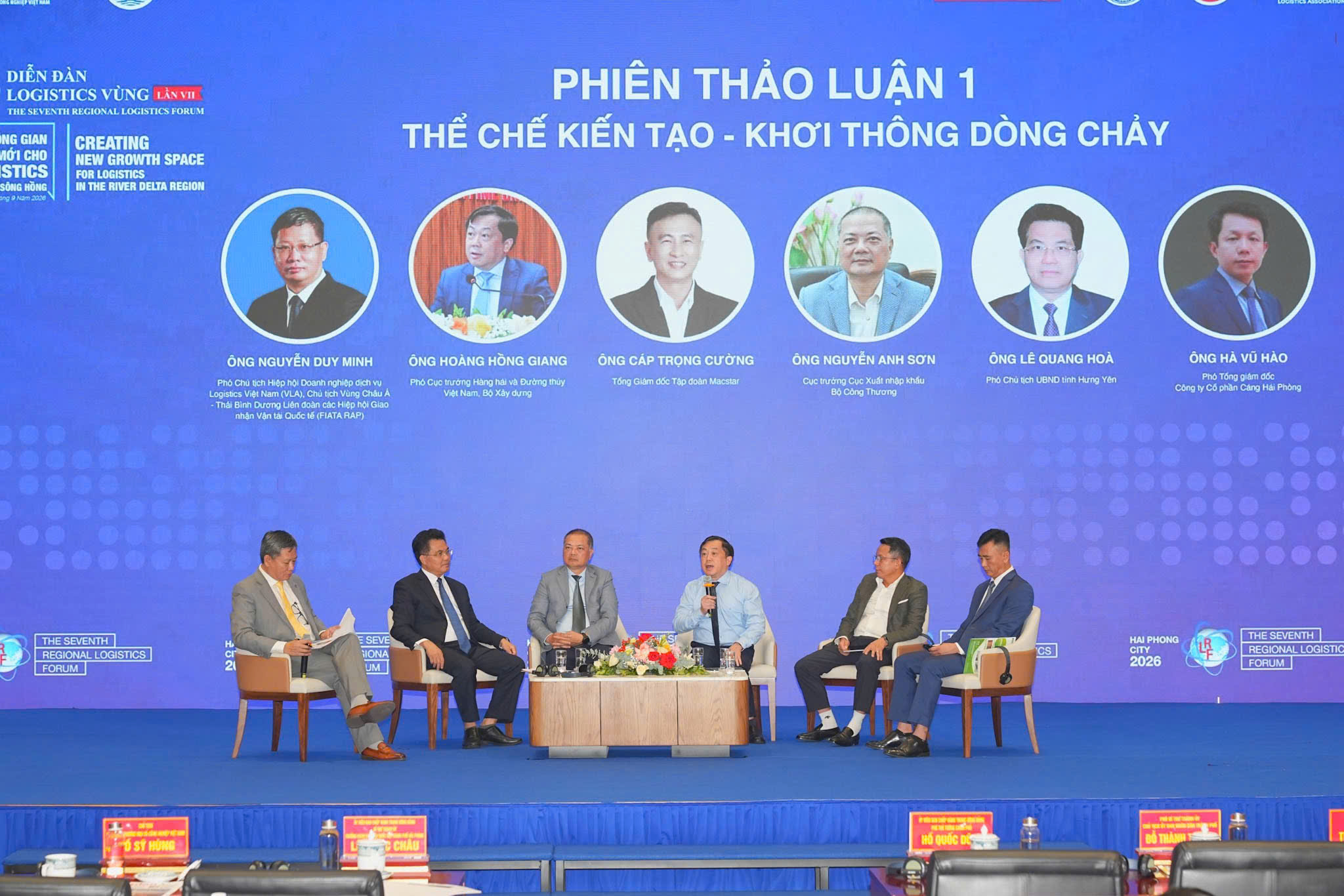
Within the framework of the Forum, discussion sessions were held with the participation of leaders of management agencies, localities, associations, experts, and domestic and international businesses.
The contents focused on improving institutions and policies for maritime, waterway, and logistics development; connecting seaports with waterways, developing multimodal transport, green logistics, and digital transformation. Delegates also discussed orientations and mechanisms to attract investment for the development of the Lach Huyen International Gateway Port area, completing infrastructure, forming green transport corridors, logistics centers, and a modern logistics ecosystem, strengthening Hai Phong's connections with the Red River Delta, ASEAN, and internationally.
Also at the program, the Organizing Committee presented certificates to businesses accompanying the Forum, acknowledging the coordination and contributions of the business community to the event and activities connecting and promoting logistics development in the Red River Delta./.
Minh Hao
Photo: Dam Thanh