
 Procedures

Online mailbox
Receiving feedback and proposals from organizations and individuals.

Investment from the United States into Vietnam enters a new phase. Minister of Planning and Investment Nguyen Chi Dung commented that investment from the United States […]
Minister of Planning and Investment Nguyen Chi Dung said that investment from the United States into Vietnam is entering a new phase, with positive changes in both quantity and quality. However, there is still a lot of work to be done to make it more effective.
Dear Minister, 2016 marks the 15th anniversary of the Vietnam - United States Trade Agreement taking effect (December 10, 2001 - December 10, 2016). How do you evaluate the bilateral trade and investment cooperation in recent times?
In 1995, Vietnam and the United States officially established diplomatic relations and in 2001, the Vietnam - United States Trade Agreement (BTA) took effect. These are very important milestones in the cooperative relationship between the two countries. That is also the foundation for the two countries' senior leaders to create a comprehensive partnership for the benefit of the two peoples, for peace, security and prosperity in the region and the world.
In fact, after only 2 years of the BTA taking effect, the United States has become Vietnam's No. 1 export market and has maintained it to this day, with two-way trade in 2015 reaching about 45 billion USD, an increase of 18.2% compared to 2014. Of which, with an export turnover of 33.5 billion USD, Vietnam has become the country with the largest export volume in ASEAN to the US market.
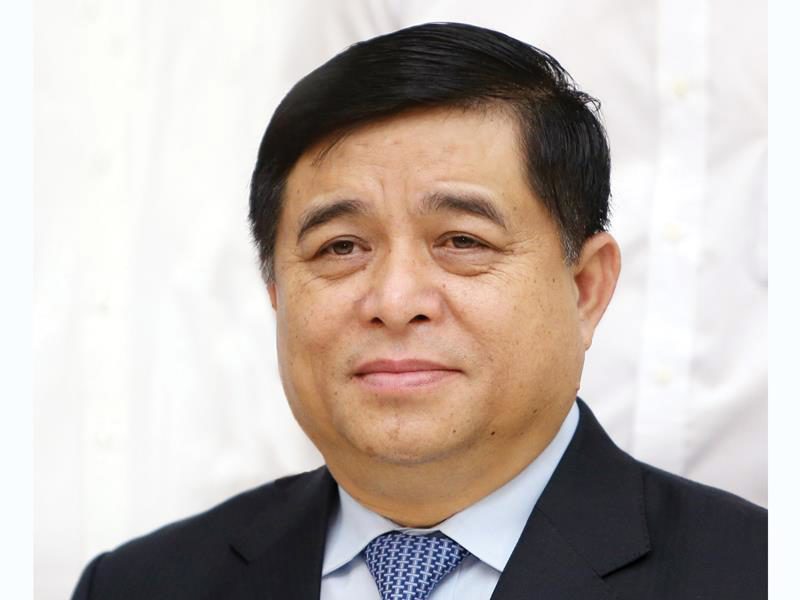 Minister of Planning and Investment Nguyen Chi Dung
It can be said that BTA has created a strong push for the two sides to continue signing many other cooperation agreements in the economic field, such as the Agreement on Textiles and Garment (effective from May 1, 2001), Agreement on Aviation (effective from January 14, 2004), Framework Agreement on Economic and Technical Cooperation, Memorandum of Understanding on Agricultural Cooperation (signed in June 2005) and going further, In May 2006, the two countries signed an Agreement to officially end bilateral negotiations between Vietnam and the United States on Vietnam's accession to the World Trade Organization (WTO), opening a new phase in economic and trade relations between the two countries.
In addition to trade cooperation, for a long time, we have been hoping to attract a large source of investment capital from the United States, but it seems that the results are not commensurate with the potential, Mr. Minister?
US businesses have invested over 11 billion USD in Vietnam, ranking in the Top 10 largest investing countries and territories in Vietnam today. Many large US corporations such as Intel, General Electric, Microsoft, AIG, Coca-Cola, Chevron... have made large investments in Vietnam and have operated effectively for many years.
It is also necessary to state clearly here that the statistical figure of more than 11 billion USD does not fully reflect US direct investment in Vietnam, because a number of US companies such as Intel, Coca-Cola, Procter & Gamble, ConocoPhillips... invest in Vietnam through their branches and subsidiaries in some other markets such as British Virgin Islands, Singapore, Hong Kong...
The above figures are encouraging, but compared to US investment in other countries in the region such as Singapore, Malaysia, or compared to investments from Korea, Japan, Singapore... in Vietnam, investment from the US into our country is still modest, not commensurate with the potential.
One of the main reasons is that up to now, the United States has not yet recognized Vietnam as a full market economy, still creating many barriers in trade and investment relations with Vietnam.
Besides, there are a number of other reasons that can be mentioned, such as the transparency of the Vietnamese legal system is not high; Law enforcement is inconsistent across localities; limitations in infrastructure, especially in the fields of energy, transportation...; shortage of highly skilled labor.
US investors, with strong financial potential and advanced and modern management skills, always demand transparency in legal policies, they are afraid of having to run around because of the "ask - give" mechanism. Mainly investing in high-tech fields, service fields with high levels of management such as finance - banking..., so US investors also require high quality human resources...
So as the head of the Planning and Investment sector, what will you do to remove those problems?
Points that limit the competitiveness of the investment environment need to be quickly overcome, especially in terms of administrative procedures. The key task of the Ministry of Planning and Investment in the coming time is to continue to strongly reform administrative procedures, perfect laws on investment and business, creating friendliness and peace of mind for people, businesses, and investors.
In particular, focus on completing documents guiding the implementation of the Investment Law and Enterprise Law 2014, as well as promoting the implementation of Resolution 19/NQ-CP on improving the investment environment that the Government has issued for 3 consecutive years, in order to create a complete, transparent and most favorable legal basis for businesses and investors, especially project implementation procedures at all stages such as land, construction, taxes, customs, etc. environment and labor to shorten time, reduce costs, and increase investment and business efficiency in Vietnam.
The Vietnamese government is trying to implement three strategic breakthroughs, including perfecting institutions, building infrastructure and improving the quality of human resources. When market economic institutions are fully implemented and more modern, I believe that mechanisms and policies will be transparent and predictable, making US investors in particular and foreign investors in general more secure when investing in Vietnam.
What does the Minister forecast about US investment in Vietnam in the near future?
Vietnam - US economic relations, including investment cooperation, are increasingly deepening, especially after the historic visit of General Secretary of the Communist Party of Vietnam Nguyen Phu Trong to the US in mid-2015 on the occasion of the two countries celebrating the 20th anniversary of establishing diplomatic relations.
Similarly, the official visit to Vietnam by US President Barack Obama, as well as the meetings of senior leaders of the two countries on the sidelines of international and regional forums, have and will continue to make important contributions to deepening the Comprehensive Partnership between the two countries in all fields.
Promoted political and diplomatic relations will create an important foundation and trust for businesses of the two countries to promote trade and investment cooperation.
In addition, the conclusion of negotiations for the Trans-Pacific Partnership Agreement (TPP) by Vietnam, the United States and 10 other countries in October 2015 is an unprecedented opportunity to further promote comprehensive relations between the two countries. This will contribute to increasing Vietnam's export turnover to the US market, making the US the leading investor in Vietnam.
Vietnam's recent signing of free trade agreements with the EU, Korea, and the Eurasian Economic Union and the official establishment of the ASEAN Economic Community (AEC) at the end of 2015 are also important impulses to promote and expand US investment in Vietnam.
With rising labor costs in some countries in the region, many US multinational corporations have turned to Vietnam, where there is a young, abundant, competitive and relatively well-trained labor source.
It can be said that Vietnam is a reliable investment address for US businesses. For example, in recent years, the US Embassy in Singapore has coordinated with the American Chamber of Commerce (AmCham) to organize many US business delegations based in Singapore, led by the Ambassador himself, to Vietnam to seek investment opportunities.
Up to now, many large US corporations have considered Vietnam a potential strategic market and a key point in their global supply chains. In particular, after the conclusion of TPP negotiations, Vietnam has become "different" and more attractive to US investors when compared to other countries in Southeast Asia.
In addition, factors such as a young population and improved people's income help increase the purchasing power of Vietnamese consumers, a stable political situation, a stable macro-economy, an increasingly perfect investment and business environment... are also basic factors that make US investors more confident in the destination of Vietnam.
Which areas are expected to attract large, high-quality investment projects from the United States, Minister?
We attract foreign investment with the desire to have more resources for sustainable socio-economic development, transfer technology, and acquire advanced and modern management skills. US investors, with their financial strengths, modern technology and advanced management skills, meet those expectations.
In addition, the United States concentrates many transnational corporations. Meanwhile, Vietnam's orientation in the coming time is to attract more and more large projects from transnational corporations, because with these projects, we have the opportunity to improve the quality of foreign direct investment flows, create a spillover impact on Vietnam's socio-economy and create a push to attract investment from small and medium-sized investors.
The key areas of Vietnam's economy today such as oil and gas, aviation, information technology, electricity and infrastructure are also areas where US investors have strengths, with big names such as Exxon Mobil, Chevron, Boeing, ADC - HAS Airport, Microsoft, Intel, Apple, HP, General Electric, General Atlantis, AES...
Here, we will focus on creating favorable conditions to attract more investment in these areas. I want to emphasize that we do not attract investment at all costs, but will select and encourage projects that have an impact on the country's sustainable development.