
 Procedures

Online mailbox
Receiving feedback and proposals from organizations and individuals.

TPP negotiations may resume at the end of August, P3 said after a new round of negotiations by ministers of 12 countries participating in the Partnership Agreement [...]
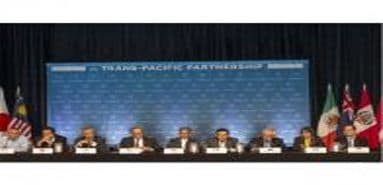
 P3speech after a new round of negotiations by ministers of 12 countries participating in the Trans-Pacific Partnership Agreement (TPP) in Hawaii (USA) endingc, Japanese Economy Minister Akira Amari said it is likely that the next round of TPP negotiations will take place at the end of August 2015.
Mr. Amari said that in addition to the reasons why this negotiation failed, such as the process of opening the automobile and agricultural markets, and the protection of the pharmaceutical industry, differences between countries regarding intellectual property rights must also be taken into account.
Although a final agreement was not reached, the TPP negotiation round in Hawaii recorded significant progress. The meeting in Maui achieved some success with agreements on environmental protection and a code of conduct in case of conflicts of interest.
| Under the environmental agreement, countries commit to comply with existing wildlife trafficking treaties as well as their respective environmental laws. Environmentally harmful support measures such as government support for the construction of fishing vessels in overexploited areas are prohibited. The agreement also emphasizes long-term protection measures for at-risk animals such as sea turtles, seabirds, whales, sharks, etc. Violating countries may face trade sanctions.
The environmental agreement is considered to have far-reaching impact as the 12 countries participating in TPP account for about 25% of seafood trade and 25% of world wood and pulp output. Five of these countries are on the list of top ecologically diverse countries in the world. |
Mr. Amari affirmed that the parties were very close to a comprehensive agreement and only needed one more meeting for the ministers to complete the work.
The failure to reach an agreement at the negotiation round in Hawaii makes the chances of TPP being passed by the US Congress this year slim. Unable to complete the TPP will be a failure for US President Barack Obama because he sees the TPP as an economic pillar in the "pivot" policy to the Asia-Pacific and an opportunity for the US to balance China's influence in this region.
However, on August 1, US Trade Representative Michael Froman said the 12 countries participating in the negotiations had made significant progress and were more confident than ever that an agreement was within reach. Froman said trade ministers are moving forward with work to resolve problem areas that are politically sensitive, such as efforts to allow increased rice imports into Japan, more sugar imports into the United States, increased access to Canada's dairy market and extended patent protection for new drugs for 12 years.
TPP negotiations were launched in 2005 and have so far attracted the participation of 12 countries including Australia, Brunei, Canada, Chile, Japan, Malaysia, Mexico, New Zealand, Peru, Singapore, the US and Vietnam. These countries are working towards signing the agreement as soon as possible, after missing the deadline set at the end of 2013.
According to estimates, once signed, TPP will become a free trade area with 800 million people, accounting for 30% of trade turnover and nearly 40% of world economic output.
Source: TBKTSG