
 Procedures

Online mailbox
Receiving feedback and proposals from organizations and individuals.

New opportunities to promote economic cooperation between Vietnam and Korea After 27 years since the first FDI project and 23 years of […]
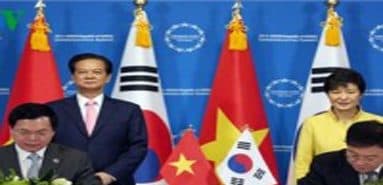
 After 27 years since the first FDI project and 23 years of establishing diplomatic relations, Korea has become the largest foreign investor in Vietnam cabout the total number and number of investment projects. Korean investment projects generally operate effectively, consistent with Vietnam's level of economic development and ability to absorb FDI capital in each period. At the same time, it has made an important contribution to the economic restructuring and socio-economic development of localities in recent times. The VKFTA Agreement, which is about to officially take effect, will contribute to promoting the wave of FDI from Korea into Vietnam in both quantity and quality.
Korean investment situation in Vietnam
After more than 27 years of implementing investment activities in Vietnam, Korea has surpassed Japan and become the largest foreign investor in terms of both number of projects and total investment capital among countries and territories investing in Vietnam since October 2014. To date, Korea's total registered investment capital in Vietnam has reached 43.64 billion USD with 4,777 valid investment projects. If including projects of Samsung, Hyosung and a number of other corporations investing through third countries (Singapore, BVI, Türkiye ...), Korea's total accumulated FDI capital in Vietnam is up to about 50 billion USD, accounting for about 18% of total FDI capital in Vietnam and a difference of up to 11 billion USD compared to Japan, the 2nd FDI partner in Vietnam.
November 2015, the total FDI capital of Korea in Vietnam reached over 6.39 billion USD through 904 new investment projects and increased capital, Korean investors were present in 45 localities across the country. Among them, localities such as Bac Ninh and City. Ho Chi Minh, Dong Nai, Binh Duong, Hanoi, Ba Ria - Vung Tau, Hai Phong... are localities that receive a lot of investment from Korea. The main forms of investment are 100% foreign capital.
In November 2015, total Korean FDI capital accounted for 31.6% of total FDI capital into Vietnam. If counting the project of Hyosung Group (660 million USD, invested through Turkish legal entities), Korean FDI accounts for 34.9% of total FDI capital in Vietnam, 4.1 times more than Japan; 6.2 times Taiwan and 6.8 times Singapore (but Vietnam's 2nd, 3rd, 4th traditional FDI partner).
According to the results of a 2015 survey by the Korea International Trade Association (KITA) on Korean businesses, 49% of 540 Korean businesses that participated in a survey on the investment environment in 32 countries with an annual growth rate of more than 3% in the past 3 years all affirmed that they have plans to develop business in the Vietnamese market in 2015. Korean FDI enterprises play an important role in Vietnam's economy by creating jobs for about 70,000 workers and contributing about 30% of Vietnam's total export value in 2014.
About 95% of Korean investment projects are carried out by small and medium enterprises (SMEs), focusing mainly on the processing and manufacturing industry. In particular, these projects are mainly processing projects in the field of light industry such as garments, shoe and sandals production... However, recently there has begun to be a change in quality when exporting many satellite businesses to Korean TNCs investing in Vietnam in the field of high technology, electronic technology... Although large Korean corporations only account for about 5% of the projects, they reach more than 70% of the total registered investment capital in Vietnam and focus on the industry. processing and manufacturing industry; real estate business; building … positively contributing to economic stability and development such as Samsung, Doosan, LG, Posco,CJ, Taekwang, Hyosung, Kumho …
Vietnam - Korea trade cooperation relationship
Economic and trade relations between Vietnam and Korea have increased more than 57 times, from 0.5 billion USD in 1992, when to 28.8 billion USD in 2014. In 2014, Korea was Vietnam's 3rd largest trading partner (after China and the United States) and Vietnam was the export market. Korea's 6th largest export.
05 items goods with large export valueto Korea in 2014 include: Textiles and garments (reaching 2.14 billion USD); Aquatic products (654 million USD); Wood and wood products (489 million USD); Computers, electronic products and components (395 million USD); Phones of all types and accessories (334%).
05items with high import value from Korea in 2014 include: Computers, electronic products and components (5.05 billion USD); Other machinery, equipment, tools, and spare parts (3.1 billion USD); Fabrics of all kinds (1.8 billion USD); Phones of all kinds and components (1.7 billion USD); Plastic raw materials (1.2 billion USD). Imports from Korea are mainly raw materials and fuel for investment and production, of which a significant part serves Vietnam's export manufacturing enterprises. However, due to large differences in import-export structure, Vietnam is having a large trade deficit from Korea, especially recently.
One of the major characteristics of bilateral trade relations is that the structure of import and export goods is complementary, basically not directly competitive.
Prospects for bilateral cooperation after VKFTA takes effect
The Vietnam - Korea Free Trade Agreement (VKFTA) was officially launched in Hanoi, Vietnam on August 6, 2012. Along with the ASEAN-Korea FTA Agreement (AKFTA) signed in June 2006 and effective from July 2007, the VKFTA Agreement signed on May 5, 2015 will be the most comprehensive legal document regulating economic cooperation between Vietnam and Korea.The VKFTA Agreement is expected to bring many prospects for the two countries.
In addition, the two sides aim to increase bilateral trade turnover to70 billionUSD by 2020 on the basis of mutual benefit.
About economics, trade and investment
Similar to joining the WTO or other FTAs, signing the VKFTA Agreement will help Vietnam further improve the business environment, allocate and use social resources more effectively, thereby promoting the process of restructuring the economy in the direction of increasing added value, moving up the ladder in the global value chain. This is an important long-term benefit.
First, the most important benefit of establishing an FTA with Korea is to promote investment from Korea into Vietnam, along with technological resources, management qualifications and opportunities to access third markets. In recent years, especially since the AKFTA Agreement took effect, Korean investment in Vietnam has increased significantly. Korea's investment capital has a relatively positive structure, in which the proportion of investment in the processing and manufacturing sector accounts for more than 60% of the total investment capital.
Korea belongs to the group of countries with the leading technological level in the world today. Therefore, increasing South Korea's investment attraction in the coming time, with the above positive structure, along with measures to encourage technology transfer, will help improve Vietnam's technological level and production capacity, contributing to the goal of basically turning Vietnam into a modern industrial country.
Along with the commitments in the Investment Chapter of the VKFTA Agreement and the fact that Vietnam has finished negotiating new generation FTA agreements such as TPP, EVFTA... and the trend of shifting investment to Southeast Asian countries of Korean businesses investing in China will certainly increase Vietnam's competitive advantage in attracting Korean investment.
This is a very favorable opportunity for Vietnam to attract quality FDI projects from Korea, thereby participating more firmly in the production and supply chain on a regional and global scale, attracting large Korean economic corporations and satellite suppliers, developing supporting industries, creating jobs, and actively contributing to the country's economic and social development. This is an opportunity to gain strategic, long-term benefits for the economy.
Second, regarding market access opportunities for each Party's goods, the Korean side gives Vietnam incentives to cut and reduce tariffs, creating important new export opportunities for key groups ofagricultural and aquatic products such as shrimp, crabs, fish, tropical fruits, and industrial goods such as textiles, furniture, mechanical products... Vietnam is the first FTA partner with which Korea opens its market for very important products. domestic sensitive products such as garlic, ginger, honey, sweet potatoes... Accordingly, it creates significant competitive opportunities for Vietnam's exports compared to other competitors in the region such as China, Indonesia, Malaysia and Thailand.
While Vietnam gives preferential treatment to Korea for industrial product groups such as textile and garment raw materials, plastic materials, electronic components, trucks and cars of 3,000 cc or more, auto parts, household electrical appliances, some iron and steel products, electric cables... Most of these are raw materials and accessories that need to be imported for domestic production, reducing dependence on imports from a few countries.
Other benefits, the VKFTA Agreement is expected to also bring positive social consequences by creating more job opportunities for Vietnamese workers at Korean enterprises investing in Vietnam as well as for Vietnamese workers to work in Korea, increasing income, especially of groups of low- and medium-skilled workers, contributing to hunger eradication and poverty reduction in rural areas.
Besides the positive and favorable aspects,it is possible to anticipate some significant challenges for Vietnam whenimplementingthe VKFTA Agreement.
First, cutting tariffs with Korea will create more competitive pressure on domestic businesses, while businesses are currently competing with many partners such as China, Japan, etc. The commitment to cut tariffs partly reduces the source of revenue from import taxes for the State budget and due to the large difference in import-export structure, the trade deficit from Korea is expected to continue to increase.
Second, although commitments on procedures, rules and institutions do not create new legal obligations, they require State management agencies to constantly strengthen their organizations and improve staff capacity to meet the requirements of performing state management tasks in an economic environment operating according to international practices, and strengthen reforms, simplify procedures, and facilitate production and business activities of enterprises.
Third, State agencies, localities, business communities and people must raise awareness about the integration process in general and the implementation of the VKFTA Agreement in particular to be able to effectively exploit the benefits and limit the adverse impacts of the Agreement.
Some measures to increase FDI attraction from Korea
Korea is the largest FDI partner, the potential to attract FDI capital from Korea has many favorable factors in the near future. Shortcomings and limitations related to administrative procedures, capacity of domestic supporting industry enterprises, quality of human resources, and incomplete infrastructure are major fundamental problems that Vietnam is currently and will continue to overcome to improve the effectiveness of attracting FDI to Korea in particular and other countries in general.
In the coming time, some investment fields that Korean investors will continue to promote investment in Vietnam are: electronics industry (led by Samsung, LG and satellite businesses); distribution, wholesale and retail (Lotte, Shinseghe, E Mart); finance – insurance (Shinha, Woori, KEB, IBK, KB, Hanwha …); real estate business (Daewoo, GS, Posco …); energy (thermal and nuclear power plants at the Government level such as Kepco, Doosan, Samsung C&T, Taekwang …); high quality services, tourism (Lotte …); food and food processing (CJ); garments (for export in anticipation of new generation FTA agreements, Hyosung, Taekwang, Panko ...); petroleum – chemicals (GS,SK, Samsung…); agriculture – farming (CJ…) …
A number of agencies under the Korean Government have the function of supporting the investment of businesses abroad that local ministries and branches can cooperate in the process of developing investment promotion plans as well as promoting and directly approaching Korean businesses including: Korea Trade Promotion Agency (KOTRA); Korean Chamber of Commerce and Industry (KCCI); Korea Trade Association (KITA); Korean Economic Federation (representative of large corporations); Korean Association of Small and Medium Enterprises (KBIZ) and financial institutions and banks; law - consulting firms, Korean Business Association in Vietnam (KOCHAM); Honorary Consul General of Vietnam in Busan, KwangJu.
Foreign Investment Department