
 Procedures

Online mailbox
Receiving feedback and proposals from organizations and individuals.

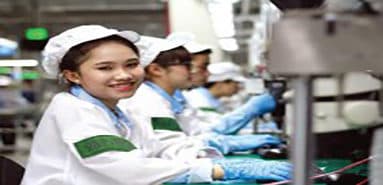
The "symphony" of FDI from the US added a new note when notable information appeared in the middle of this week. That is Microsoft, America's leading technology corporation, suddenly announced the sale of its popular phone segment, including the Microsoft Mobile Vietnam mobile phone factory in Bac Ninh to FIH Mobile Ltd., part of Hon Hai/Foxconn Technology Group (Taiwan) and HMD Global, Oy (Finland). The value of the deal is 350 million USD
It is also important to recall that, since the end of 2014, after officially receiving the transfer of this factory from Nokia Group, Microsoft has begun moves to move production to Vietnam. For that reason, Microsoft Mobile Vietnam is always considered a typical example of a wave of foreign investment in general, and from the US in particular, flowing into Vietnam.
The US is completely capable of becoming the number 1 investor in Vietnam in the near future
Now, the Microsoft Mobile Vietnam Factory will be transferred to Foxconn and of course, the investment capital of the Factory will be calculated for Taiwanese investors, not investment from the US. Foxconn may carry out the production of Nokia-branded phone products for HMD at the factory that formerly belonged to Nokia.
But that's another story. For now, although Microsoft's sale of the factory to Foxconn is largely due to market problems, not due to problems with Vietnam's investment environment, it still creates a low note in the "symphony" of FDI from the US to Vietnam.
Another sad note is that despite many expectations set after free trade agreements (FTAs) between Vietnam and its partners were signed, including TPP, investment capital from the US into Vietnam has not seen a clear improvement. According to data from the Foreign Investment Agency (Ministry of Planning and Investment), in the first 4 months of this year, there was only 30.5 million USD of investment capital from the US into Vietnam. Therefore, the US has dropped to 17th place among countries and territories investing in Vietnam in the first months of this year, and also dropped to 8th place instead of 7th on this list, if calculated cumulatively. Up to this point, American investors have registered to invest in Vietnam over 11.7 billion USD.
Although it is true that there are low notes, these low notes are probably not enough to reduce the "pitch and duration" of the "symphony" of FDI from the US to Vietnam, along with the expectation of acceleration of this capital flow.
Just before US President Barack Obama's visit to Vietnam, the Vietnamese Government signed a decision to establish Fulbright University Vietnam, an educational institution with 100% foreign investment, operating not for profit.
In fact, since July 2015, on the occasion of his official visit to the United States, General Secretary Nguyen Phu Trong witnessed the ceremony of awarding the investment certificate to Fulbright University Vietnam in New York. At that time, the General Secretary expressed his agreement with the American side's view that developing this university is for the people, for the cause of education and training. “If we do this project well, we will contribute to strengthening and affirming the good relationship between Vietnam and the US,” General Secretary Nguyen Phu Trong said.
And just a few days before President Barack Obama's visit to Vietnam, a group of American and Vietnamese investors, including Steelman Partners, Cantor Fitzgerald, Weidner Resorts and the Pan-Pacific Import-Export Company Limited (IPP) of tycoon Jonathan Hanh Nguyen, proposed a complex project in Thu Thiem New Urban Area, with a total investment of more than 4 billion USD.
Not long ago, a news that caused a stir in public opinion was that Apple - the brand that makes any country covet their investments - planned to invest 1 billion USD in the Vietnamese market. Detailed information has not been disclosed, but experts believe that, once Apple really invests in Vietnam, it will be like Intel's previous investment, the message of a very attractive investment location continues to be sent. This will be an important push for global investors to turn to Vietnam.
Meanwhile, the investor of the Ho Tram Strip Project (investment capital of 4.2 billion USD), has also just made an important decision. It opened an office in Hanoi after 3 years of putting the project into operation in Ba Ria - Vung Tau.
“It's not because the US President officially visited Vietnam that we opened an office in Hanoi, but it is somewhat related because it shows the good relationship that Vietnam and the US have. Economy Vietnam is on the rise, so the US President's visit this time is a big step forward in the two countries' trade relations. This event further strengthens the belief in a beneficial cooperative relationship for the two countries," said billionaire Philip Falcone, Founder and Chairman of Harbinger Capital Investment Fund (USA) - an investment fund currently investing in the Ho Tram Strip Project.
Nearly 10 years ago, when billionaire Philip Falcone began investing in Ho Tram Strip - the first project in Vietnam, he had faith that Vietnam would quickly become one of the most attractive markets, attracting international investment sources. Now, he remains as optimistic and confident in Vietnam's future as he was 10 years ago. "Therefore, I am willing to pursue my investment goal here to the end," billionaire Philip Falcone said, adding that he is considered a visionary investor and has always seen Vietnam as a country full of real potential.
Maybe, investments have ups and downs. Billionaire Philip Falcone himself admitted so. But in the long term, investment capital flows from the US really have potential.
“I believe the US will become the number 1 investor in Vietnam in the near future,” US Ambassador to Vietnam Ted Osius emphasized. And Minister of Planning and Investment Nguyen Chi Dung affirmed that Vietnam and the US have great opportunities to promote trade and investment cooperation.
When President Barack Obama visits Vietnam, there will certainly be cooperation agreements signed. That is the foundation for more upbeat notes in the "symphony" of FDI from the US.