
 Procedures

Online mailbox
Receiving feedback and proposals from organizations and individuals.

After 10 years of implementing the National Target Program to build new rural areas, the appearance of agriculture and rural areas in Hai Phong has seen strong developments. From the fields to the villages and hamlets, everyone wears a spacious and bright "new shirt". People's material and spiritual lives are constantly improving. The production structure has shifted in the right direction; Agriculture is developing strongly towards large-scale concentrated commodity production, moving towards ecological agriculture, applying high technology; Industry and rural services have developed significantly...
Leadership and direction for drastic and timely implementation
Hai Phong implements the National Target Program to build new rural areas in 139 communes in 07 districts, with an average population of over 1,070 thousand people, accounting for 58% of the city's population (1.85 million people, in 2010), on a natural area of nearly 126,000 hectares, accounting for about 82% of the city's land area.
To bring the program to life, in recent years, a series of Directives, Resolutions, and Plans of the City Party Committee, People's Council, and People's Committee of Hai Phong City have been issued to gradually concretize the work of leadership, direction, inspection, and urging to remove difficulties with the determination to successfully implement rural and agricultural innovation to raise the level and narrow the gap between rural and urban areas. A typical example is Resolution No. 06-NQ/TU dated July 16, 2012 of the XIV City Party Executive Committee on building new rural areas in Hai Phong until 2015, with an orientation to 2020; Resolution No. 10/2013/NQ-HDND dated July 25, 2013 of the City People's Council on mechanisms and policies to support investment in building new rural infrastructure in Hai Pho cityng period 2013-2015, orientation to 2020; Resolution No. 136/2016/NQ-HDND dated August 22, 2016 of the City People's Council, on supporting 100% of the final settlement value of new rural infrastructure construction projects; 100% cement to make roads in fields and villages; 100% preferential loan interest rates for businesses investing and improving rural clean water and Resolution No. 13/2017/NQ-HDND dated July 20, 2017 of the City People's Council promulgating mechanisms and policies to support the development of agriculture, fisheries, rural economy, and improve farmer income in Hai Phong city in the period 2017-2020.
Rural socio-economic infrastructure, living conditions, and productive labor of people in rural areas have been significantly improved and enhanced
In the period 2010-2020, along with socio-economic development in rural areas, the city has invested in developing spacious and modern rural infrastructure to gradually develop the rural economy shifting towards industry-service, increasing added value, sustainable development, contributing to raising income for rural residents, gradually narrowing the gap with urban areas.
As of July 2020, 100% of villages and communes have electricity from the national grid, rural electricity infrastructure systems have always been invested, renovated, upgraded and newly built, eliminating rotating power cuts in rural areas during peak months. Along with that, 100% of villages have car roads to the Commune People's Committee and 100% of the car traffic routes from the Commune People's Committee to the District People's Committee headquarters are asphalted and concreted (except for 01 island commune on the sea). Safe and effective transportation solutions for rural people with inter-provincial and inter-district bus routes established with 21 communes having bus stops, accounting for 15% of the total number of communes. The system of cultural-sports institutions, communications and postal and telecommunications services is increasingly convenient, effective, and responsive toMeet the needs of rural residents with 4G mobile information coverage and loudspeaker systems reaching 100% of residential areas.
With the policy of socialization of education, school systems at all levels in rural areas were newly built and upgraded. By 2020, 100% of communes will have educational establishments with the ratio: 1.8 kindergartens, 1.3 primary schools and 1.1 secondary schools/commune. For health care services, 100% of communes have medical stations and are built spaciously and solidly, ensuring environmental hygiene; Of which 94.32% of the total communes are recognized to meet national health criteria and 83.3% of facilities are eligible for medical examination and treatment with health insurance for people.
Over the past 10 years, the City has built 37 medium- and large-scale centralized water supply systems in rural areas, with 11 systems meeting national technical standards on drinking water quality (QCVN 01:2009/BYT). Currently, the system of clean water supply works in daily life reaches 61% of communes, with 125 water supply works in operation. In particular, the proportion of rural households using clean rural water has so far reached 92.1% (central regulation of 65%).
The service of goods circulation through annual markets in rural areas is guaranteed and relatively stable with 85.11% of the total communes having markets. Credit finance activities have also developed rapidly, with bank branches present in 36 communes, reaching a rate of 25.53% and 26 people's credit funds operating effectively in 25 communes, accounting for 17.73%.
According to the results of the mid-term rural and agricultural survey, there are currently nearly 51 thousand households receiving preferential loans. In 2019 alone, the amount of capital disbursed for preferential loans for programs and projects reached 1,255.4 billion VND, an average of 25 million VND/household. This has created favorable conditions for residents to access credit capital to serve production and business to meet increasingly improved living standards.
The economy of the agricultural, forestry and fishery sector develops and moves in the right direction
The city's rural area currently has 350,966 households, of which 87,749 agricultural, forestry and fishery households account for 25% (42.85% in 2011) the remaining are non-agricultural, forestry and fishery households and there are 496 agricultural, forestry and fishery households that meet farm criteria; Thus, the occupational structure of households in rural areas has changed quite clearly in a positive direction: the proportion of households engaged in industrial production, construction and services is increasing, the proportion of agricultural, forestry and fishery households continues to decrease.
Specifically, agricultural households in the entire City have 82.7 thousand households, accounting for 90.98% of the total number of agricultural, forestry and fishery households, down 2.58 percentage points; Forestry households: account for 0.02% and remain stable; Aquaculture households: there are 5.4 thousand households, accounting for 6.04%, a decrease of 0.37 percentage points compared to 2011. This reflects the restructuring of the production industry in rural areas in line with the trend of restructuring the city's economy in recent times. In 2010, the added value of the agriculture, forestry and fishery sector reached over 6.3 trillion VND, accounting for 9.05% of the city's GRDP structure. After 5 years (2015), it reached over 9.8 trillion VND, accounting for 7.52% of the structure, down 1.5 percentage points; Preliminary 2020 reached 12.7 trillion VND (doubled compared to 2010) and the structure accounts for 4.6% of the city's total GRDP, down 2.9 percentage points.
In the recent period, under the impact of urbanization, the area of agricultural land has continuously decreased, the shift in labor structure from agricultural to non-agricultural sectors has been strong, the proportion of social investment in agriculture has decreased; Natural disasters and epidemics are complicated, but the agriculture, forestry and fisheries sector still maintains annual growth. From 2010 to present, production value has increased by an average of 2.1%/year; Average GRDP reaches 2.84%/year. Production value in 2010 of the entire industry reached over 12.6 trillion VND with the internal structure of agriculture-forestry-fishery being 75.01%-0.36% and 24.24% respectively; Preliminary 2020 reached over 24.7 trillion with a corresponding structure of 55.95%-0.17%-33.61%. So after 10 years, the structure is clearThe agriculture, forestry and fishery sector has shifted in the right direction according to the local potential and advantages: rapidly increasing the proportion of the fisheries sector and reducing the proportion of the crop sector in the production value.
In order for the farming industry to develop in a sustainable balance with the goal of ensuring food security and export, under the pressure of urbanization (the average annual cultivated area decreased by 2.23 thousand hectares) The city implemented policies to support farmers such as providing credit, transferring science and technology, building infrastructure, and planning fields in the direction of commodity production zones, so far rice productivity has reached 6.42 tons/ha, an increase of 7% (corresponding to an increase of 4 tons/ha) compared to 2010; The product value on 1 hectare of cultivated land in 2019 reached 121.9 million VND/ha, in accordance with the target set by the City Party Congress.
For the livestock industry, the form of farm and family farming is gradually replacing the small-scale household farming model, continuing to accelerate development in industrial, semi-industrial, disease-safe methods, suitable to the advantages of each region. The total weight of live meat increased steadily in the period 2010-2019, especially poultry meat in 2019 reached 61.86 thousand tons, 2.33 times; Poultry egg production is estimated at 361.82 million eggs, an increase of 1.53 times compared to 2010.
For the fisheries industry, offshore fishing is developing rapidly. Up to now, the total number of boats in the whole city is over 1.7 thousand vehicles with a total capacity of 215.84 thousand CV, the average capacity is 124.2 CV/vehicle, this is the capacity level that ensures the ability to go offshore for long-term exploitation in the Gulf of Tonkin. Mining activities continue the offshore trend, using modern means and machinery such as fish finders and locators to increase production efficiency. Besides, with its coastal geographical location, the aquaculture industry has many advantages in diversifying saltwater, brackish and freshwater production areas. With the trend of multi-species, multi-type and environmentally friendly farming, focusing on developing products with great potential.Strengths include clams, white shrimp, sea bass, caged seafood, etc. Up to now, seafood production has been increasing, not only meeting domestic consumption needs but also providing raw materials for export processing.
Hai Phong has focused on doing a good job of propaganda and advocacy, creating consensus and unity among officials, party members and the residential and business communities. Along with that, many mechanisms and policies to support program implementation are deployed to meet urgent needs in each certain period. Accordingly, support for each new rural destination to complete infrastructure criteria, the level of support next year is higher than the previous year, specifically: communes that meet standards in the 2016-2017 period are supported on average 22 billion VND/commune; Communes met standards in 2018, an average of 24 billion VND/commune; Communes meet 2019 standards, an average of 25 billion VND/commune...
As of 2019, the city had 139/139 (100% of communes) communes completed new rural construction, one year ahead of the city's plan and the target assigned by the Prime Minister (the national average is 50.26% and the Red River Delta is 83.69%).
On October 8, 2020, the Prime Minister issued Decision No. 1531/QD-TTg recognizing Cat Hai district, Hai Phong city as meeting new rural standards in 2019. Cat Hai is the first district of Hai Phong city to meet new rural standards. Two districts, An Duong and Kien Thuy, are about to be completed; The remaining districts are accelerating the pace of building new rural districts.
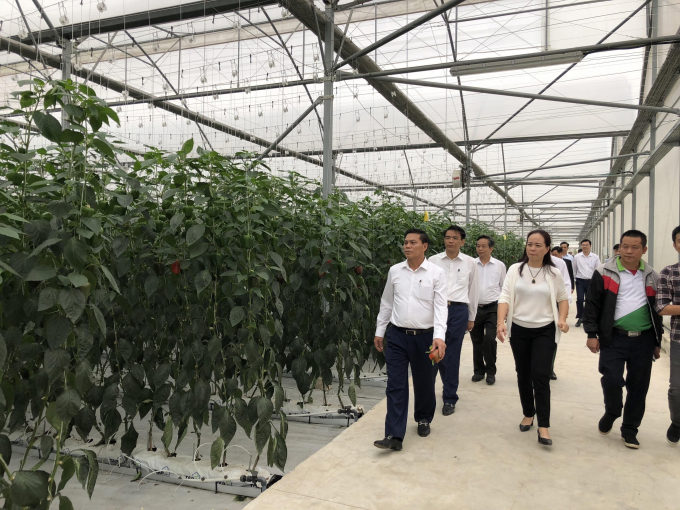
After 10 years of implementing the Resolution of the 7th Central Committee, session X (on agriculture, farmers, and rural areas); Hai Phong's rural areas and agriculture have achieved outstanding results, creating a close connection between urban areas, modern seaports and the countryside. Hai Phong's countryside has truly changed, firmly ensuring national food security and improving production efficiency; Farmers have truly become subjects in building new rural areas, enjoying the fruits of innovation.
Besides the achievements, there are also shortcomings and limitations. Production restructuring has not been strong enough to produce vegetables and fruit trees; The agricultural product processing industry is slowly forming; There are few branded products.
The innovation and development of forms of production organization in agriculture have changed but the results are not high. The situation of rural environmental pollution is still complicated, solid waste is collected and treated using simple technology. The work of adjusting and supplementing new rural planning is not timely and appropriate to the new situation.
To "Hai Phong's countryside must be a countryside worth living in", continue to build new rural areas to meet the requirements of promoting and improving comprehensive quality, associated with sustainable poverty reduction, a well-off material life, a safe living environment, a rich spiritual life, and maintaining the national cultural identity in the spirit of Conclusion No. 54-KL/TW dated August 7, 2019 of the Ministry Politics on continuing to implement the Resolution of the 7th Central Committee, term
Hai Phong strives to have 100% of communes complete the construction of model new rural areas by 2025. Average income per capita in rural areas increased 2-2.5 times compared to 2020; poverty rate (according to national multidimensional standards for the period 2021-2025) is below 0.2%; The rate of people participating in health insurance reached 95%; The rate of people using clean water (urban) reached 100%.
To strive to achieve those goals, the city sets out main tasks and solutions, which are:
First,, concretize the directions of the Government, the Prime Minister, and the instructions of the Ministries and Central branches into the practical conditions of the city to focus on leading and directing the construction of new rural areas with the highest spirit and responsibility.
Secondly, continue to carry out the emulation movement "All people join together to build new rural areas" and the campaign "All people unite to build new rural areas and civilized cities" in which special importance is attached to constantly consolidating and improving the quality of new rural criteria at commune and district levels towards achieving advanced new rural standards and new rural areas. model.
Third,, build detailed plans for the development of agricultural sectors and concentrated commodity production areas in the direction of prioritizing traditional products, regional advantages, taking advantage of endogenous capacity and adding value (OCOP products). Organize the review, adjustment and supplementation of new rural planning to ensure compliance with the pace of socio-economic development, the urbanization process of the locality and district planning. Develop specific plans for urban development associated with new rural construction for districts expected to develop into districts.
Fourth,, promote industrialization and modernization of agriculture and rural areas; innovate the growth model associated with the development of clean agriculture, organic agriculture... Focus on applying high technology to production; Build and replicate production chains and effective economic models; Continue to effectively implement policies to attract and call for businesses to invest in rural areas, agricultural product processing businesses, and fields that create many jobs for rural workers.
The year is, protecting the ecological environment, preserving the rural landscape and environment in a green-clean-beautiful direction. Renovate and upgrade concentrated household waste treatment areas in communes and towns to become environmentally friendly waste treatment areas.
Sixth, continue to invest in perfecting and improving the quality of the rural infrastructure system, focusing on investing in the construction of rural socio-economic infrastructure associated with urban development; inter-commune and district connections; Build district-level production support service centers associated with commune cluster centers and industrial clusters, conveniently linked with the infrastructure system, ensuring that sub-regions in the district develop agriculture, industry, trade and services... associated with large agricultural commodity production areas./.
Hoang Xuan An, Deputy Head of the Economic Statistics Department
Hai Phong City Statistics Department
Source: thanhphohaiphong.gov.vn