
 Procedures

Online mailbox
Receiving feedback and proposals from organizations and individuals.

On the morning of July 2, in Hanoi, the Central Steering Committee implementing Resolution 57 of the Politburo on breakthroughs in science and technology development, innovation and national digital transformation held a preliminary conference for the first 6 months of 2025; Deploying key work tasks in the last 6 months of 2025. Attending and giving a speech to direct the Conference at the Central bridge point was comrade To Lam, General Secretary, Head of the Central Steering Committee.
Co-chairing the Conference were Deputy Heads of the Central Steering Committee: Pham Minh Chinh, Politburo member, Prime Minister; Tran Cam Tu, Politburo member, Standing member of the Secretariat; Nguyen Duy Ngoc, Politburo member, Secretary of the Party Central Committee, Chairman of the Central Inspection Committee; Le Hoai Trung, Secretary of the Party Central Committee, Chief of the Party Central Committee Office. The conference was connected online to provincial and commune-level bridges across the country.
Presenting at the Hai Phong city bridge were comrades: Le Tien Chau, Member of the Party Central Committee, Secretary of the City Party Committee, Head of the Hai Phong National Assembly Delegation; Do Manh Hien, Permanent Deputy Secretary of the City Party Committee; Le Ngoc Chau, Deputy Secretary of the City Party Committee, Chairman of the City People's Committee; Le Van Hieu, Deputy Secretary of the City Party Committee, Chairman of the City People's Council; Pham Van Lap, Deputy Secretary of the City Party Committee, Chairman of the city's Vietnam Fatherland Front Committee; Comrades, members of the Standing Committee of the City Party Committee; Member of the City Steering Committee to implement Resolution 57; leaders of city departments, branches, branches and units.
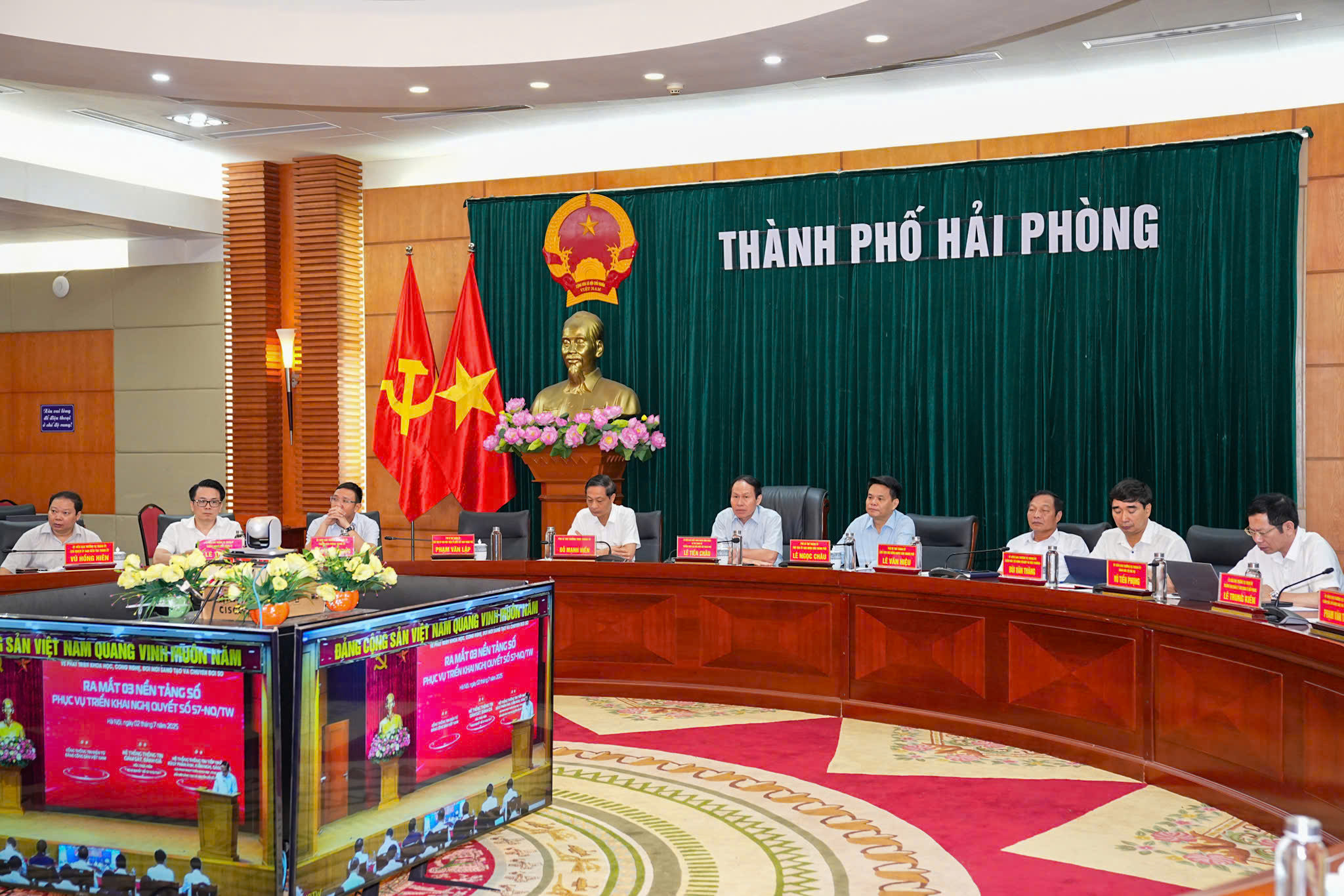
At the Conference, delegates performed the ceremony of pressing the button to launch 3 application platforms serving the implementation of Resolution No. 57-NQ/TW, including: Electronic Information Portal of the Communist Party of Vietnam; Information system to monitor and evaluate the implementation of Resolution No. 57-NQ/TW; The information system receives and processes feedback, recommendations, initiatives and solutions for the development of science, technology, innovation and national digital transformation. This is a specific step to establish a centralized operating mechanism to link digital data, ensure the monitoring and progress tracking requirements assigned by the Central Steering Committee, and contribute to successfully completing the targets and goals set out in the stage of organizational arrangement of the political system.
According to the report of the Central Steering Committee, after 6 months of implementation, Resolution No. 57-NQ/TW has created clear changes in awareness and action throughout the political system, demonstrating the close direction of the General Secretary, Party and State leaders and high political determination from the Central to local levels. The National Assembly has passed two fundamental laws, the Law on Science, Technology and Innovation, and the Law on Digital Technology Industry, creating a solid legal corridor for the development of key technology industries. The Government has issued many important documents, including decrees on administrative reform, decentralization, and decentralization of power in accordance with the two-level government model.
The Central Steering Committee has drastically implemented two major plans: Strategic Action Plan and Plan No. 02-KH/BCĐTW, with a new, practical approach. At the same time, the system for monitoring and evaluating the implementation of resolutions and the system for receiving initiatives and reflections in the fields of science, technology, innovation and digital transformation have been put into operation. The application of a real-time management platform, along with the Party Digital Transformation Architecture version 3.0 and a paperless meeting room system down to the commune level, has contributed to strongly modernizing leadership and administration activities.
The Government has identified 11 strategic technology groups, promoting the formation of a fast-growing innovation ecosystem with 858 science and technology enterprises, 45 high-tech enterprises and over 73,000 digital technology enterprises.
Plan No. 02-KH/BCĐTW also marks a breakthrough in the new governance model: digitizing all tasks, allowing the commune level to report directly, the provincial level to operate in real time, and the Steering Committee to independently inspect and supervise, thereby creating a data management model that can be replicated in the coming period, especially with the two-level government model.
In addition to the outstanding results, the process of implementing the Resolution still has some limitations such as slow progress of some tasks, lack of uniform policy institutions, fragmented digital infrastructure and national data, limited connectivity and data sharing, and lack of high-quality human resources, especially in key technology industries. Some presiding officers are not fully aware of the urgency and systematicity of the task, leading to lack of drastic implementation and lack of real innovation. Although the construction of the national database has achieved fundamental results, it needs to move to the stage of exploitation, connection, and effective use to serve direction, administration, and socio-economic development in a more substantial way.
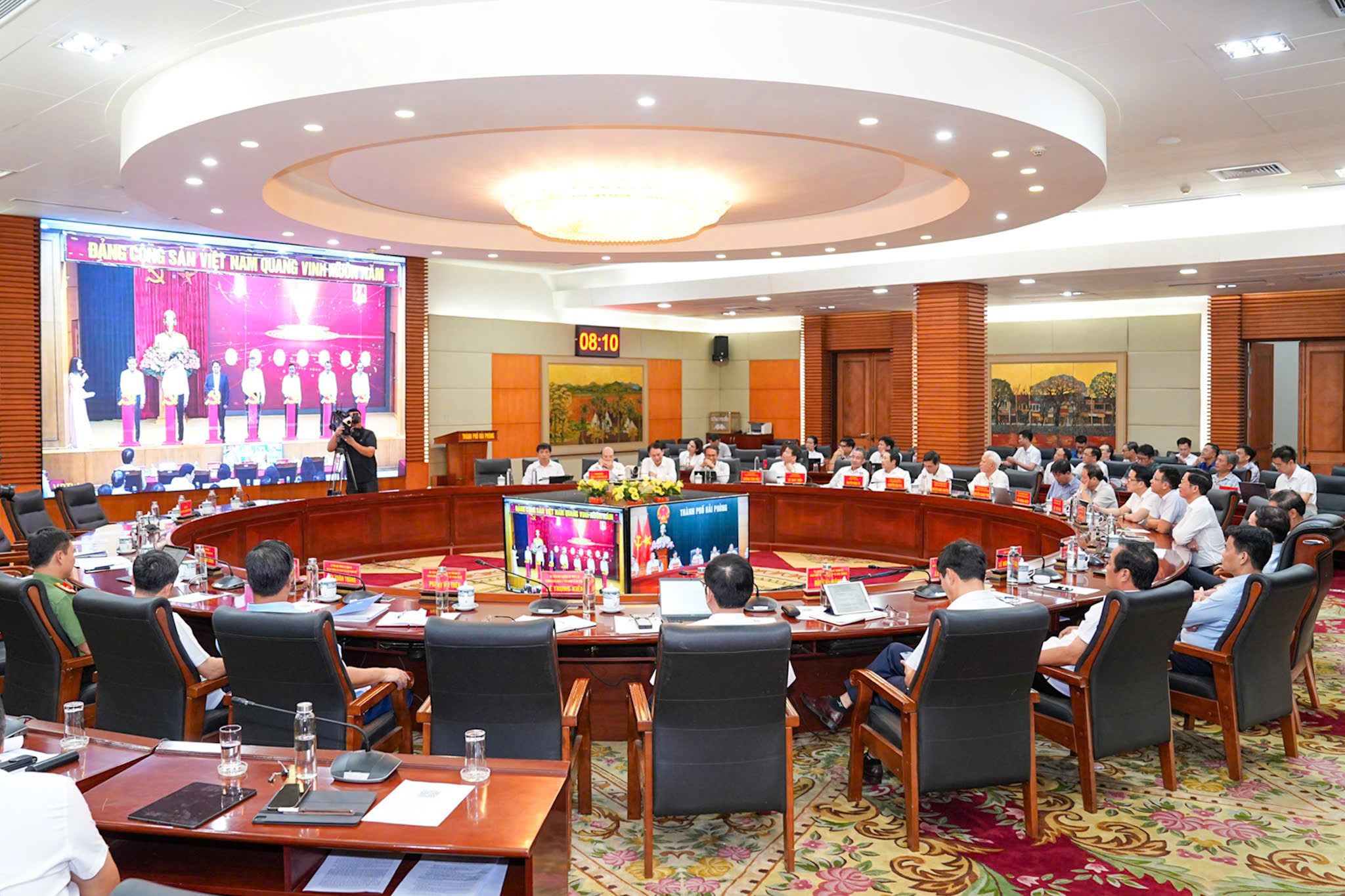
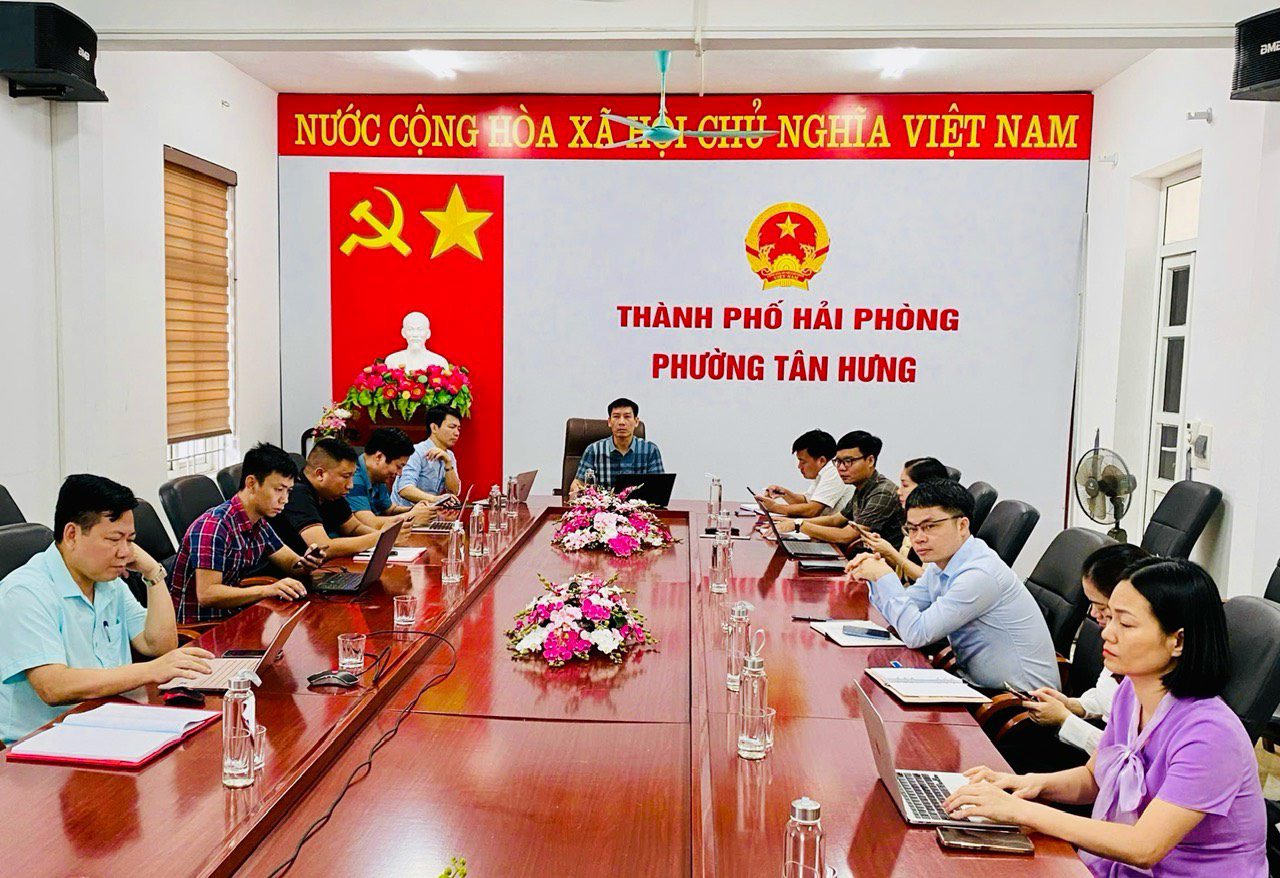
Speaking at the Conference, General Secretary To Lam requested agencies and units to promote the initial results achieved in the first 6 months of the year, continue to innovate, act decisively, and focus highly on direction and administration, ensuring progress, quality, and set goals. Heads of departments, ministries, branches, and localities must uphold the spirit of responsibility, "resolute, persistent, steadfast, do whatever it takes" to strengthen the trust of the entire society, especially regarding outstanding tasks.
The General Secretary assigned the Propaganda Department and the Central Mass Mobilization Committee to preside over and coordinate with press agencies to deploy an extensive communication program on the breakthrough contents of the Law on Science, Technology and Innovation; the role of data in digital transformation; innovating public services and applying technology in life.
The General Secretary requested ministries and branches to urgently develop and promulgate a full system of by-law documents, mechanisms and policies to develop science, technology, innovation and digital transformation, and effectively deploy the Strategic Action Plan with a focused, focused approach, avoiding spreading resources. Ministries, branches, localities, businesses, research institutes, and universities need to proactively seek opportunities, propose initiatives, participate in the Strategic System and Breakthrough Initiatives according to the correct process, promptly remove obstacles, ensure progress and efficiency. The implementation of Plan No. 02-KH/BCĐTW, dated June 19, 2025 on promoting inter-connected and synchronous digital transformation in organizational arrangements of the political apparatus needs to be implemented seriously, on schedule from July 1 to the end of 2025.
The General Secretary assigned the Ministry of Public Security and other ministries and agencies to urgently build and put into operation the National Data Center and specialized databases according to the roadmap in Resolution No. 71/NQ-CP, dated April 1, 2025, ensuring "correct, sufficient, clean, live" data, with plans to share, connect, and analyze data to serve socio-economic development, and strictly handle responsibilities if behind schedule. At the same time, localities, ministries and branches are required to promote data sharing, restructure administrative procedures, and reuse data to provide convenient online public services for people and businesses.
The Ministry of Science and Technology coordinates with ministries and branches to deploy digital infrastructure, nationwide 5G coverage, promote satellite Internet, overcome signal depressions and power shortages; The Ministry of Industry and Trade ensures a stable power source to serve national digital transformation. Provincial and city party committees need to allocate resources to ensure network infrastructure at the commune level, terminal equipment and local digital conversion human resources.
Regarding human resources, the General Secretary assigned the Ministry of Home Affairs to coordinate with the Ministry of Science and Technology, the Ministry of Education and Training, and the Ministry of Finance to promulgate policies to attract domestic and foreign talents, especially in key technology fields; Develop a project to develop and utilize leading experts in the field, implement the Strategy to attract talents to 2030, vision to 2050. The Ministry of Education and Training presides over the development of a strategic framework for higher education, arranges the system of university research institutes, and promulgates special remuneration policies to attract at least 100 leading experts to work in the country.
The General Secretary assigned the Ministry of Science and Technology and the Ministry of Finance to advise the Government on allocating sufficient budget for science, technology, innovation, digital transformation, prioritizing key, inter-sectoral and inter-regional projects with breakthroughs, while ensuring network security and effective operation of digital platforms to implement Resolution No. 57-NQ/TW./.